
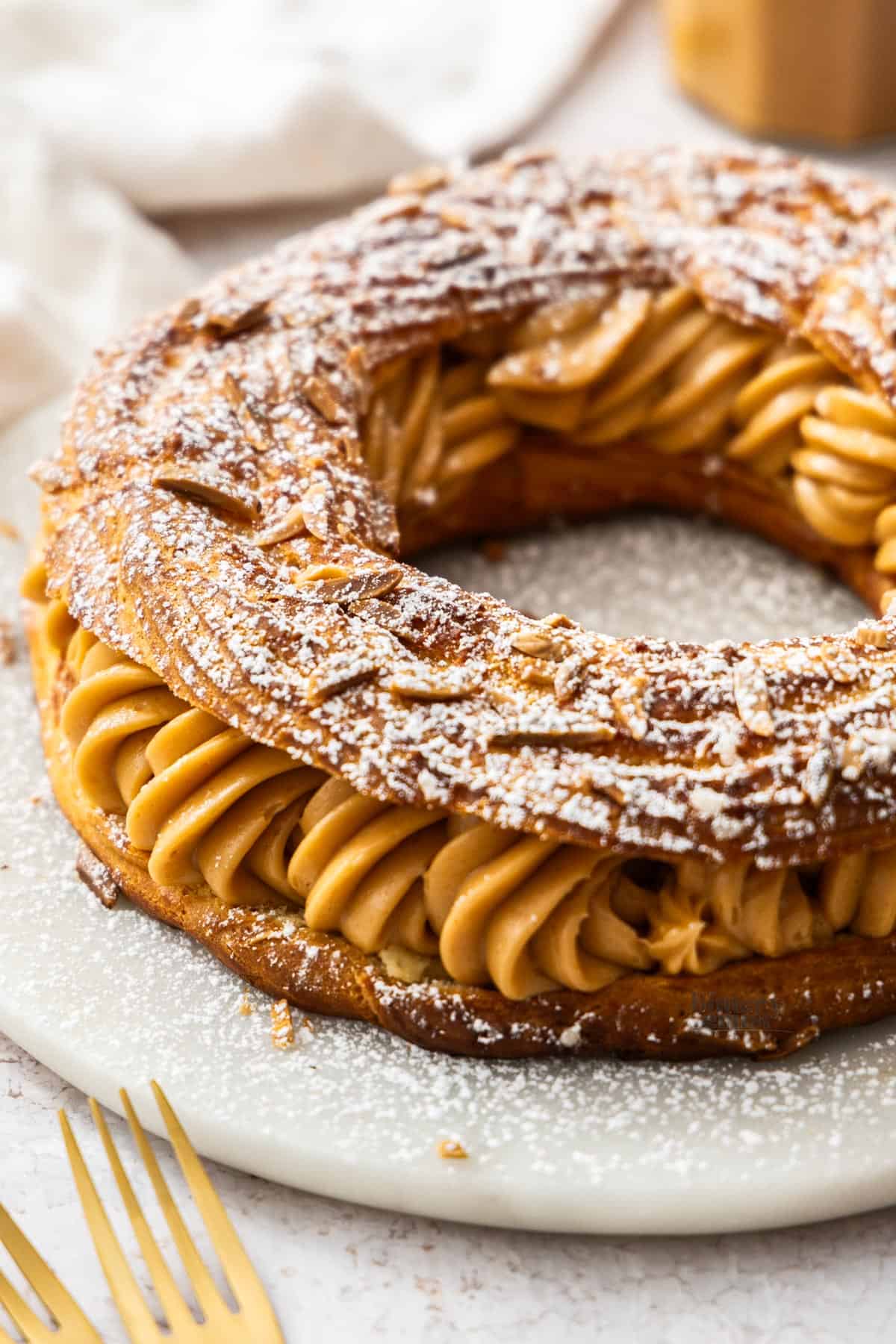
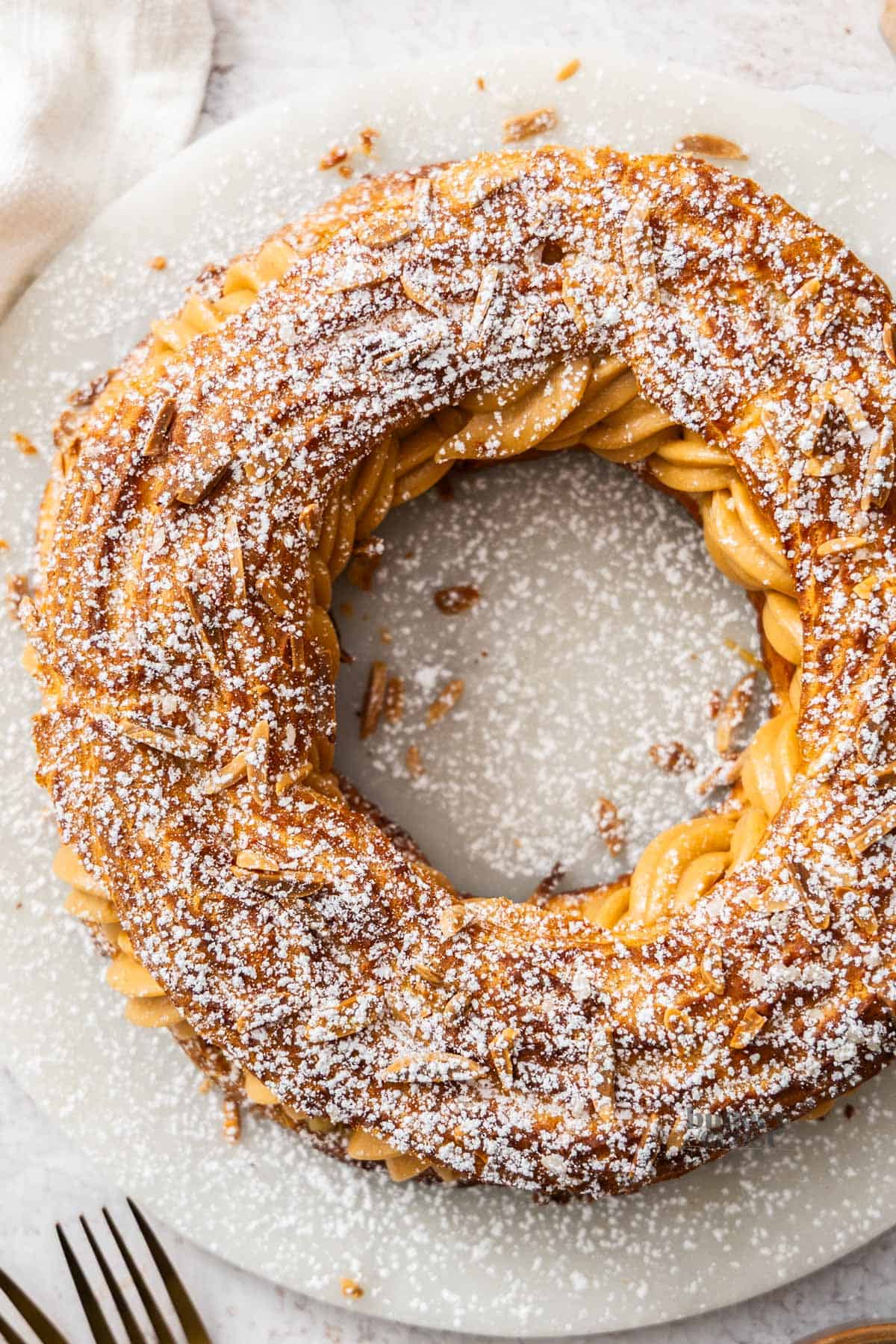
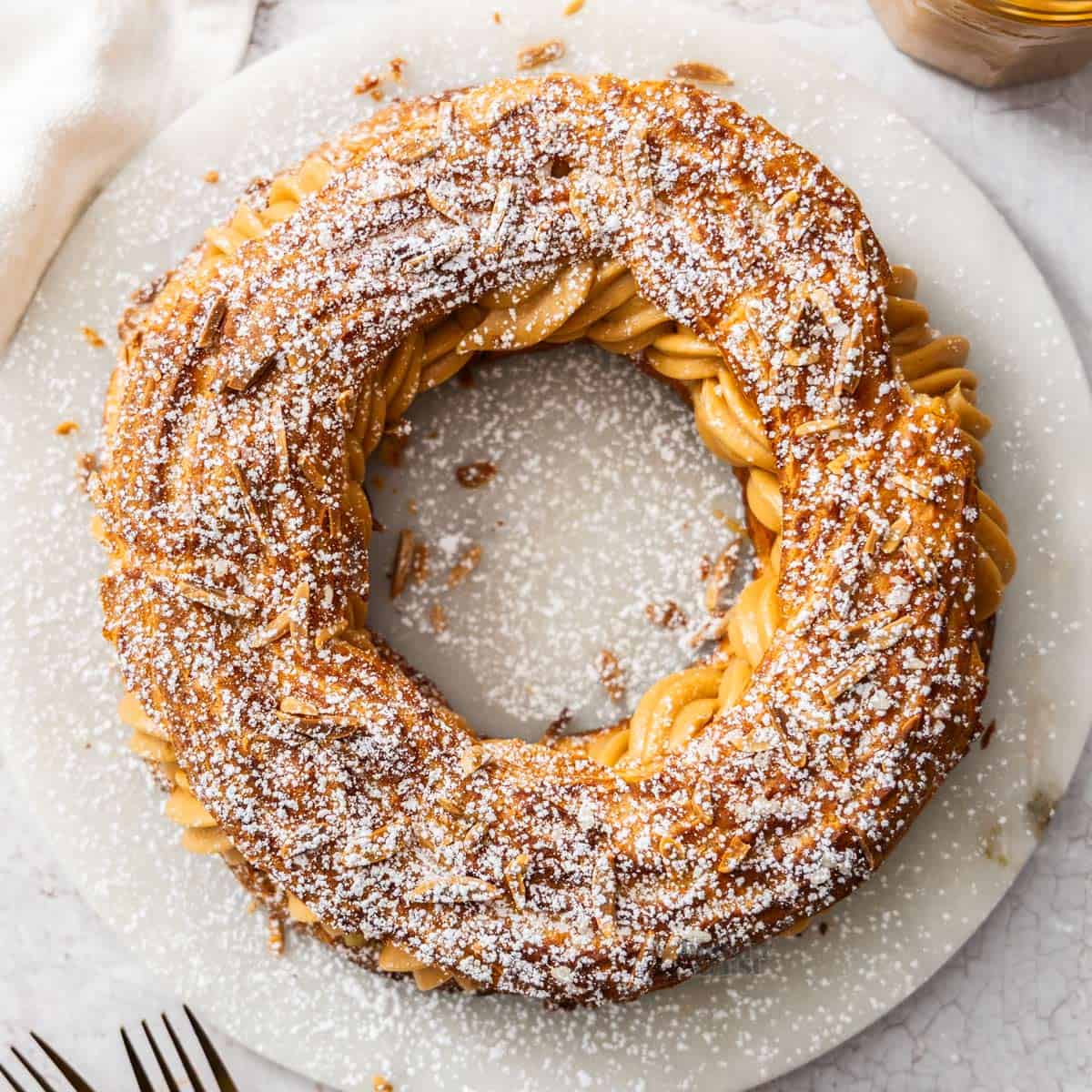
Paris Brest is a classic French pastry made from a crisp ring of choux pastry filled with rich, silky praline mousseline cream. It looks so impressive, but it's really just a few simple components brought together in the most delicious way.
This version is made with my easy choux pastry and an undeniably nutty praline cream filling that's smooth, buttery, caramelly, and completely irresistible. I like to finish mine with pearl sugar and slivered almonds instead of flaked almonds, giving it a little extra crunch.
Never Miss a Recipe!
Get the latest recipes straight to your inbox!
Jump to:
❤️ Why use this recipe?
- Reliable choux pastry: The pastry bakes up crisp, golden and sturdy enought to slice and fill without collapsing.
- Classic praline filling: The praline mousseline is silky, buttery and deeply nutty with the classic caramelised flavour.
- Impressive but achievable: It looks like a showstopper but this recipe is just 3 simple components.
- Beautiful textures: Every bite is exciting with crisp choux, smooth, creamy mousseline cream, crunchy pearl sugar and almonds.
- Make it in stages: It doesn't all have to be made in one baking session.
What is Paris Brest?
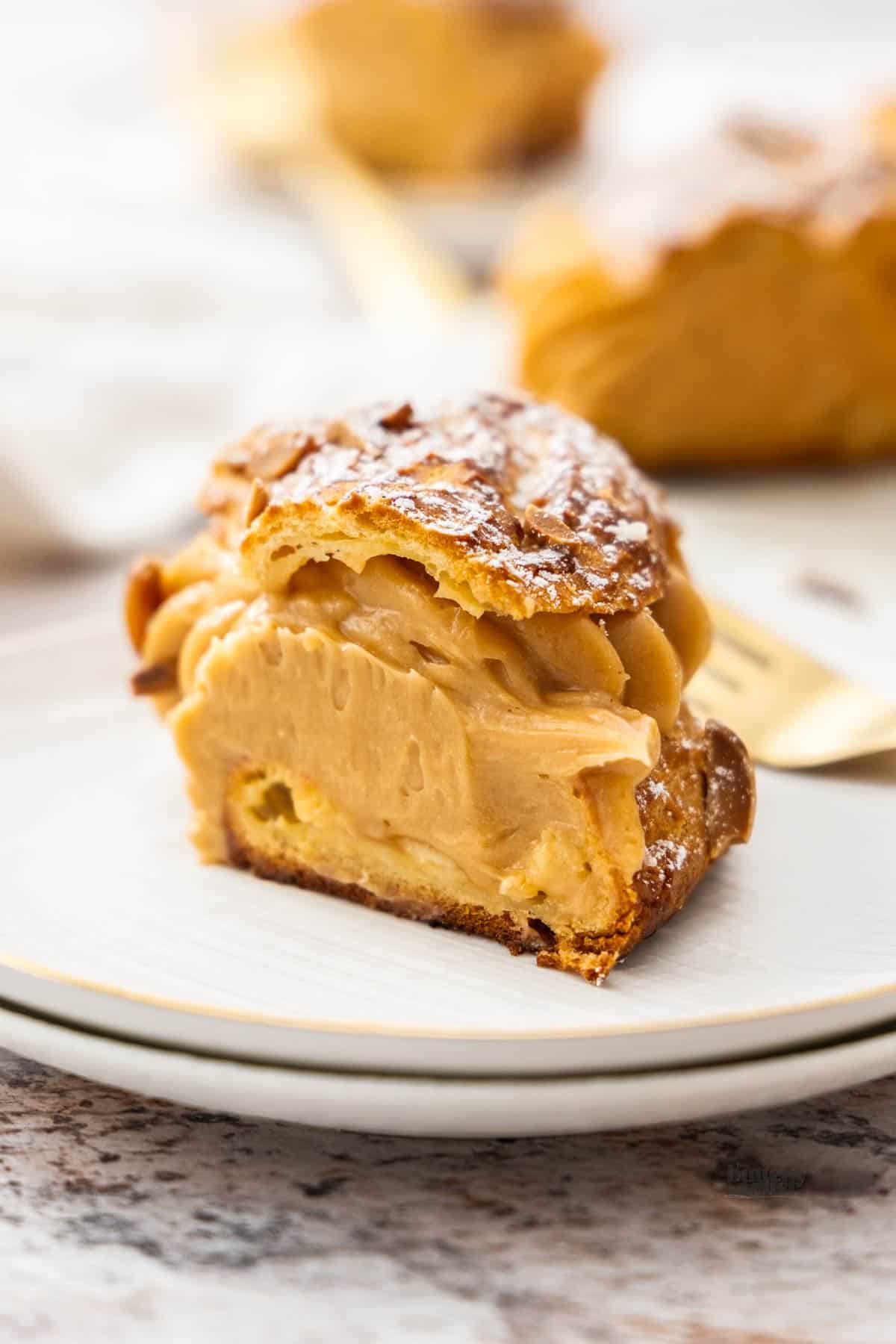
Paris-Brest is a classic French pastry made from pâte à choux (choux pastry) piped into a ring and baked until crisp and golden. Once cooled, the ring is sliced in half and filled with praline mousselline cream - a silky pastry cream enriched with butter and praline paste.
It was originally created to celebrate the Paris-Brest-Paris bicycle race, which is why it is traditionally shaped like a wheel. The result is a pastry that looks stunning but is made from traditional French pastry basics: crisp choux, praline, mousseline cream.
Ingredients & substitutions
- Bread flour works best for Paris-Brest - it's higher protein content provides better structure and helps to prevent cracks. You can use plain flour / all-purpose flour but you may find you get cracks, especially along the bases.
- Eggs: There is no exact quantity of eggs, as choux pastry goes by texture and consistency, which you'll need to judge by eye. I give you all the tips to do that below, and you'll get better at recognising it as you practice. For the pastry cream, you'll only need the yolks, but you can freeze egg whites and use them later for meringue or pavlova or beat one up and fold it into cake batter for a lighter, fluffier cake.
- Milk and water are used in combination for Paris-Brest. The milk just adds a little richness but too much will make the pastry too soft. Milk is also used in the pastry cream and glaze. Make sure to use whole milk for the best flavour.
- Cornflour, aka cornstarch, is a starch most often used to thicken things. Here, it is used to thicken the pastry cream further than the eggs can alone.
- Sugar: I use caster sugar (aka superfine sugar, not powdered sugar) in all my baking. It's the one I keep on hand. It's just granulated sugar slightly more finely ground and I like it because it dissolves more quickly and easily into batters and fillings. You can swap it for granulated here if you prefer just take care to make sure it dissolves fully into the milk before proceeding. I also use pearl sugar to top my Paris-Brest.
- Unsalted butter is the best option here. It contains less water and it also allows you to control the salt level. Since choux is not very sweet at all, it's very easy for it to become savoury if you choose salted butter over unsalted.
- Praline paste: This gives the filling its signature nutty flavour. A classic Paris Brest is usually made with hazelnut praline or hazelnut-almond praline, but you can use whichever you love most.
How to make Paris-Brest
Paris-Brest is easier to make than it looks. It can also be made in parts so there's no need to try to fit in the whole bake in one morning.
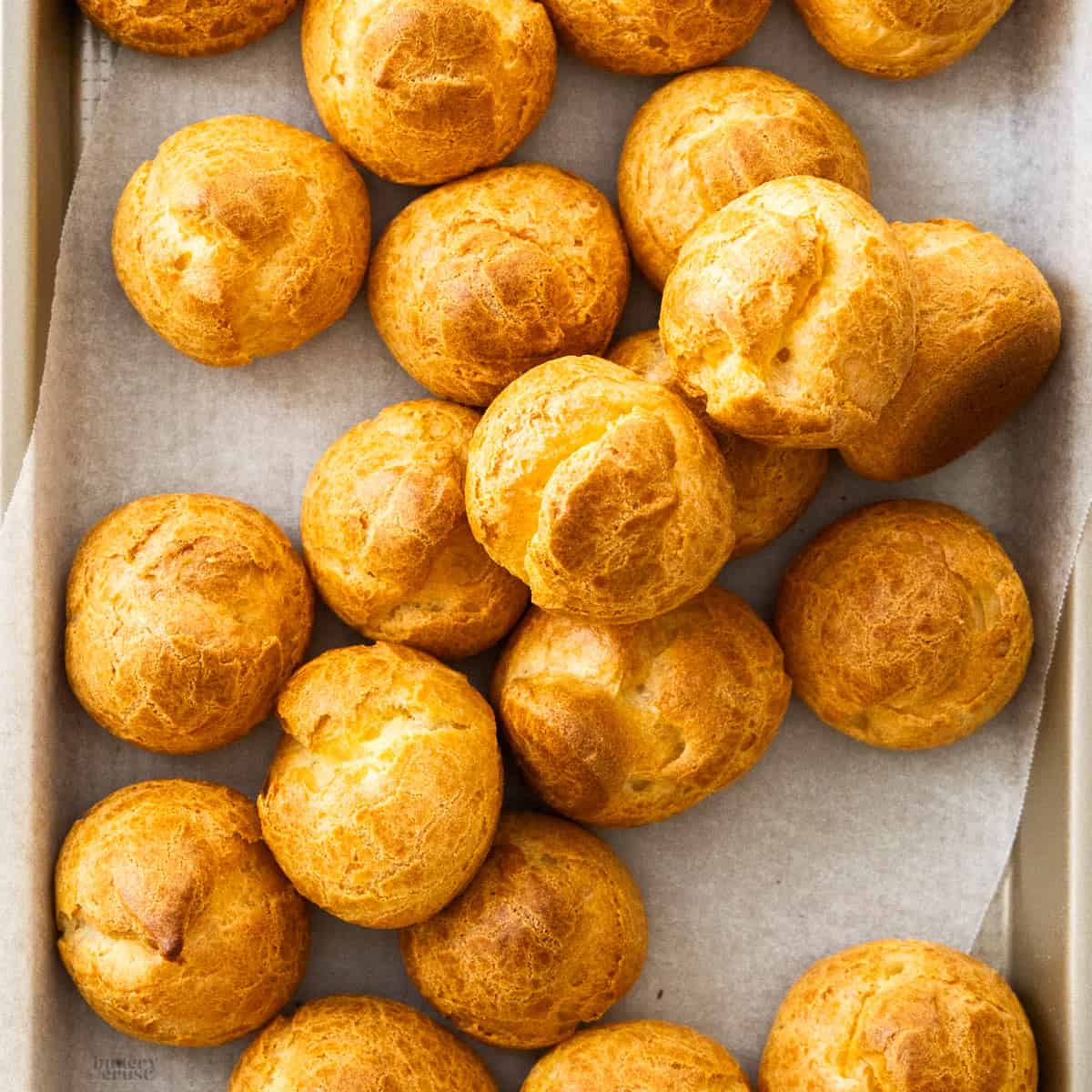
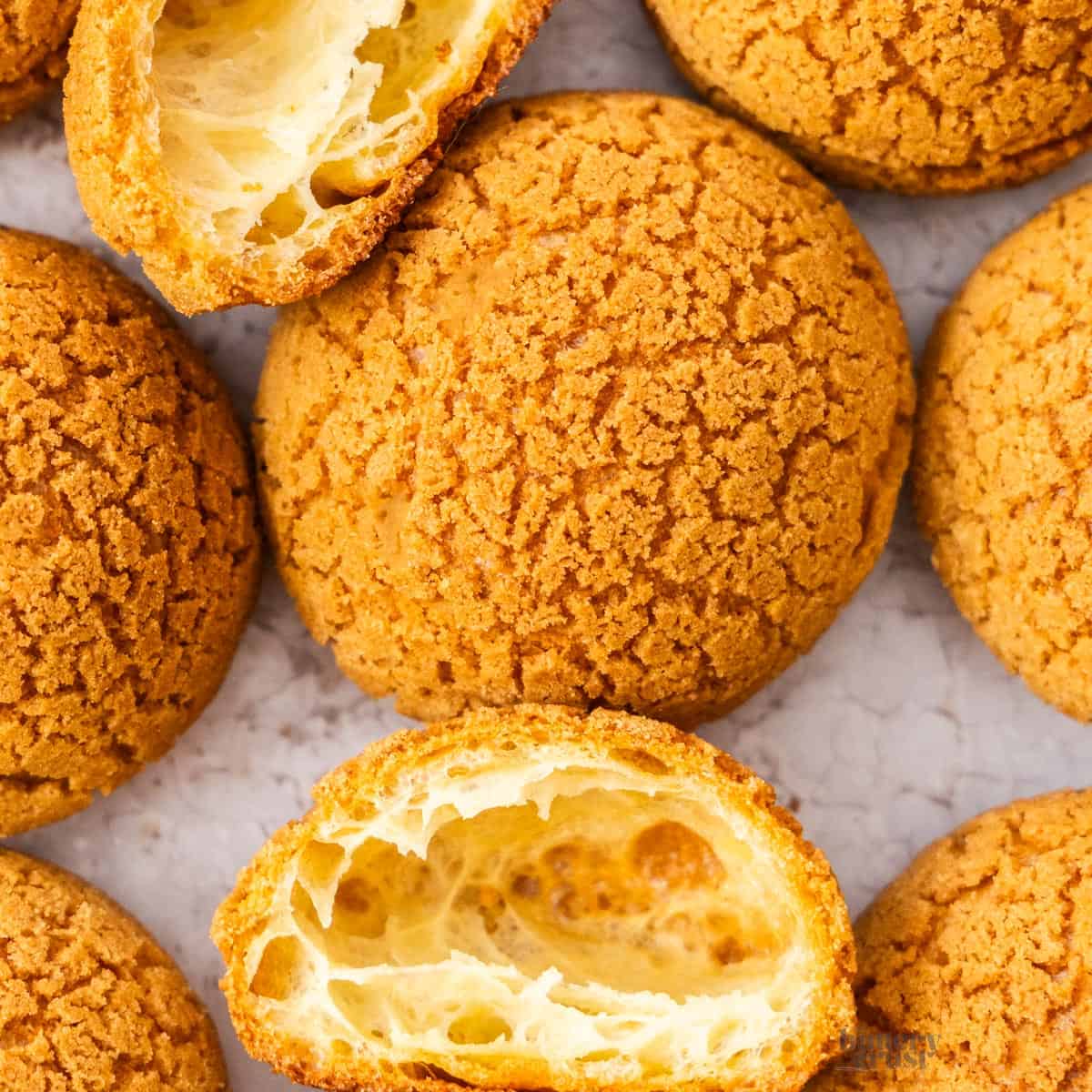
- Choux pastry - this easy choux pastry recipe turns out perfectly hollow inside and golden and crispy on the outside. It can be made in advance and reheated until crisp again before filling and serving. This recipe makes two choux rings but only enough filling for one - the other choux ring can be frozen for another time.
- Mousseline cream - it starts with a base of vanilla pastry cream which is later added to whipped butter. Pastry cream can be made 2-3 days in advance, as can the whole mousseline cream recipe.
- Praline paste - this can be made well in advance - weeks or more - or you can use store-bought.
⬇️Jump to the recipe card for full quantities and instructions.
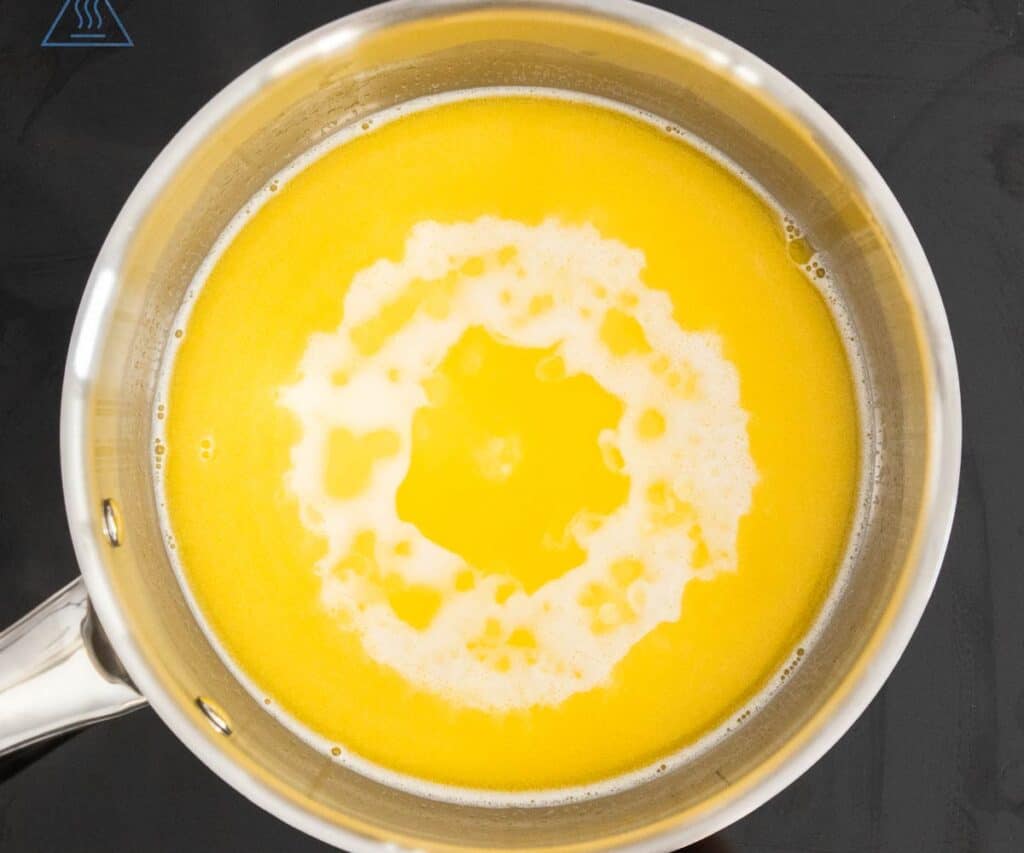
Melt the butter
(2 minutes) Start by heating butter, water, milk and sugar in a medium saucepan over medium heat. Stir until the butter melts.
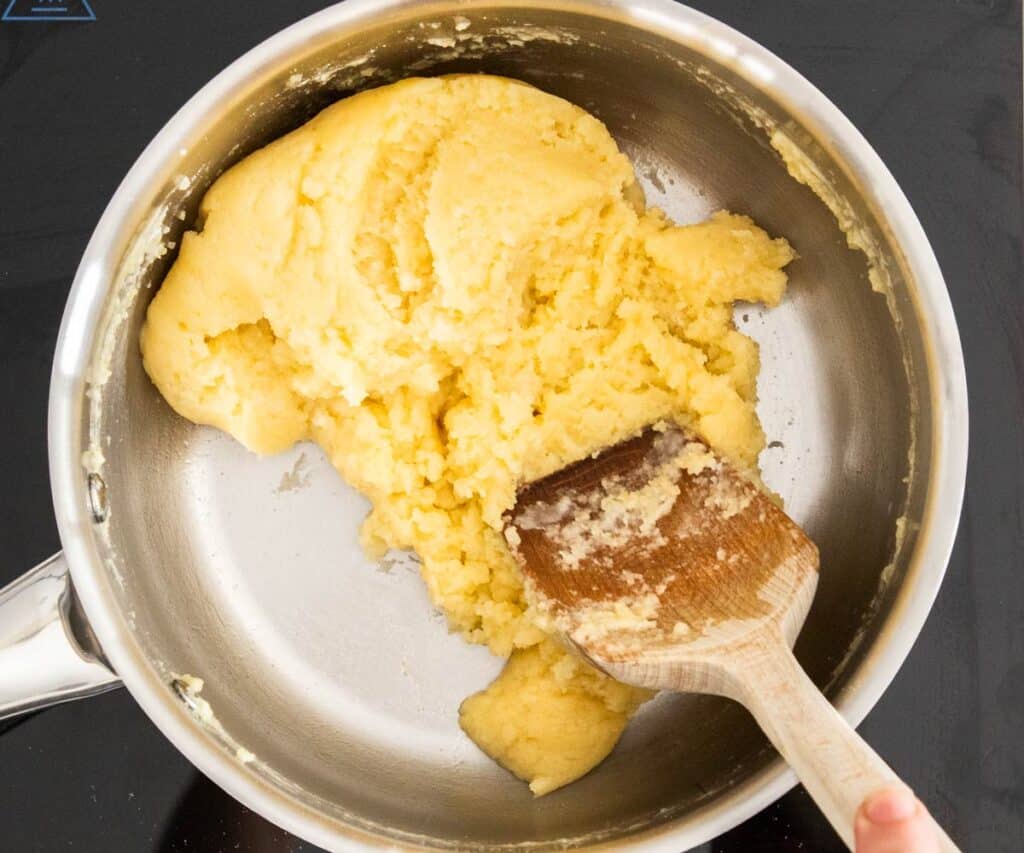
Add the flour
(1 minute) Let it come to a bubble and, as soon as you see the first bubbles appear, take it off the heat. Add the flour and use a wooden spoon or silicone spatula to mix it in.
My preferred option is actually to put the flour into the mixing bowl of the stand mixer, then turn the mixer on low as I pour in the milk. I never find lumps of flour in it this way.
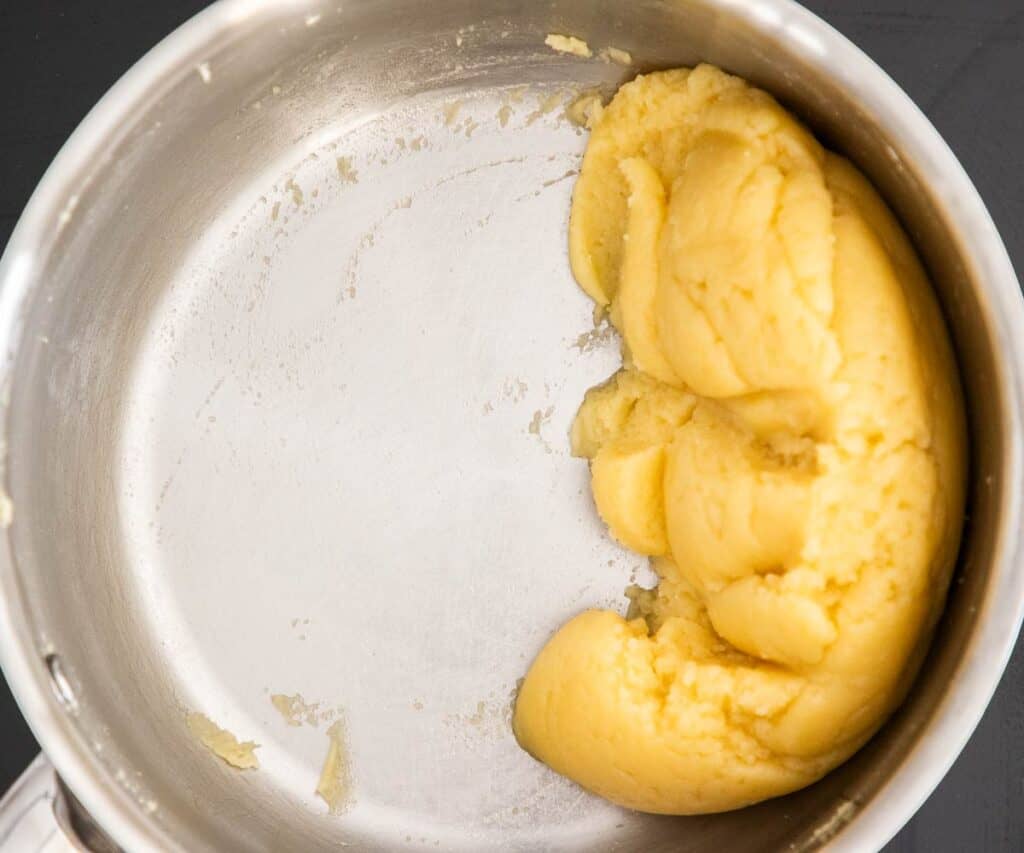
Cook the panade
Cook the panade
(2 minutes) Return the pan to the stove over low heat and cook, stirring and folding constantly for 2 minutes.
"You'll see a film..."
Some recipes will say "you'll see a film on the bottom of the pan" - unfortunately this leaves it too open to interpretation. The type of pan will affect whether you see that film or not and you might see a film but then how obvious should it be and exactly what does it look like. So, just keep the heat on low and cook for 2 minutes moving the dough around the pan constantly.
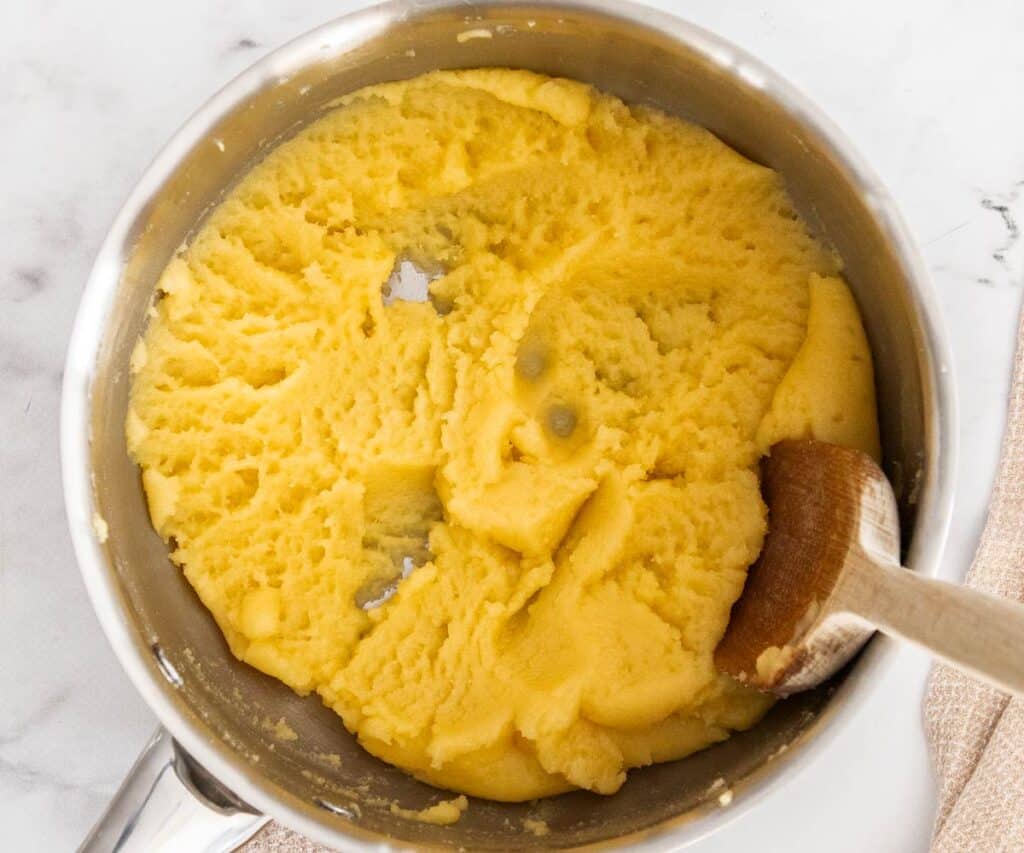
Cool the panade
(2-10 minutes) You only need to cool the dough long enough that the eggs won't scramble when you add them.
By hand: Press the dough out into a flat layer on the base of the pan and let it cool for 10 minutes.
With a stand mixer: Transfer the dough to the stand mixer and press it up the sides of the bowl. Let it cool for 5 minutes.
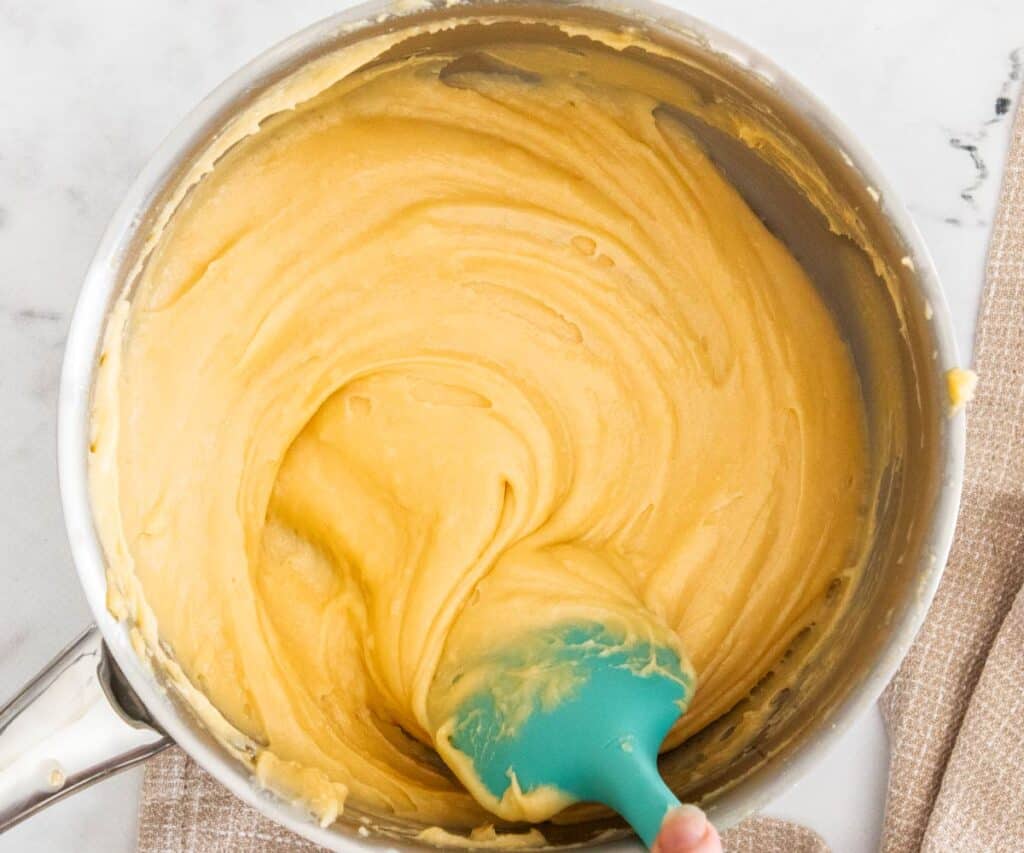
Add the eggs
(3 minutes) Lightly beat 4 eggs in a small jug. Add one quarter of the beaten eggs to the dough, then beat with a wooden spoon or on low speed in the stand mixer until it's completely incorporated. Add the next two portions the same way. When you get to the final quarter of the eggs, add them just a little at a time, beating each in until fully incorporated, and the choux dough is ready (see below).
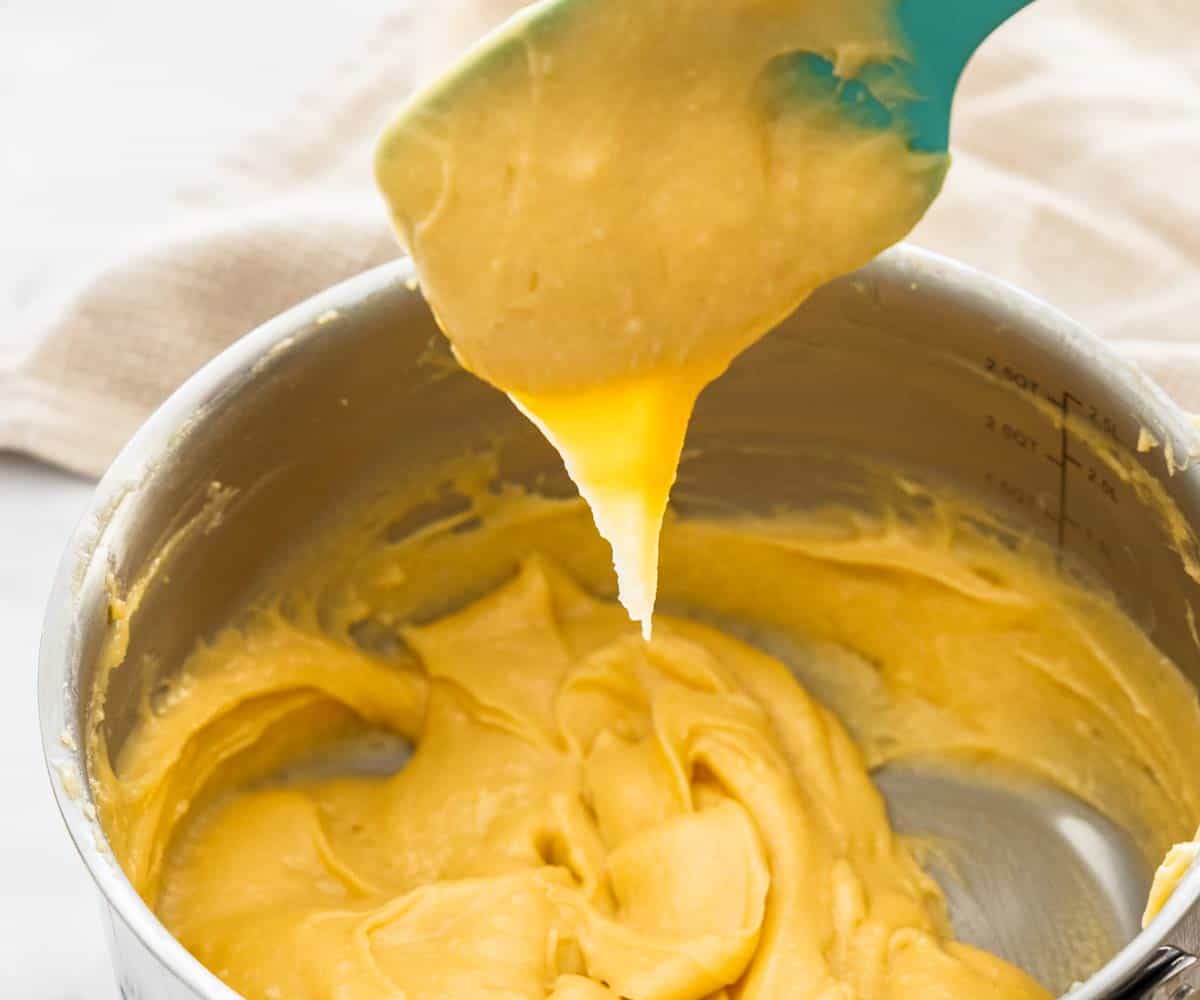
There are a few visual cues to look for to check if your choux pastry is ready;
- Smooth and glossy: The dough will be very smooth and have a slight sheen to it.
- The spoon test: Dip a spoon or spatula into the dough and it should reluctantly fall off the spoon, leaving a "V" of dough hanging.
- The "V" test: As above when you dig the spatula or paddle attachment into the dough then lift it straight up, the dough should form a fairly neat "V".
- The trough test: When you draw a line in the dough with your finger, it should form a trough with straight upright edges and hold the shape.
- Pipeable but holding consistency: It should be fluid enough to pipe but not enough to spread out. You can test this by just dropping a small amount onto a plate with a spoon and seeing his well it holds its shape.
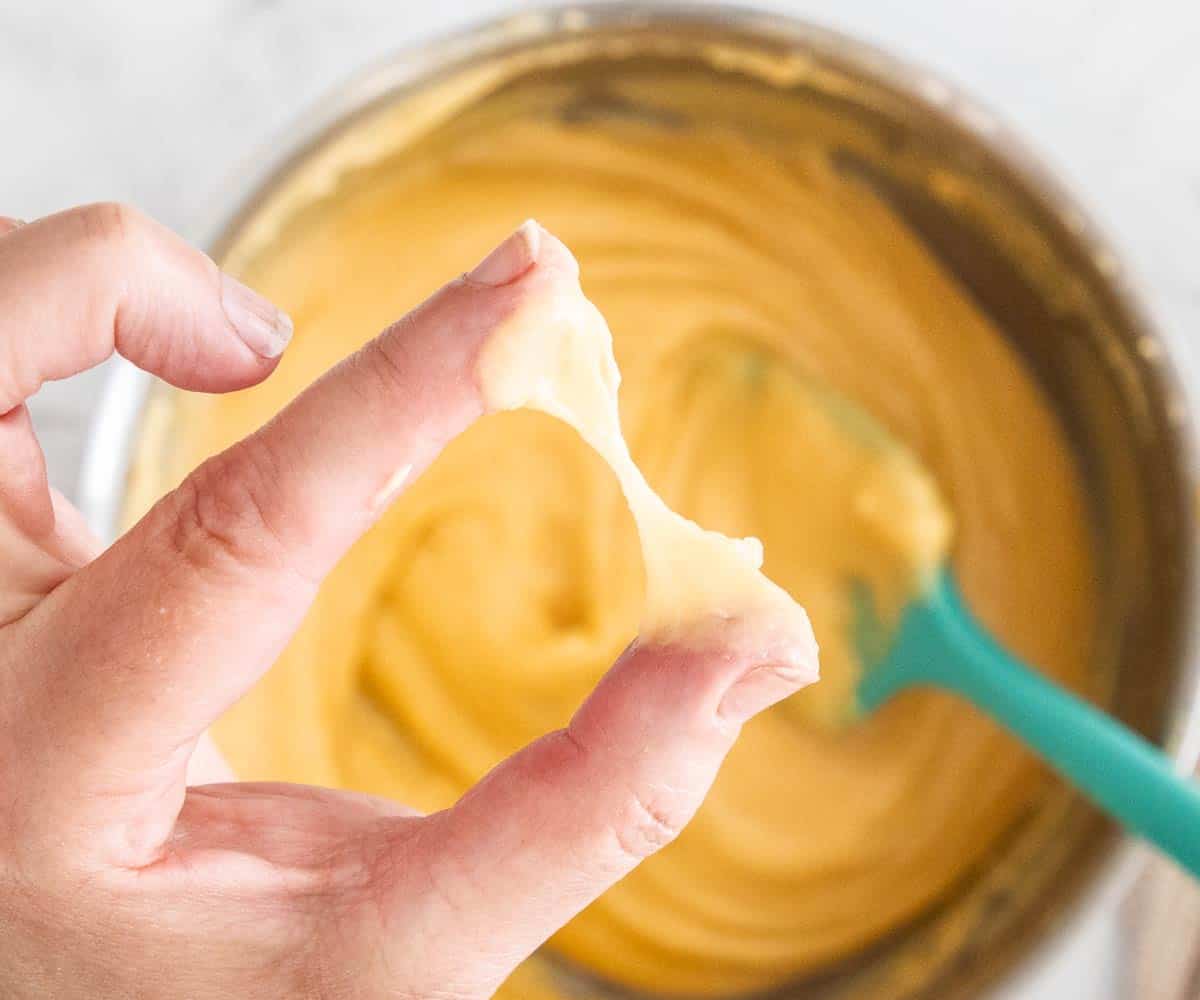
- The pinch test: Pinch a portion of dough (about 1cm / ½ inch thick) between your thumb and finger. Slowly draw your thumb and finger apart - you need to get to 2 inches with at least a string of dough still intact.
Transfer to a piping bag
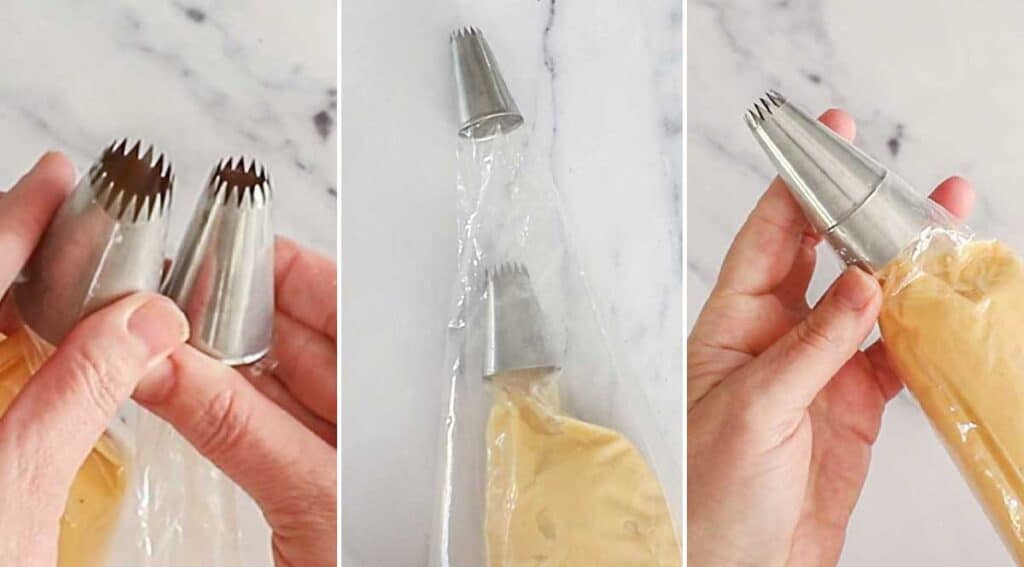
(5 minutes) One piping tip will work but if you have two different sized French star piping tips (one at about 1cm wide and the other about 1 ½cm), you'll get the best result.
Insert each tip into a separate piping bag. Fill the bag with the larger tip with the choux dough then insert that piping bag inside the one with the smaller piping tip. This will allow you to pipe the bottom rings, then remove the small tip easily with the large tip ready to go.
Troubleshooting choux dough consistency
The amount of eggs you need is dependent on numerous factors including the protein content of the flour you're using, how much moisture was cooked out when making the panade, the exact size of your eggs and even the way you measured your ingredients. This is why it's impossible to give an exact quantity of eggs. So, what do you do if the consistency looks wrong?
- Too firm/dry: Beat another egg and add just a little at a time to the dough/batter beating it in well before adding more. Keep going until you get the right consistency.
- Too loose/wet: Don't add flour as your choux pastries likely won't work out. Part of the process of making choux properly is cooking the flour in the panade stage. This step gelatinizes the starches in the flour making them strong and allowing them to trap steam which creates that lovely hollow centre. If your mixture is too loose, you'll need to make a second batch of panade, then add it a little at a time to your loose mixture, beating it in until you have the right consistency.
Make a template
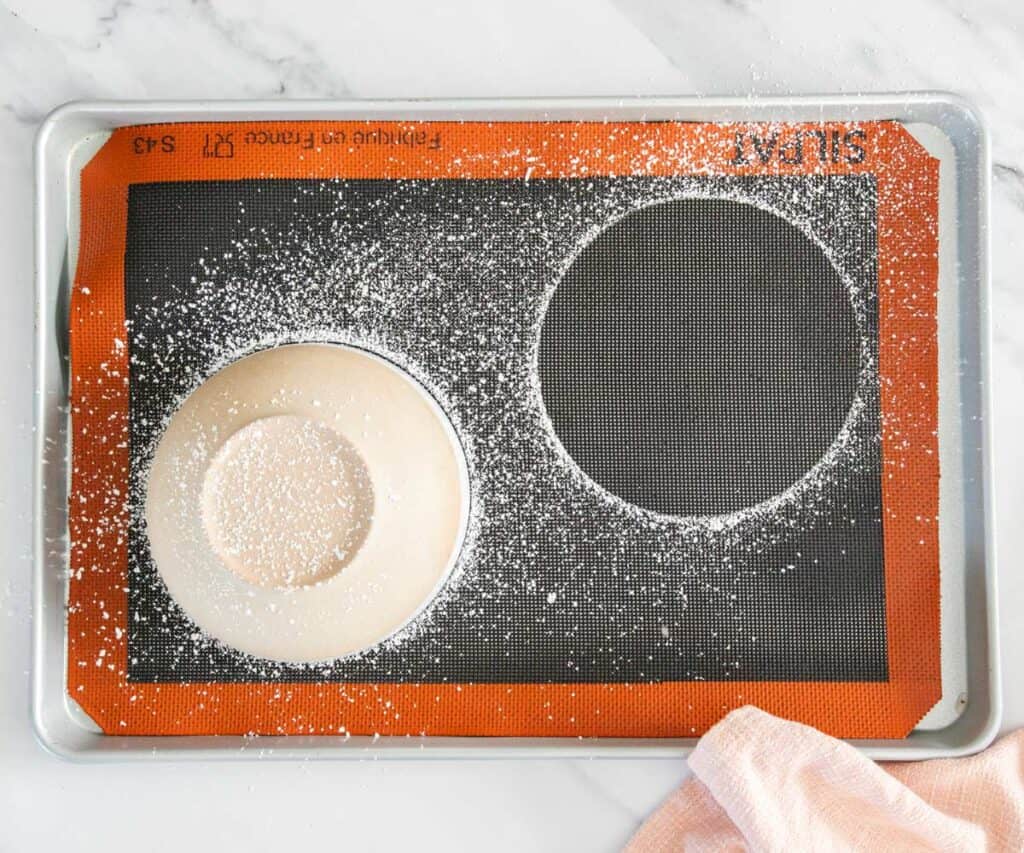
(1 minute) Place two 15cm/6in bowls or plates upside down on a lined baking sheet, and dust icing sugar over the top. Take the bowls away and you you're left with perfect ring templates.
This recipe will make two choux rings but only enough filling for one. The other can be frozen for another time.
Pipe the lower rings
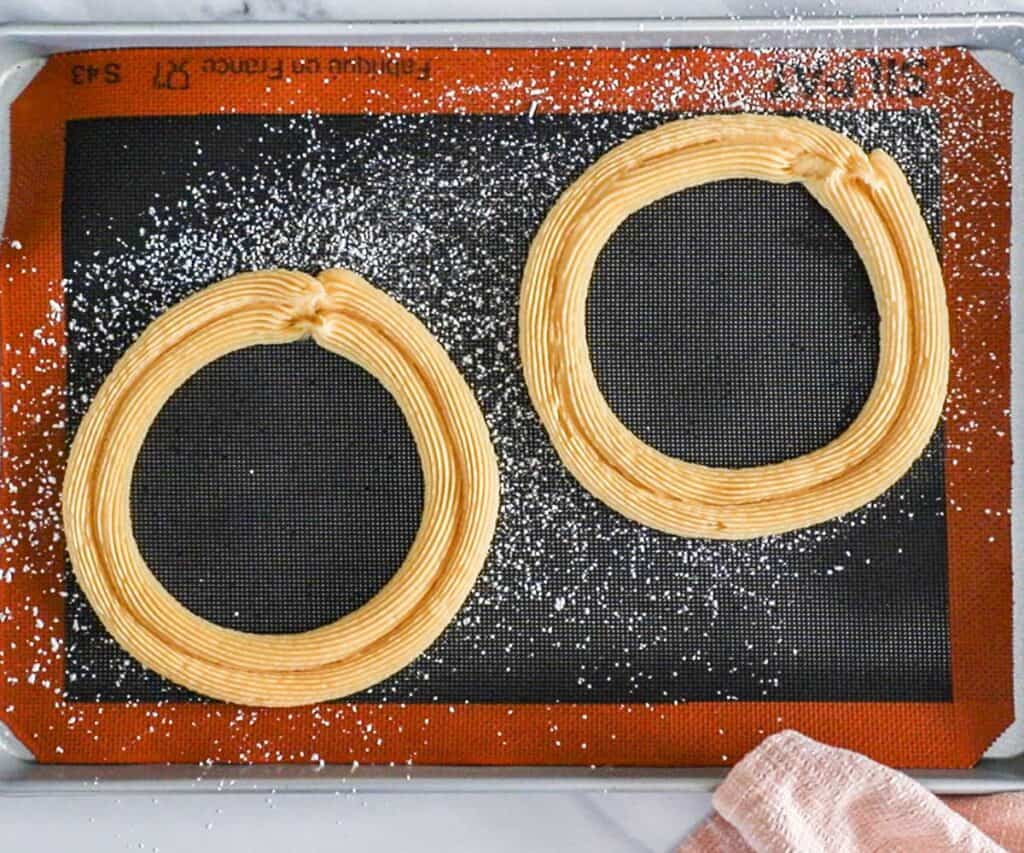
(2 minutes) Using a ~1cm French star piping tip, pipe a ring of dough on the inside of the ring template, then a second one around that. Pipe two sets of these.
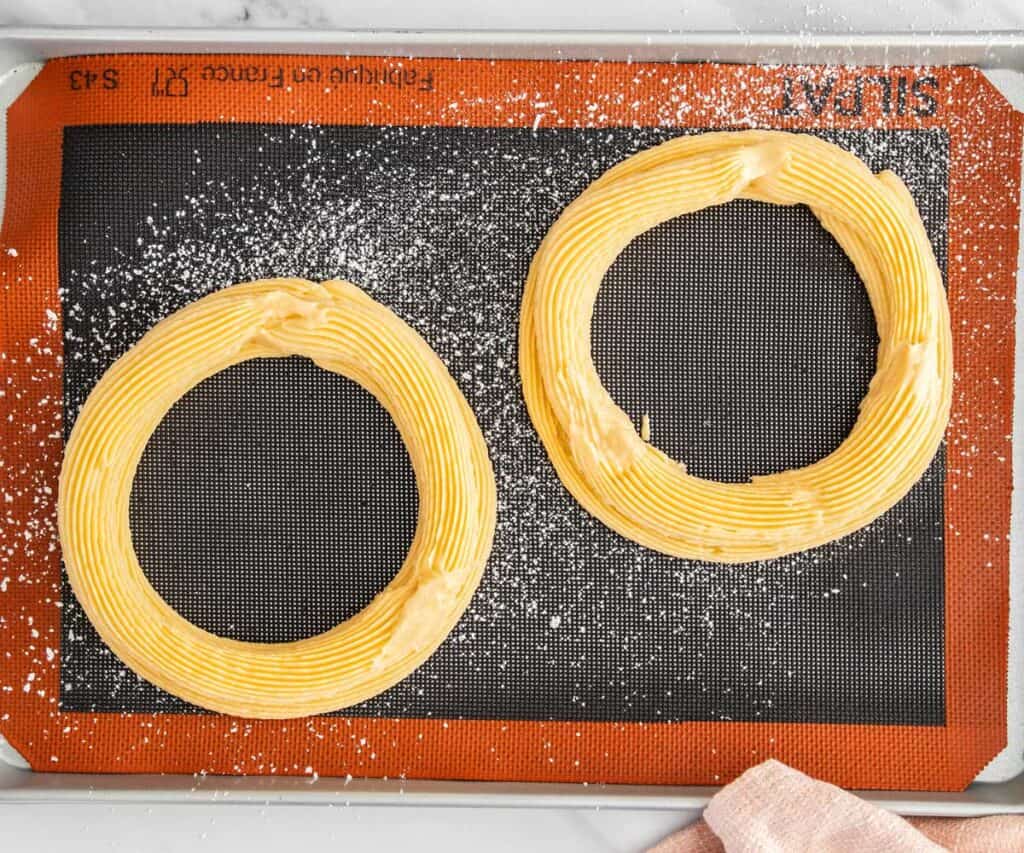
Pipe the top rings
(1 minute) Using a 1 ½ cm French star piping tip (just remove the outer piping bag if you set them up like step 6 above), pipe a ring of dough on top and around the centre of the first two rings (so you have one wider ring on top of two thinner rings below).
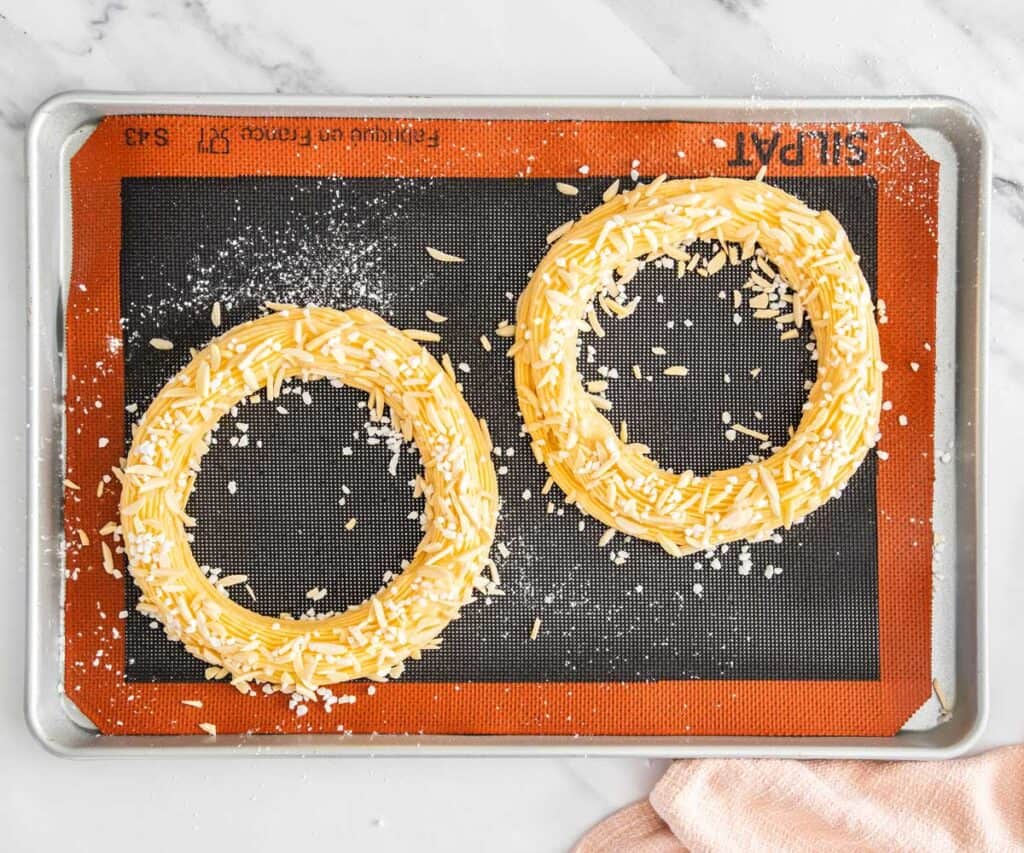
Add the crunch
(1 minute) Sprinkle over almonds and pearl sugar (optional).
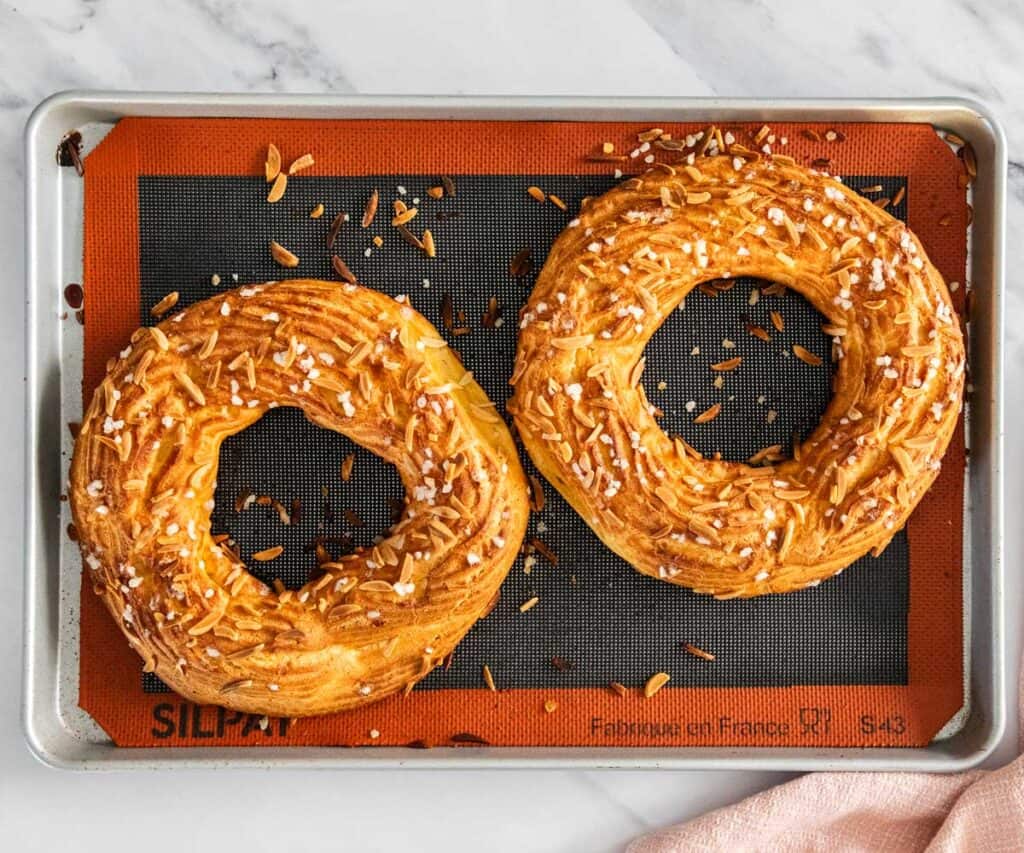
Bake
(40 minutes) Bake for 35-45 minutes depending on your oven until the Paris Brest rings are deeply golden brown and crisp.
Once baked, your Paris Brest rings should be about 20cm/8in wide.
Save this post!
No spam, I promise 😊
The praline mousseline cream
The nutty, creamy filling inside is made from a combination of mousseline cream and praline paste, and mousseline cream itself is a combination of whipped butter and pastry cream. You can make it 2-3 days in advance of serving or start it when your choux pastry is resting.
- Make a basic thick pastry cream,
- Let it chill and set,
- Then beat it into whipped butter.

Heat the milk
(4-5 minutes) Start by warming the milk and sugar over medium heat until it starts steaming heavily. Don't bring it to a boil.

Whisk the egg yolks and cornstarch
(1 minute) In a mixing bowl, whisk together the egg yolks, cornstarch and some reserved cold milk.

Temper the eggs
(1 minute) Tempering means to bring the temperature of the eggs up slowly and we do this so that they don't just scramble. By mixing as we slowly add the hot milk, the eggs fully incorporate smoothly into the hot milk to turn into a silky smooth custard. Make sure to drizzle the hot milk in slowly as you stir with a whisk.
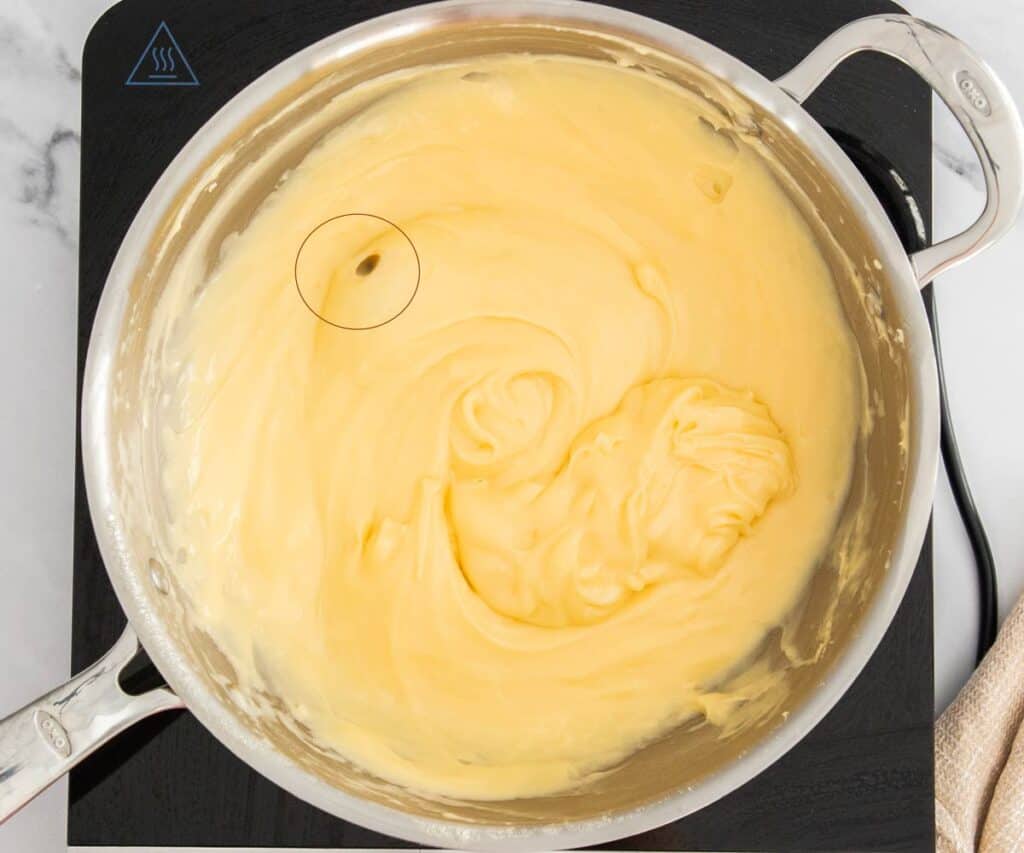
Cook the custard
(7-8 minutes) Pour it all back into the saucepan and heat it again over medium heat, gently stirring constantly with a whisk to prevent lumps. As soon as you see large bubbles breaking the surface, stir the custard for 1 full minute. This helps to activate the cornstarch. If you don't let it boil like this for a minute, once it cools, the pastry cream will just become very runny again.
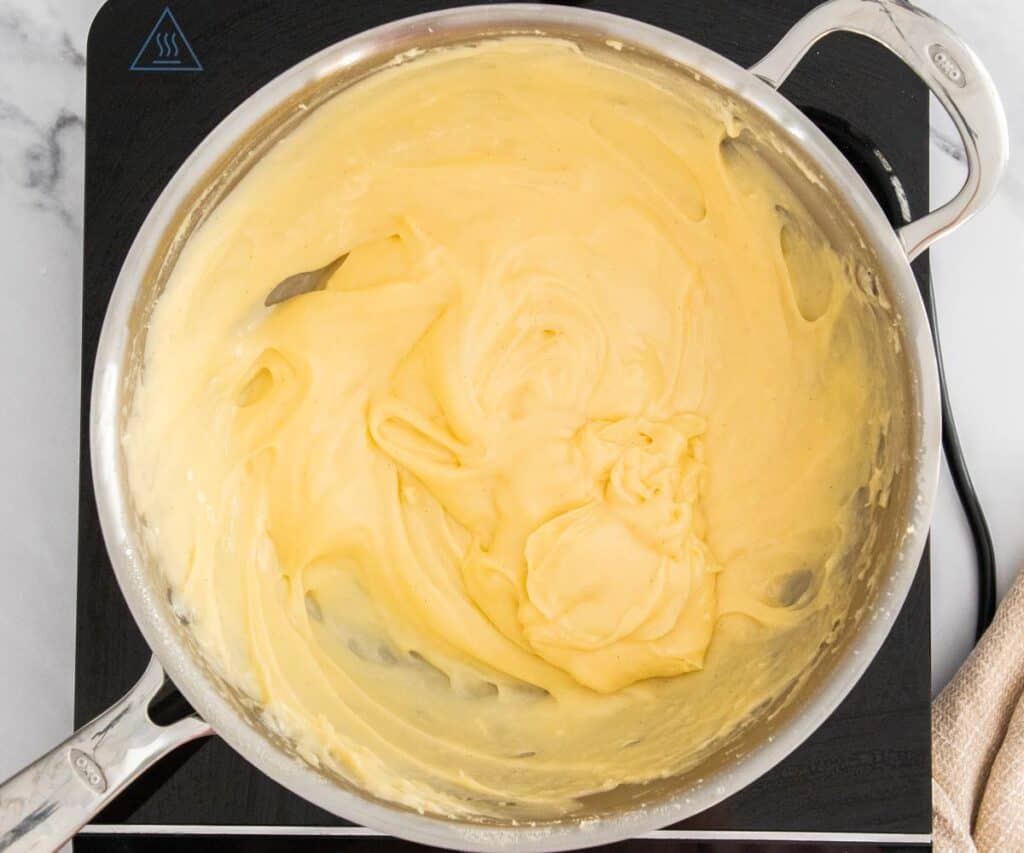
Add vanilla
(30 seconds) Whisk in the vanilla extract until it's fully combined. It will be very thick and won't easily settle in on itself.
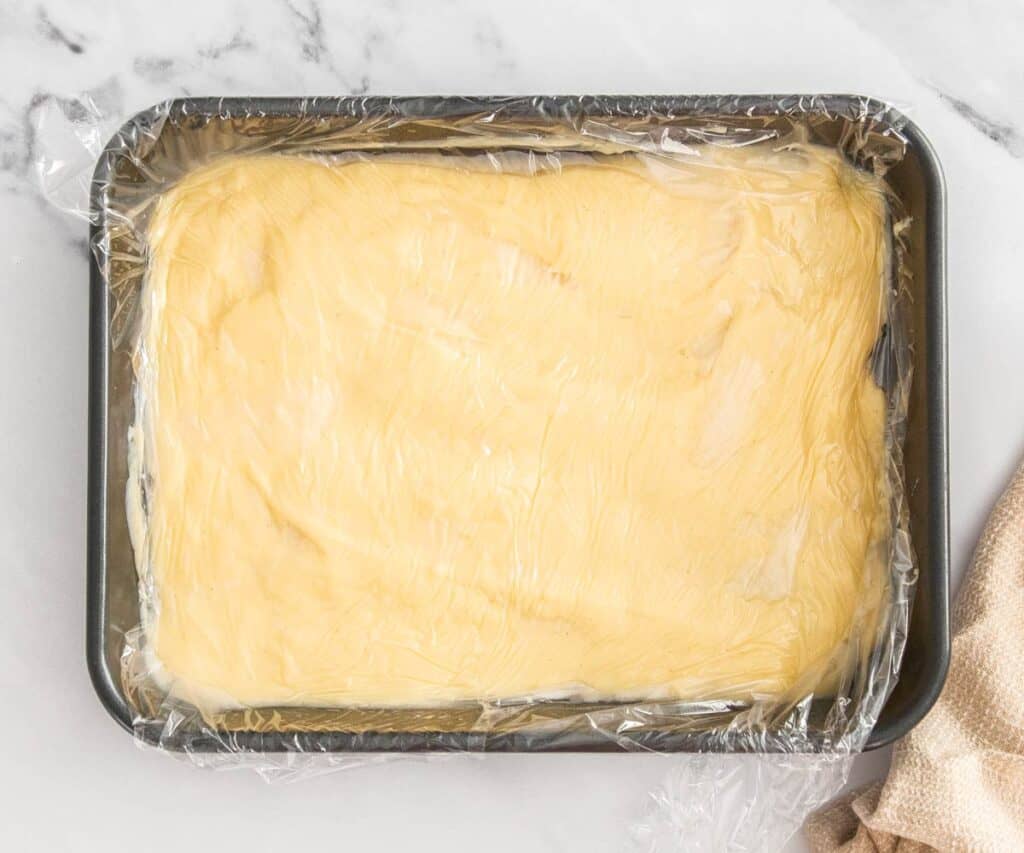
Chilling the pastry cream
(2-3 hours) Pour your pastry cream through a strainer into a clean bowl or jug, then cover it tightly with plastic wrap pressed tightly to the surface. The pastry cream can form a skin if air gets in. Chill it until cold. The larger the vessel, the quicker it will chill and you can speed it up in the freezer but don't let it freeze solid.
Once the pastry cream is made, use it within 3 days. It will be quite firm when it comes out of the fridge, a bit like set jelly. The pastry cream for praline mousseline cream recipe is thicker than a standard pastry cream so that the finished cream holds its shape better.
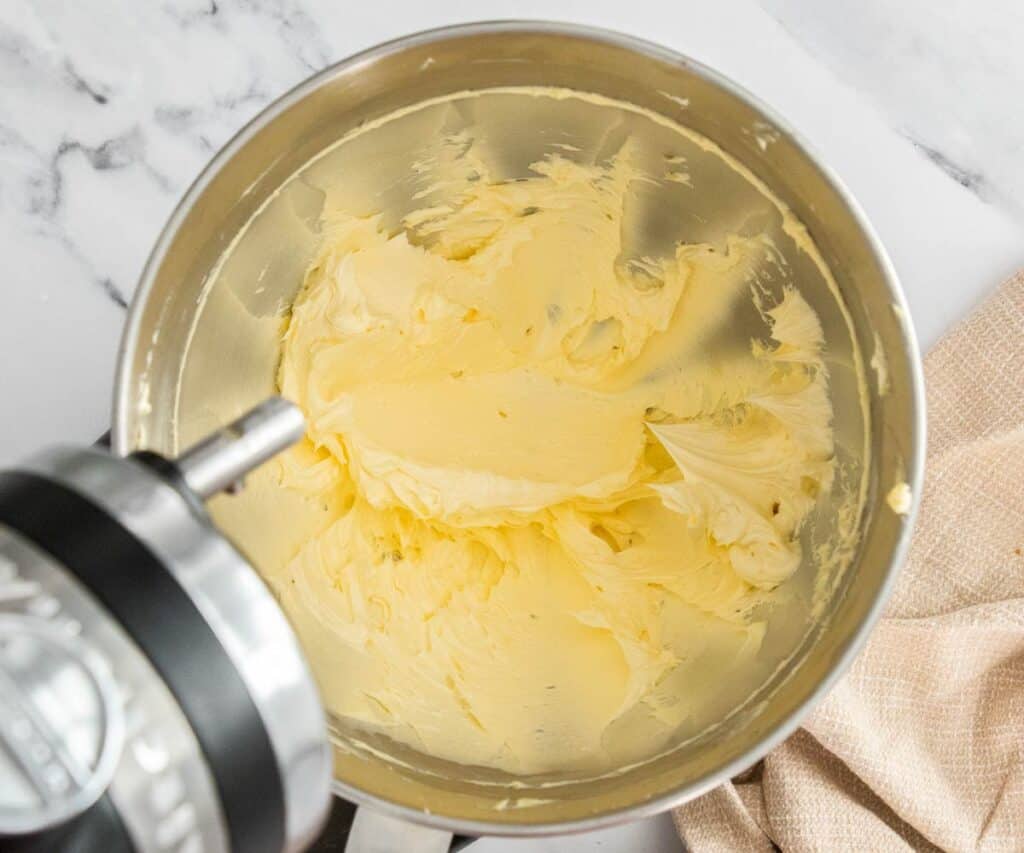
Beat the butter
(1-2 minutes) Once the pastry cream is cold and set, you can turn it into crème mousseline au praline. Start by beating the butter until smooth and creamy. Scrape down the sides of the bowl as you go.
*You'll get best results if you let the pastry cream come to cool room temperature first.
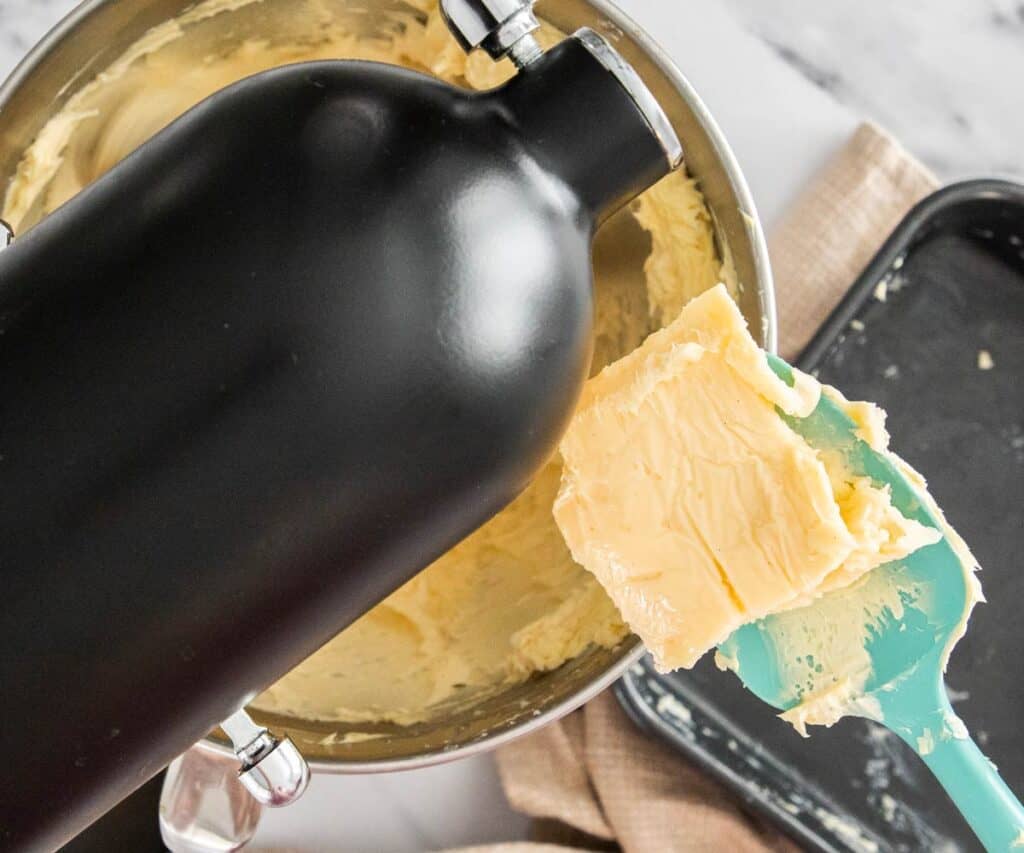
Add pastry cream
(2-3 minutes) With the mixer on low-medium speed, add the pastry cream one spoonful at a time, letting it fully beat in before adding the next.
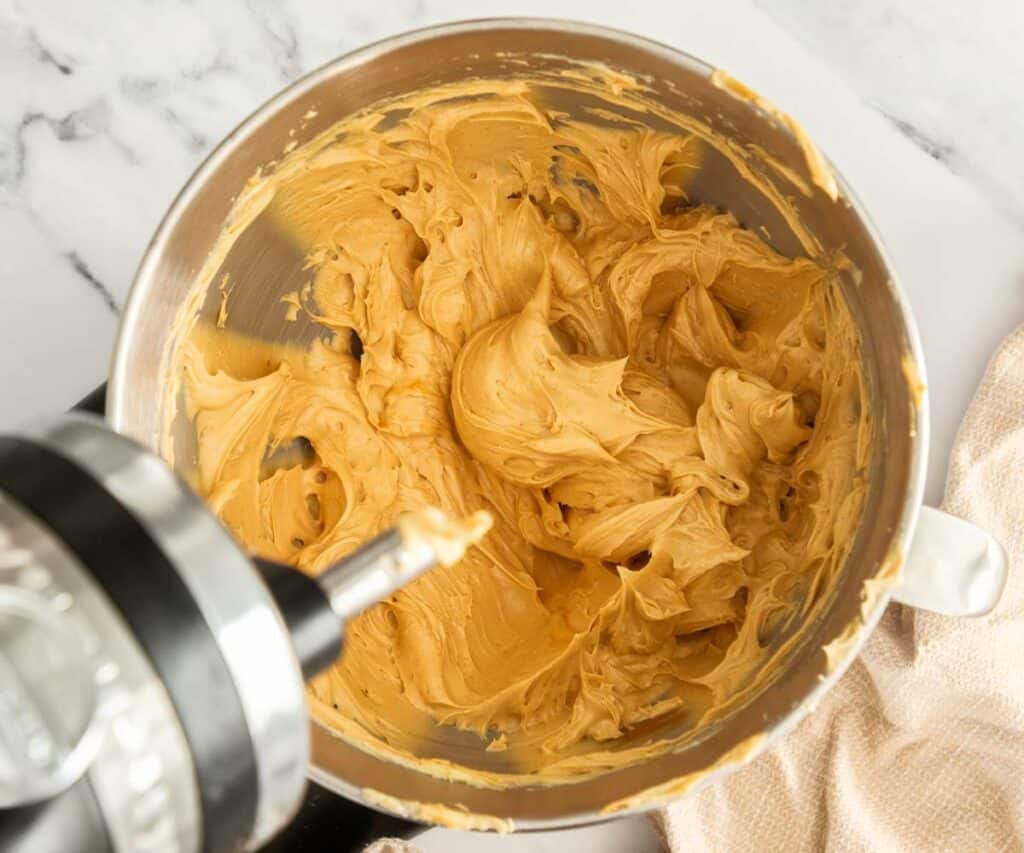
Add the praline paste
(1 minute) Beat the praline paste into the mousseline cream until just combined.
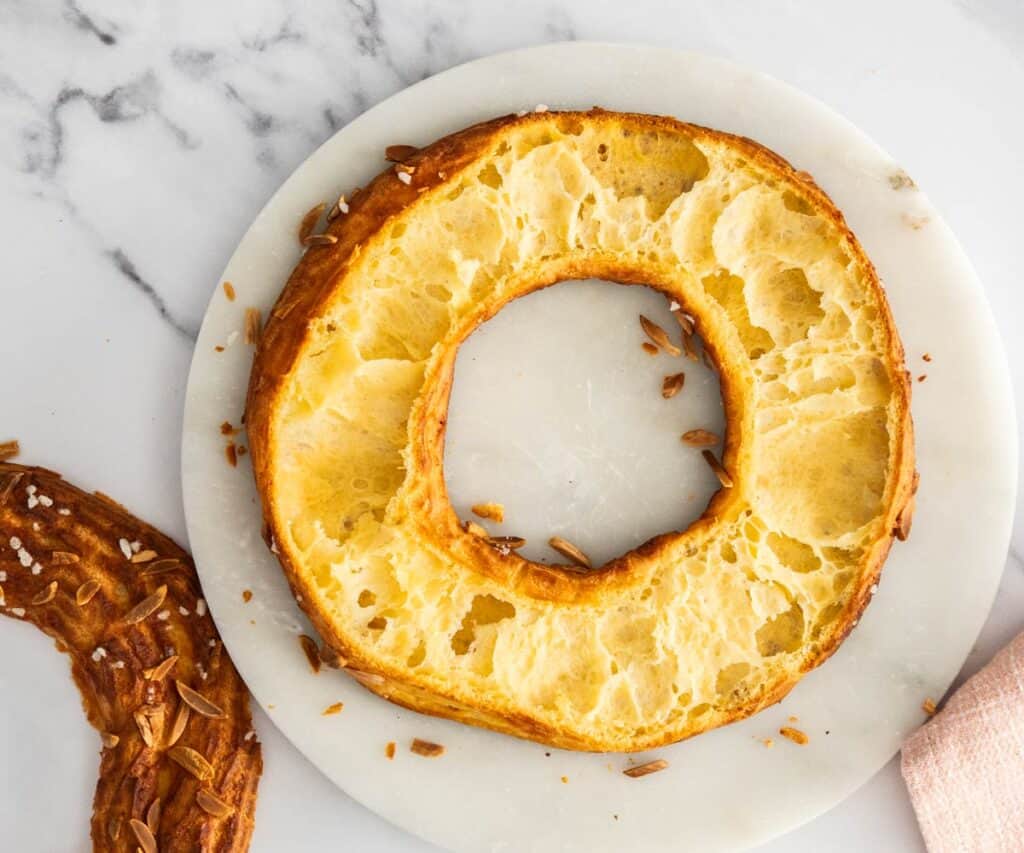
Slice the choux ring
(1 minute) Once cooled to room temperature, slice the ring in half horizontally so you have two rings.
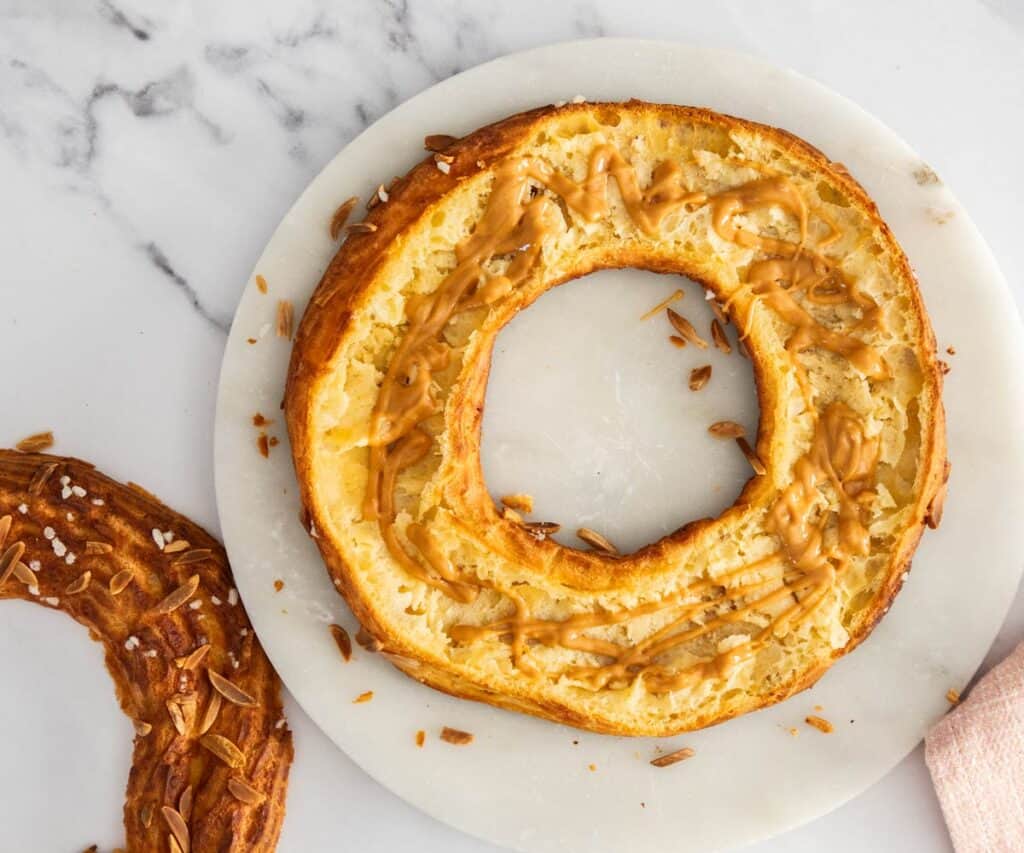
More praline paste
(1 minute) Optional, but highly recommended: drizzle a tablespoon or two of praline paste over the choux ring base.
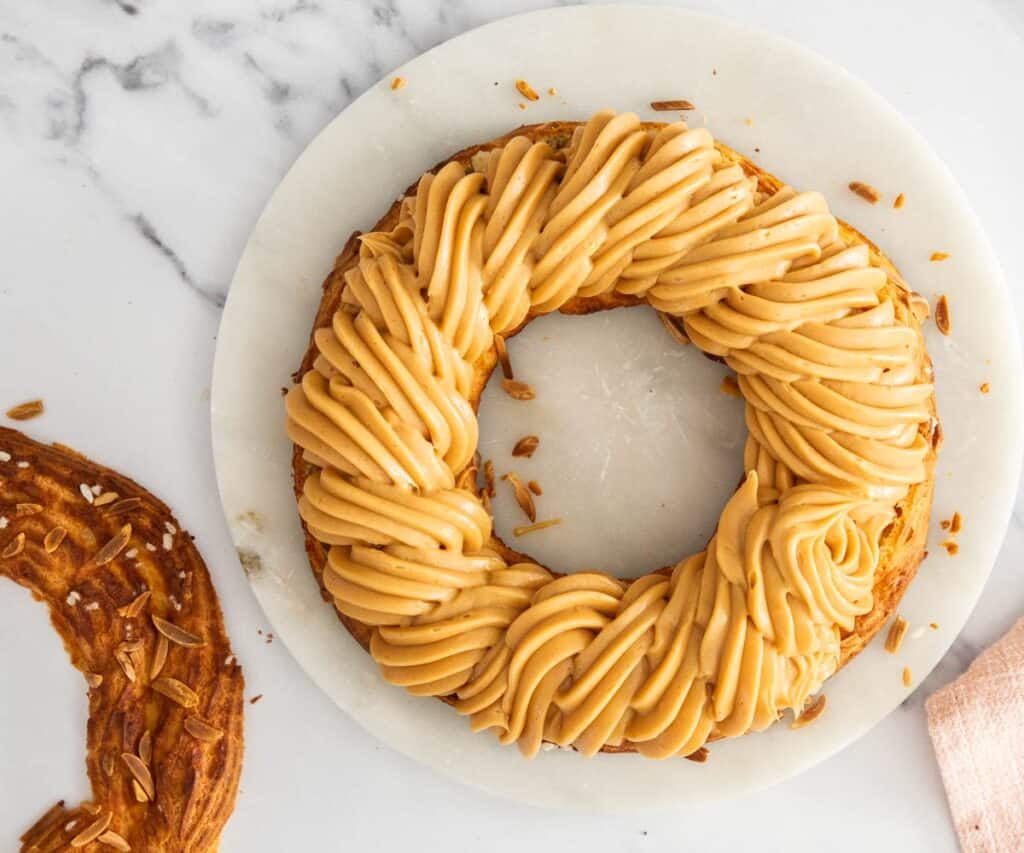
Pipe in the praline cream
(5 minutes) Transfer your praline mousseline cream to a piping bag with any piping tip you like and pipe big swirls of it over the choux ring - you should use it all up on one ring, such is the decadence of a classic Paris Brest. Then simply place the top on, dust with icing sugar and serve.
Tips and tricks
- Weigh your ingredients for the best results.
- Bake the choux until it's properly golden: Pale choux pastry is normally underbaked and may collapse or turn soggy quickly.
- Don't open the oven too early: Choux relies on steam to puff. Opening the oven door too early can cause the choux to deflate.
- Let the choux cool completely before filling: Warm choux will soften or melt the mousseline cream filling.
- Make sure mousseline ingredients are the same temperature: Cool room temperature pastry cream and butter will combine more smoothly.
- Use a piping guide: Place a bowl or plate roughly 15cm/6 inches wide on your baking sheet and dust icing sugar over the top. Take the bowl away to leave a perfect outline.
- Fill close to serving: Paris-Brest is at it's best when the choux is crisp and the filling freshly piped.
- Use a serrated knife for clean slices: This will make it easier to slice without squashing the slices.
😥 Troubleshooting
The choux pastry was most likely underbaked, or the oven door was opened too early. Make sure it is deep golden, crisp and dry before taking it out of the oven.
Choux pastry will soften over time, but you can re-crisp it in an oven preheated to 180C/350F for 10-12 minutes. It may also be soft if you underbaked it or filled it too far ahead of time.
The panade may not have been cooked long enough on the stove, the eggs may have been added too quickly, or the dough may have been too loose. Add the eggs gradually and stop once the dough is glossy and pipeable.
This can happen if the pastry cream and butter are two different temperatures. Let them both come to a cool room temperature, then whip until smooth. If it looks slightly curdled, whip a little longer.
The pastry cream may not have been thick enough, the butter may have been too warm or the finished cream may just need a chill before piping. Chill briefly, then rewhip again if needed.
Variations
- Mini Paris Brest: Instead of one large ring, pipe smaller, individual rings. They're lovely for dinner parties or entertaining and easier to serve neatly.
- Almond Paris Brest: Use an almond praline paste which has a sweeter, softer nut flavour.
- Chocolate Praline Paris Brest: Add a little melted chocolate or cocoa to the praline filling for a chocolate-hazelnut vibe.
- Extra crunch: Sprinkle chopped toasted nuts or crushed praline over the mousseline before adding the top layer of choux.
Storage
Paris-Brest is best served on the day it is made, while the choux pastry is still crisp and the mousseline is fresh and creamy.
You can make the components ahead of time and assemble closer to serving. The choux ring can be baked ahead and stored unfilled in an airtight container, while the praline mousseline can be made in advance and stored in the fridge.
Once filled, store Paris Brest in an airtight container in the fridge. The choux will soften, but it will still taste delicious. For the best texture, assemble as close to serving as possible.
Unfilled choux (and the second ring) can be frozen. Let it cool completely, wrap well in plastic wrap and freeze. Thaw then re-crisp briefly in the oven to help bring back some crispness, before cooling and filling.
Making it ahead of time
My preferred method to make Paris-Brest ahead of time is to bake the choux ring a day or two before serving. Make the pastry cream the day before serving. On serving day, re-crisp the choux ring in the oven, the let it cool. As close to serving as you can manage, turn the pastry cream into praline mousseline and assemble.
Tools I use
These are the tools I use with links, in case you need them.
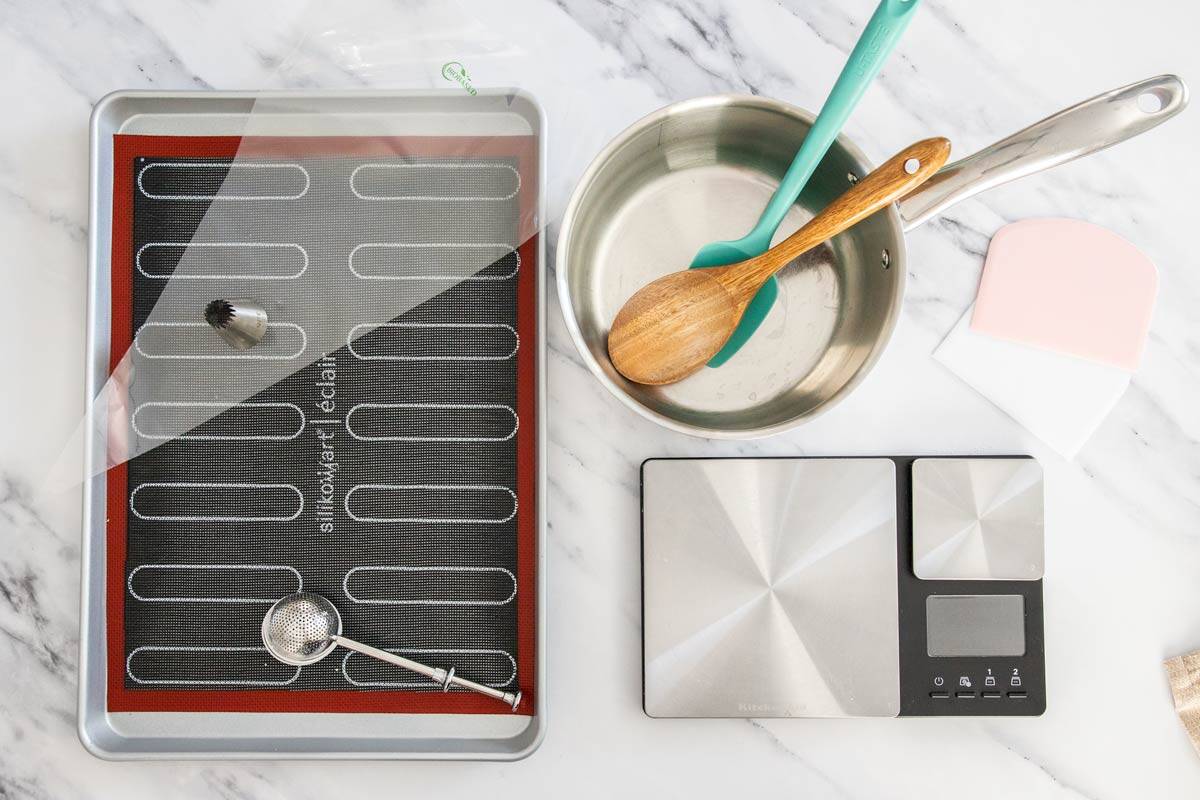
- Medium heavy-based saucepan: The heavy base makes for even heating.
- Stand mixer: I use a Kitchen Aid stand mixer for beating in the eggs. You could also beat the choux by hand. I also find it really handy for beating the flour in before returning the panade to the pan.
- Silicone spatula: So useful for all baking.
- Plastic bench scraper: These are so useful for everything from scraping down the bench to pushing dough down in your piping bag to pressing air bubbles out of the dough before loading it into your piping bag.
- Piping bags: For piping the paris brest.
- Large French star piping tip 1 ½cm, and smaller piping tip (1cm)
- Silicone mats: I find a silicone mat (not necessarily perforated) is great for providing a barrier between the hot pan and the choux pastry but you can just use baking paper.
- Half sheet pans: These are the size I always use for my baking.
❓FAQs
Paris-Brest is a classic French pastry made from a ring of choux pastry, filled with a silky pastry cream called crème mousseline, mixed with praline paste. It's shaped like a wheel and usually topped with almonds.
Paris-Brest is creamy, nutty, caramelly and buttery. The texture of the choux ring is crisp, with a crunch from almonds and inside is rich and silky-smooth.
No. Pearl sugar adds crunch and a pretty finish but you can leave it off, simply topping the choux with almonds instead.
You can, but it's best to make the components then assemble it as close to serving as possible. Once assembled, the choux will gradually soften.
Yes. Homemade praline paste has a wonderful flavour, is generally cheaper and easy to make but if you have it available, you can certainly use store-bought praline paste.

If you made this paris brest recipe,
be sure to leave a ⭐⭐⭐⭐⭐ rating below. Thank you!
Hungry for more?
- Subscribe to Email, Facebook, Pinterest and Instagram.
- Add TBC to your Google Preferred Sources.
Paris-Brest
Equipment
- heavy based medium saucepan
- Stand mixer or electric handheld mixer helpful but not essential
- Large (1 ½cm) and small (1cm) French star piping tip
- Large baking sheet
- Silicone baking mat or baking paper
Ingredients
CHOUX PASTRY SHELL
- 160 ml water (⅔ cup)
- 80 ml whole milk (⅓ cup)
- 115 g unsalted butter (4oz / 1 stick)
- 2 teaspoons white granulated sugar
- ¼ teaspoon salt
- 130 g bread flour (1 cup, spooned and levelled/~4 ½oz)
- 200-230 g eggs (7-8oz / 4-5 large eggs, see notes)
TOPPING
- 2 tablespoons slivered almonds or flaked almonds
- 1 tablespoon Pearl sugar
PRALINE MOUSSELINE CREAM
- 500 whole milk room temp, (2 cups)
- 100 g white granulated sugar or caster sugar (½ cup)
- 55 g cornflour (US cornstarch)
- 4 egg yolks from large eggs room temp
- ½ teaspoon vanilla bean paste or vanilla extract
- pinch salt
- 300 g unsalted butter softened
- 210 g hazelnut praline paste (¾ cup)
Instructions
- CHOUX PASTRY (can be made the day before): Preheat oven to 180C / 350F. Line a large baking sheet with perforated baking mats (recommended) or Silpats, baking paper/parchment paper.
- MAKE THE PANADE:Combine the water, milk, butter, sugar, and salt in a saucepan and heat over medium, stirring to melt the butter, then allow it to bubble.
- Once you see the first bubbles, turn off the heat. Sift in the flour, then stir it in with the spatula until fully combined.
- Place the pan over low heat and cook for 2 minutes, moving constantly. Fold it over itself, then press it out across the pan and repeat for 2 minutes.
- COOL THE PANADE:If using a stand mixer, transfer the dough to the mixer with a paddle attachment and beat on low for 2 minutes.
- If making by hand: Press the dough out flat over the base of the pan and leave it to cool for 5-10 minutes until it's no longer hot (warm is fine).
- ADD EGGS:Lightly beat 4 eggs together in a jug.
- Add a quarter of the eggs to the panade with one of these 3 methods;
- In the stand mixer with paddle attachment and mix on low.
- Beat by hand, directly in the saucepan with a silicone spatula or wooden spoon.
- Use a handheld mixer on low.
- Continue by adding another quarter of the eggs, beating until fully incorporated. Repeat with the third quarter of eggs.
- With the last quarter of the eggs, add them a little at a time until you have a smooth, shiny dough. It should reluctantly fall from the spoon, leaving a "V" shape hanging from it. It should be quite soft, not thick or dry-looking.
- To prepare your piping bags, place a smaller (1cm) piping tip into one bag and a 1 ½cm / ~½inch tip in a second bag. Fill the bag with the larger tip with the choux pastry, then insert that bag into the piping bag with the smaller tip.
- I recommend letting the dough rest for 30 minutes at this point. The dough will thicken slightly as it rests making it less likely to spread.
- PIPE THE PARIS BREST (can be made the day before):Place two 15cm/6inch bowls or plates upside down on your lined baking sheet and dust icing sugar over the top. Take the plates away to reveal your circular templates. This recipe makes two choux rings but only enough filling for one. The second choux ring can be frozen ready for another time, or double up on the filling to serve up two.
- Pipe a ring of dough around the inside of each sugar ring. Follow with a second ring around each of those, touching. You should have two circles, two rings thick now.
- Remove the outer bag and tip so you are left with the bag full of choux pastry with the large tip. Pipe a third ring on top of each circle, centred between the first two thinner rings.
- Sprinkle over the chopped almonds and pearl sugar then bake for 35-40 minutes until crisp and golden brown all over.Do not open the oven before 25 minutes.
- Once cool, your Paris Brest is ready to be filled, but is best filled within an hour or two of serving. If you made your pastry ring in advance, re-crisp it in an oven preheated to 180C/350F for 8-10 minutes, then let it cool again before filling.
- MAKE THE PASTRY CREAM (can be made 1-2 days ahead and kept chilled):In a heavy based, medium saucepan, over medium heat, heat 1 ¼ cups of the milk and all the sugar, stirring to dissolve until it starts steaming point.
- Add the cornflour, eggs and remaining ¼ cup of milk to a medium mixing bowl. Whisk, using a balloon whisk until smooth and combined.
- While gently whisking, very slowly drizzle the hot milk into the eggs. Don't pour it too quickly or you'll cook the eggs.
- Return the custard mixture to the pan.
- Cook over medium heat, gently stirring with a whisk the entire time until it starts to thicken and bubble.
- As soon as you see the first bubbles appear, continue cooking and stirring for a full minute to activate the cornflour.
- Remove from the heat and stir in the vanilla and salt.
- Pour the pastry cream into a bowl or container, then press plastic wrap to the surface - this will stop it from forming a skin. Chill until completely cold.
- TURN IT INTO PRALINE MOUSSELINE CREAM:Once the pastry cream has set, remove it from the fridge and let it return to room temperature.
- In a stand mixer with paddle attachment, beat the butter until it's pale and creamy.
- Add the pastry cream one spoonful at a time, beating just until each is combined.
- Finally, add the praline paste and beat until just combined.
- ASSEMBLY (as close to serving as you can manage):Use a serrated knife, carefully cut the choux pastry ring in half horizontally (so you have two rings).
- Drizzle an extra tablespoon of hazelnut praline paste, if you have it, around the inside of the base ring (optional).
- Transfer your mousseline cream to a piping bag with a large open star tip and pipe swirls into the pastry ring all the way around, using up all the mousseline cream (it's supposed to be a thick layer of filling).
- Sit the top piece over the cream then dust lightly with icing sugar.
- Please take a moment to leave a comment & rating. It's appreciated and so helpful.
Notes
- How many eggs? With eclairs, the texture is best judged by eye, not by quantity of eggs. Add the eggs until the dough is at the right texture. For me, it's just over 4 eggs but the amount you require will be determined by many variables - egg size, amount of moisture cooked out of panade, protein content of flour and even humidity in the air.
- The Paris-Brest choux ring can be made 3-4 days in advance. Store in an airtight container in the fridge. It can also be frozen for up to 3 months in an airtight container.
- Re-crisp the choux ring before assembling, if required, in a 180C/350F oven for 10-15 minutes. They are only crispy straight from the oven and will begin to gradually soften. Don't fill until they're cool.
- The pastry cream will soften the pastry so it's best filled as close to serving as possible.
- This recipe makes two paris brest rings but only enough filling to fill one. One choux ring can be frozen for another time or make a double batch of filling.



Comments
No Comments