
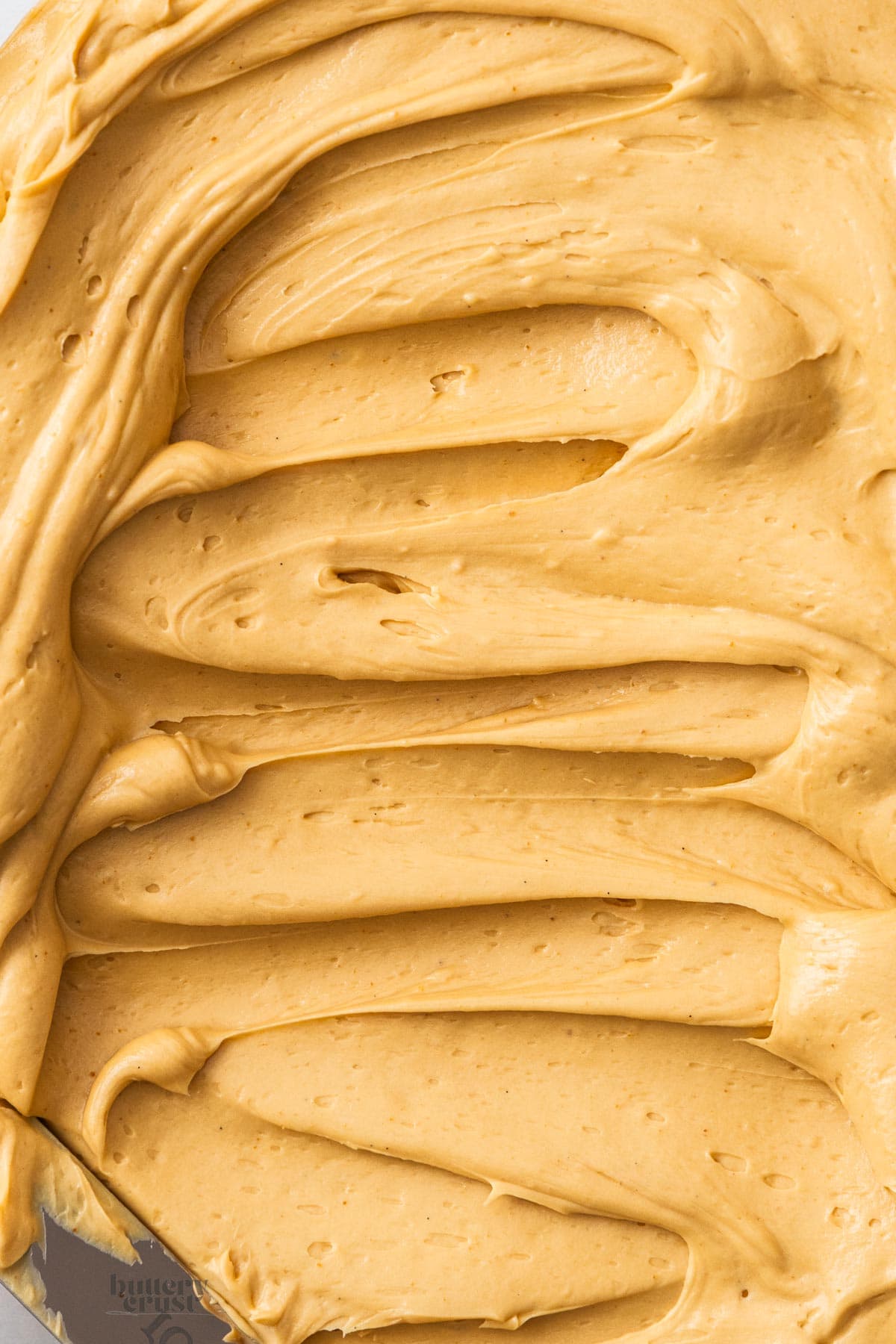
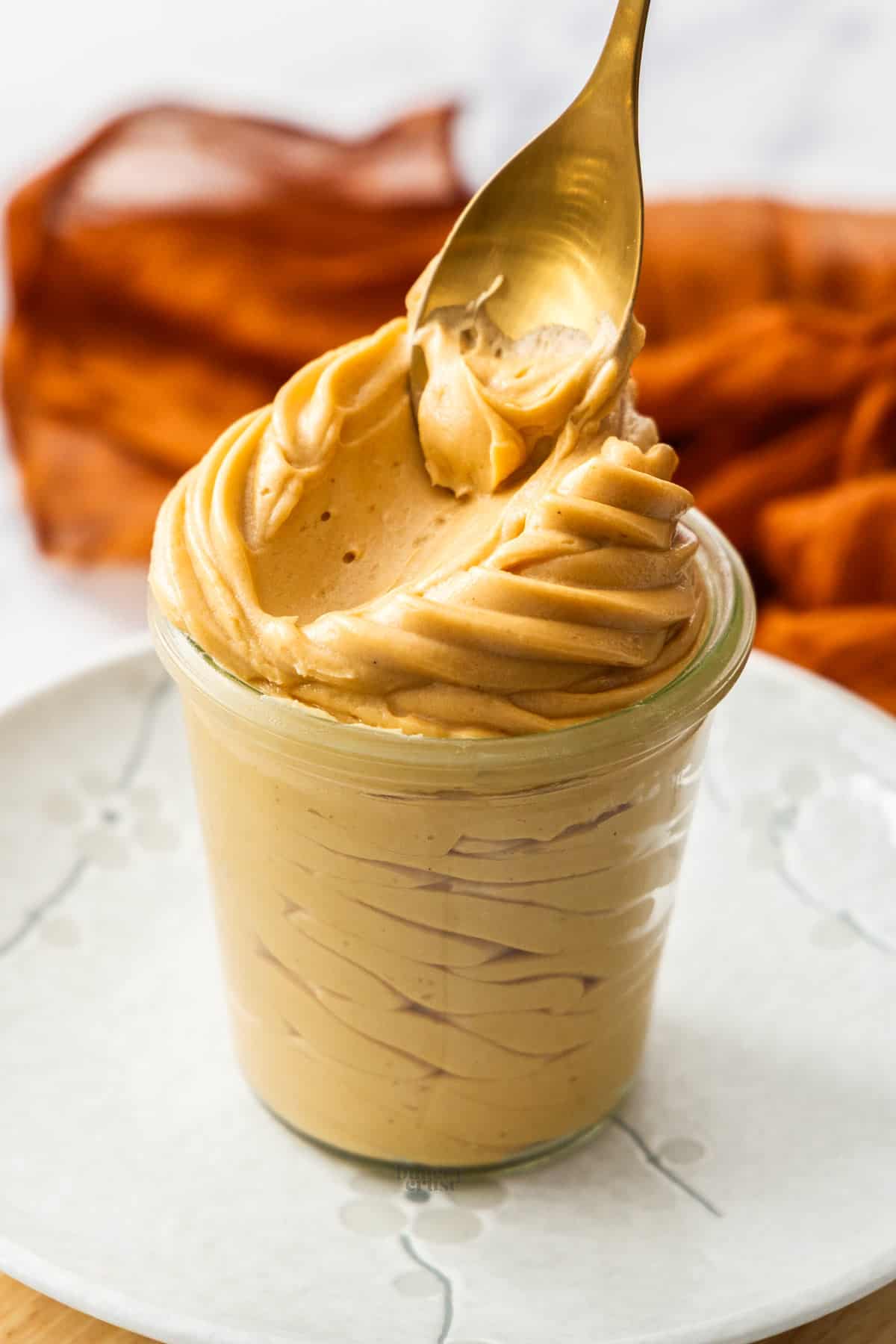
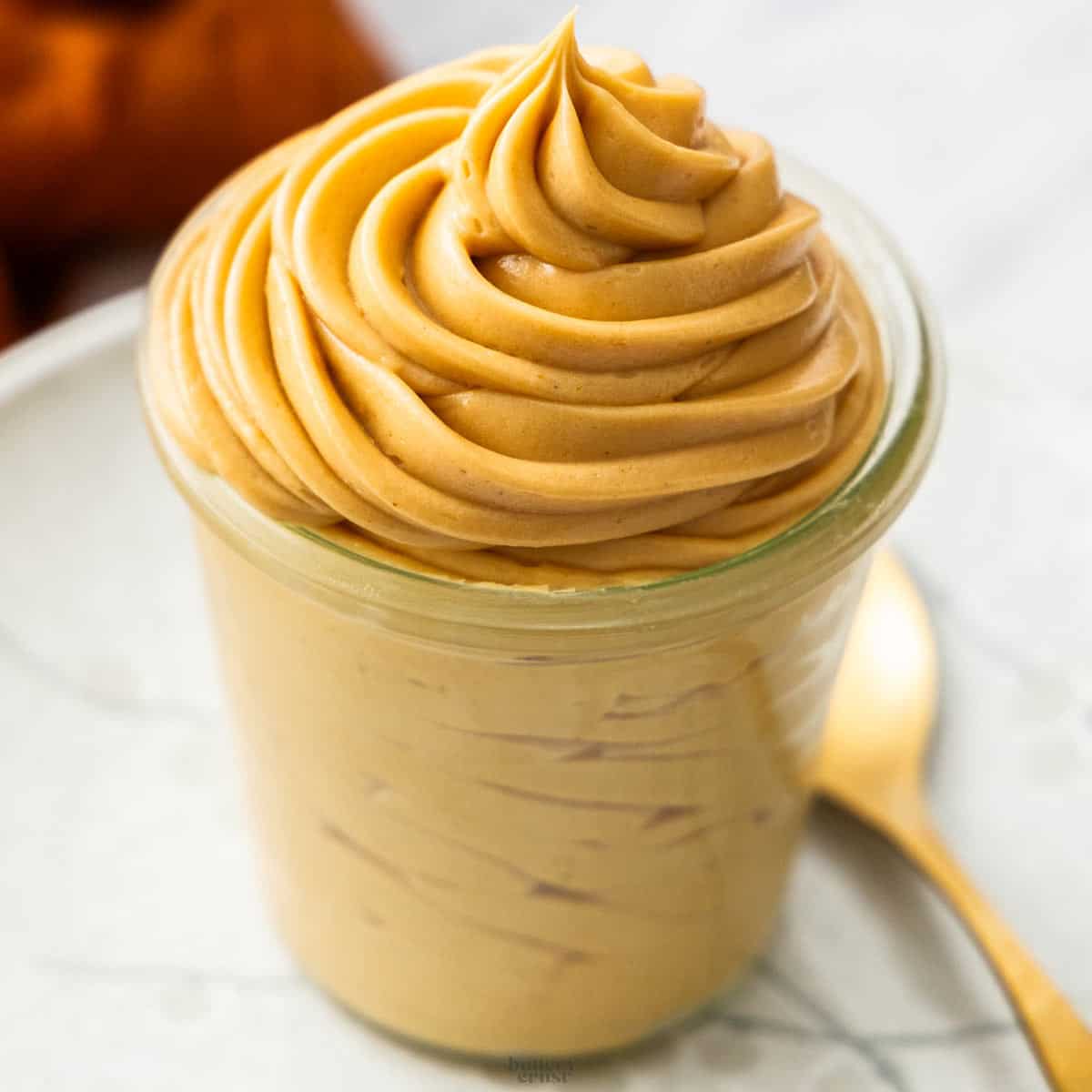
Praline mousseline cream (or crème mousseline au praline) is the creamy French pastry filling found inside Paris-Brest - silky, creamy, nutty and full of caramelised praline flavour. It starts with pastry cream, then smooth butter and hazelnut praline paste are beaten through to create a luscious cream that pipes beautifully and tastes absolutely bakery-worthy.
My version is rich without feeling heavy, sweet without being cloying and beautifully balanced so the praline flavour shines through. Use it for Paris-Brest, choux buns, eclairs, tarts, layer cakes or any pastry that deserves a soft, elegant, nutty filling.
Never Miss a Recipe!
Get the latest recipes straight to your inbox!
Jump to:
What is praline mousseline cream
Praline crème mousseline (also known as crème mousseline au praline) is a French pastry cream made by combining classic pastry cream with whipped or softened butter and hazelnut or almond praline paste.
It is best known as the filling in Paris-Brest, but it can also be used in many other pastries.
Why this recipe works
- Deep praline flavour: Praline paste brings that classic hazelnut-almond caramelised flavour.
- A thickened pastry cream base: This means when you add the praline paste, the finished praline mousseline cream remains pipeable.
- Balanced butteriness: Butter gives structure but also adds flavour. Mousseline cream should taste of butter without tasting like eating a block of butter.
- Pipeable texture: It's thick and smooth, perfect for piping into beautiful swirls.
- Temperature control keeps it silky: Making sure the 3 components are at the same temperature means they blend together perfectly.
Praline Crème Mousseline at a glace
- What it is: Crème pâtissiere mixed with whipped butter and praline paste.
- Texture: Silky, creamy, pipeable and richer than pastry cream.
- Flavour: Sweet, caramelised, nutty and buttery.
- Best for: Paris-Brest, éclairs, choux buns, fruit tarts, mille-feuille, and layer cakes.
- Key success tip: Pastry cream, butter and praline paste should be at a similar cool room temperature before combining.
- Not the same as: Diplomat cream, crème légère or plain pastry cream.
Ingredients & substitutions
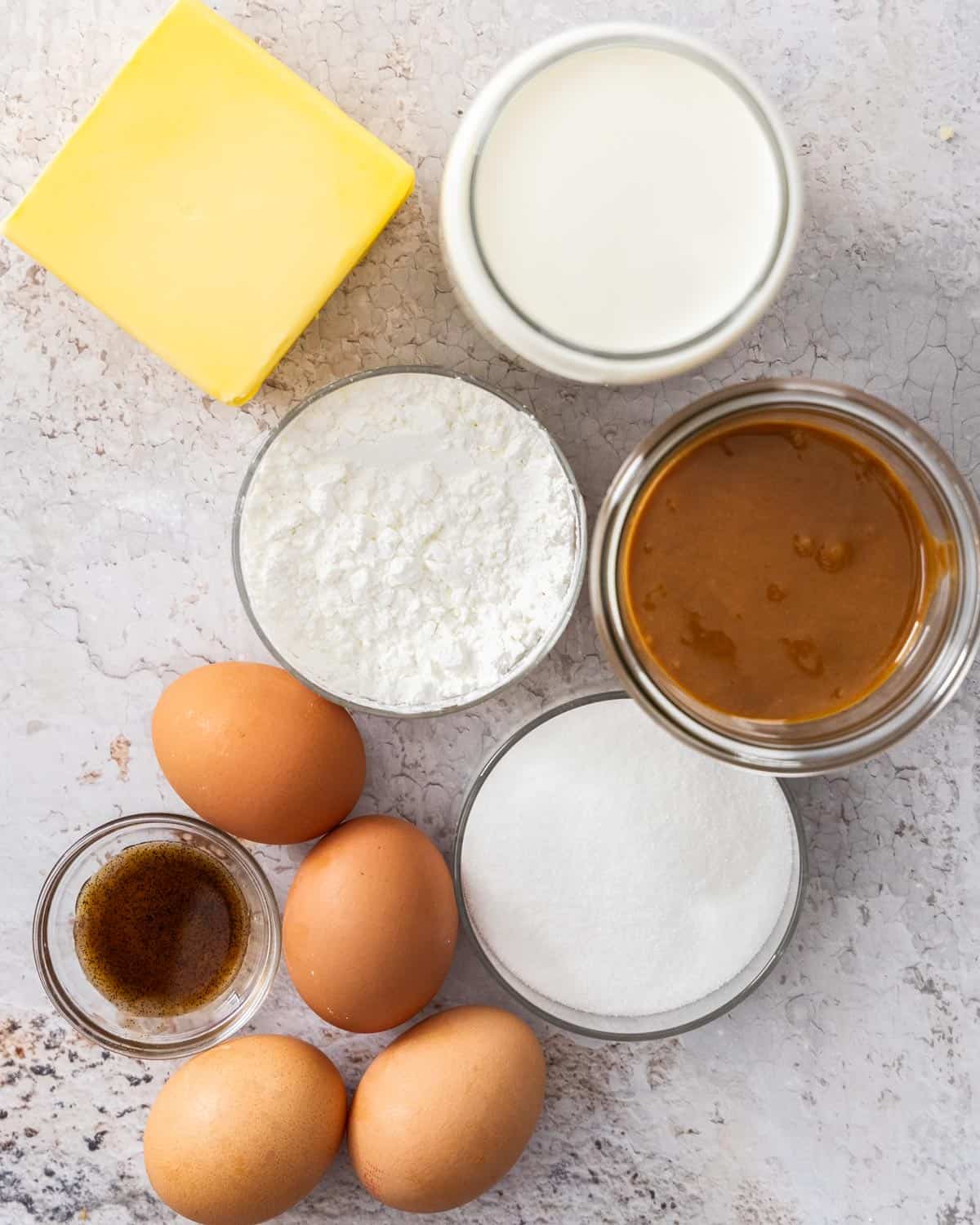
- Butter: A large part of the flavour of mousseline cream comes from butter so make sure to use a good quality unsalted butter.
- Milk: While it will work with other types of milk, praline crème mousseline is best made with full fat dairy milk for the best flavour and texture.
- Eggs: Large eggs are used to thicken the pastry cream base. These add richness and thickness to the pastry cream.
- Cornflour / US Cornstarch: Cornflour, known in some places as cornstarch, is used to thicken the pastry cream base. I use a higher proportion of cornflour in this recipe so that it can hold a shape well enough to pipe into a cake. It stays perfectly melt-in-the-mouth but you can reduce it by just a little if you like (a tablespoon or two) and it will be a much softer filling.
- Sugar: You'll just need white granulated sugar here though you can certainly experiment with brown sugar for a slightly different flavour.
- Vanilla bean paste or vanilla extract: This adds the wonderful, classic vanilla flavour. You can use the beans from a whole vanilla pod if you prefer. Don't use vanilla essence as it's an artificial flavour and just doesn't taste as good.
- Praline paste: Praline paste is a French spread (pâte pralinée) made from caramelised sugar and toasted nuts, most often hazelnuts, but almonds are often used too. If you can buy it, you're welcome to use store-bought. If you can't, don't worry; praline paste is easy to make from scratch.
How to make praline crème mousseline
Starting with a vanilla pastry cream base, praline cream is very simple to make with just three steps.
- Make a basic thick pastry cream,
- Let it chill and set,
- Then beat it into whipped butter and praline paste.
⬇️ Jump to the recipe card for full quantities and instructions.

Heat the milk
(4-5 minutes) Start by warming the milk and sugar over medium heat until it starts steaming heavily. Don't bring it to a boil.

Whisk the egg yolks and cornstarch
(1 minute) In a mixing bowl, whisk together the egg yolks, cornstarch and some reserved cold milk.

Temper the eggs
(1 minute) Tempering means to bring the temperature of the eggs up slowly and we do this so that they don't just scramble. By mixing as we slowly add the hot milk, the eggs fully incorporate smoothly into the hot milk to turn into a silky smooth custard. Make sure to drizzle the hot milk in slowly as you stir with a whisk.
Cook the custard
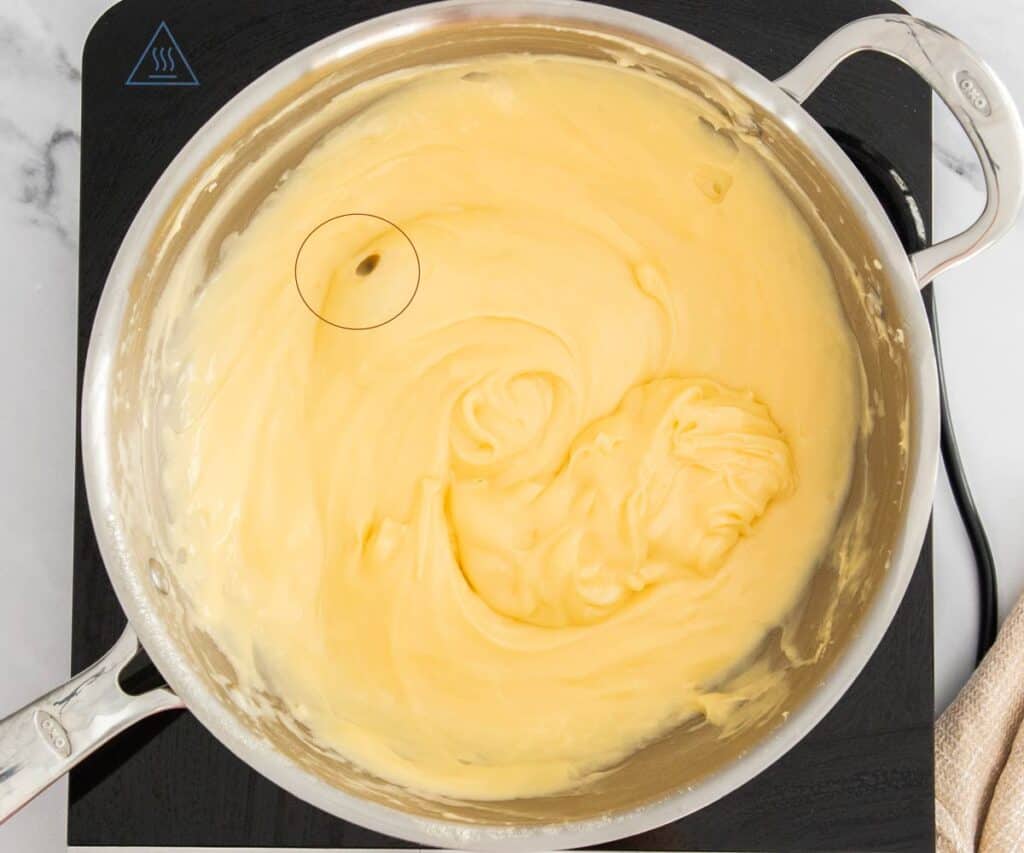
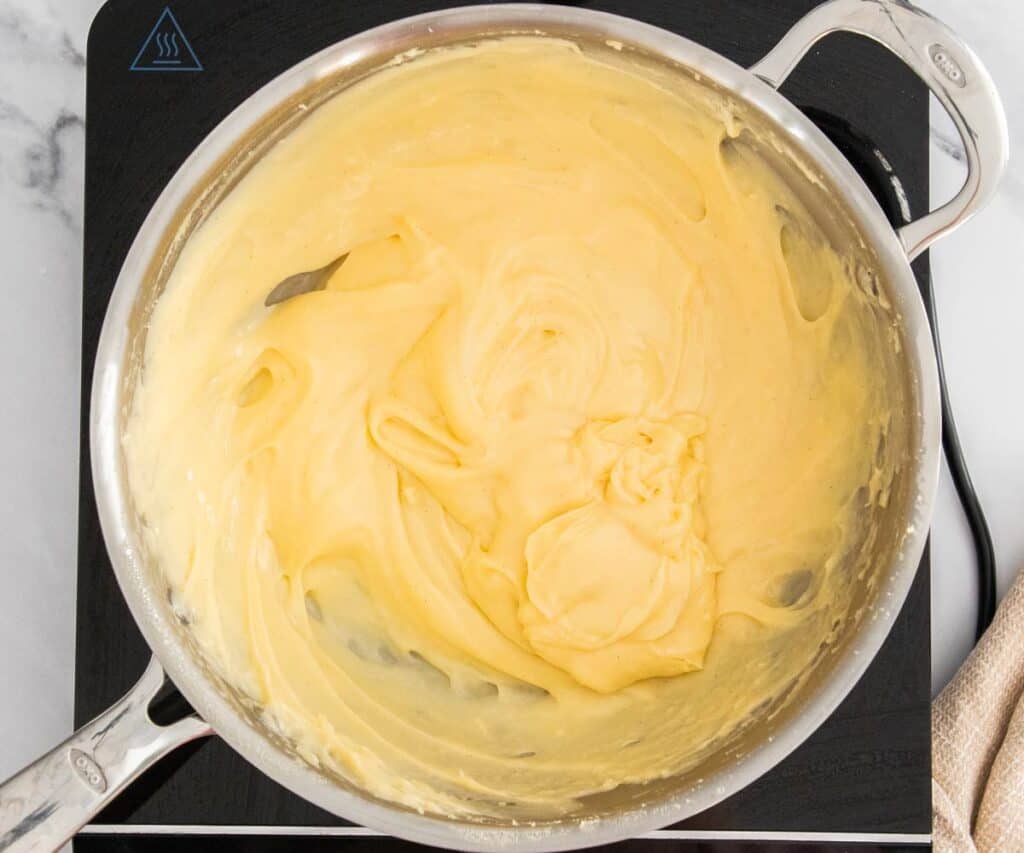
(7-8 minutes) Pour it all back into the saucepan and heat it again over medium heat, gently stirring constantly with a whisk to prevent lumps. As soon as you see large bubbles breaking the surface, stir the custard for 1 full minute. This helps to activate the cornstarch. If you don't let it boil like this for a minute, once it cools, the pastry cream will just become very runny again.
Add vanilla
(30 seconds) Whisk in the vanilla extract until it's fully combined. It will be very thick and won't easily settle in on itself.
Save this post!
No spam, I promise 😊
Chilling the pastry cream
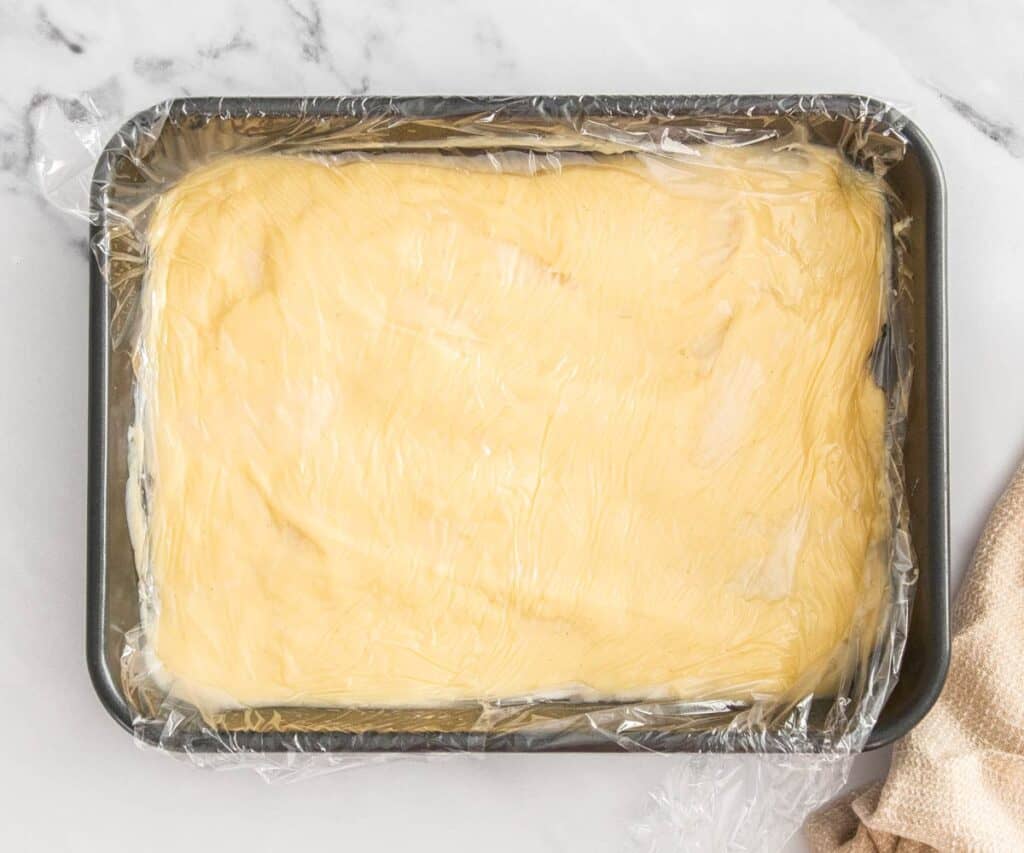
(2-3 hours) Pour your pastry cream through a strainer into a clean bowl, or jug, then cover it tightly with plastic wrap pressed tightly to the surface. The pastry cream can form a skin if air gets in. Chill it until cold. The larger the vessel, the quicker it will chill.
Once the pastry cream is made, use it within 3 days. It will be quite firm when it comes out of the fridge, a bit like set jelly. The pastry cream for this mousseline cream recipe is thicker than a standard pastry cream so that the finished cream holds its shape better.
Beat the butter
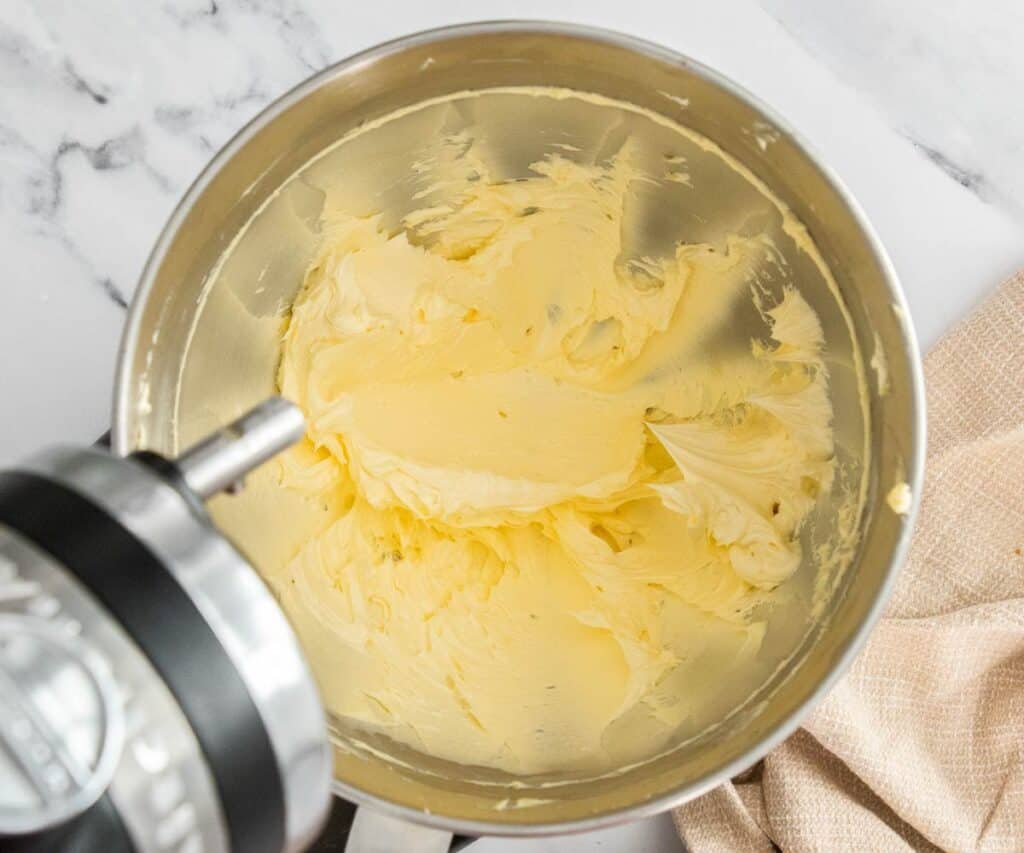
(1-2 minutes) Once the pastry cream is cold and set, you can turn it into crème mousseline. Start by beating the butter until smooth and creamy. Scrape down the sides of the bowl as you go.
*You'll get best results if you let the pastry cream come to cool room temperature first.
Add pastry cream
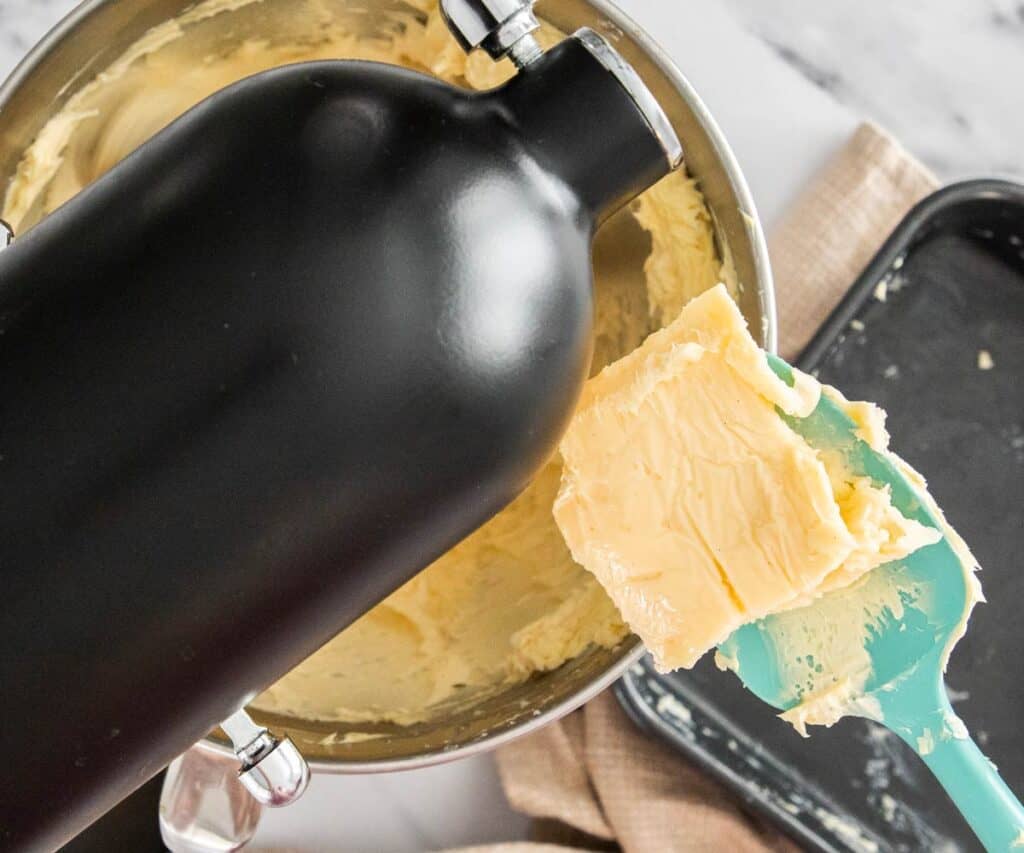
(2-3 minutes) With the mixer on low-medium speed, add the pastry cream one spoonful at a time, letting it fully beat in before adding the next.
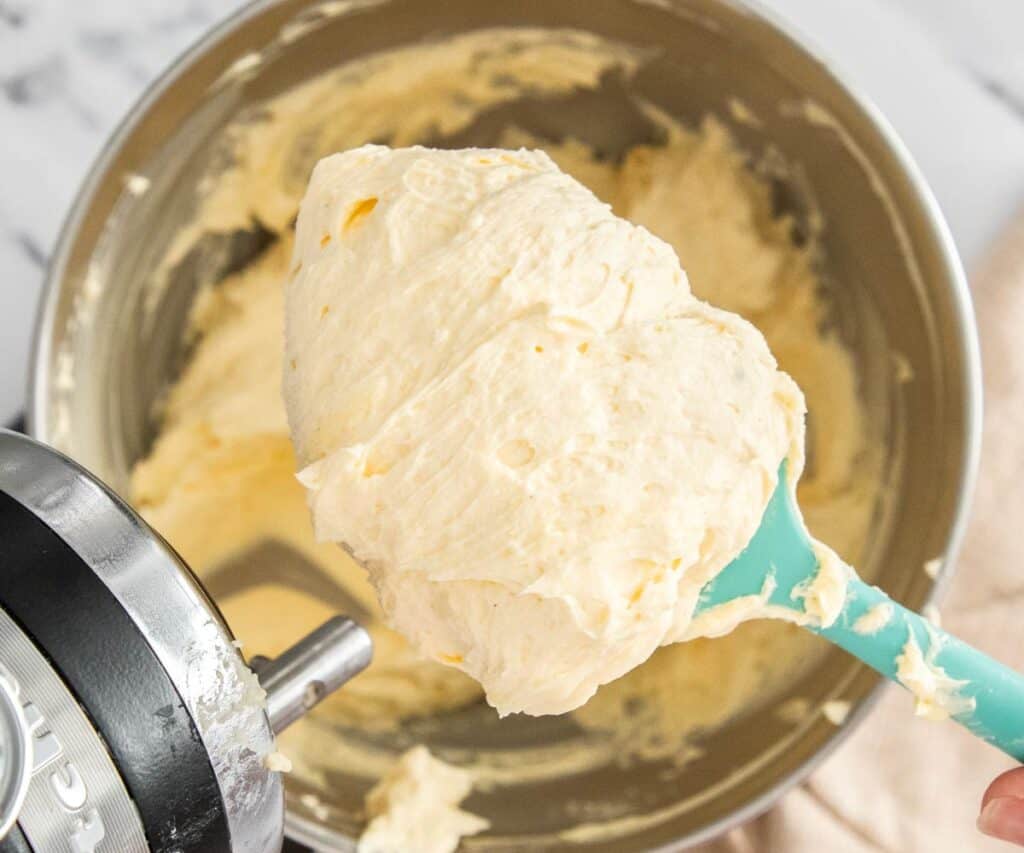
Mousseline cream
Now you have a fluffy, creamy mousseline cream.
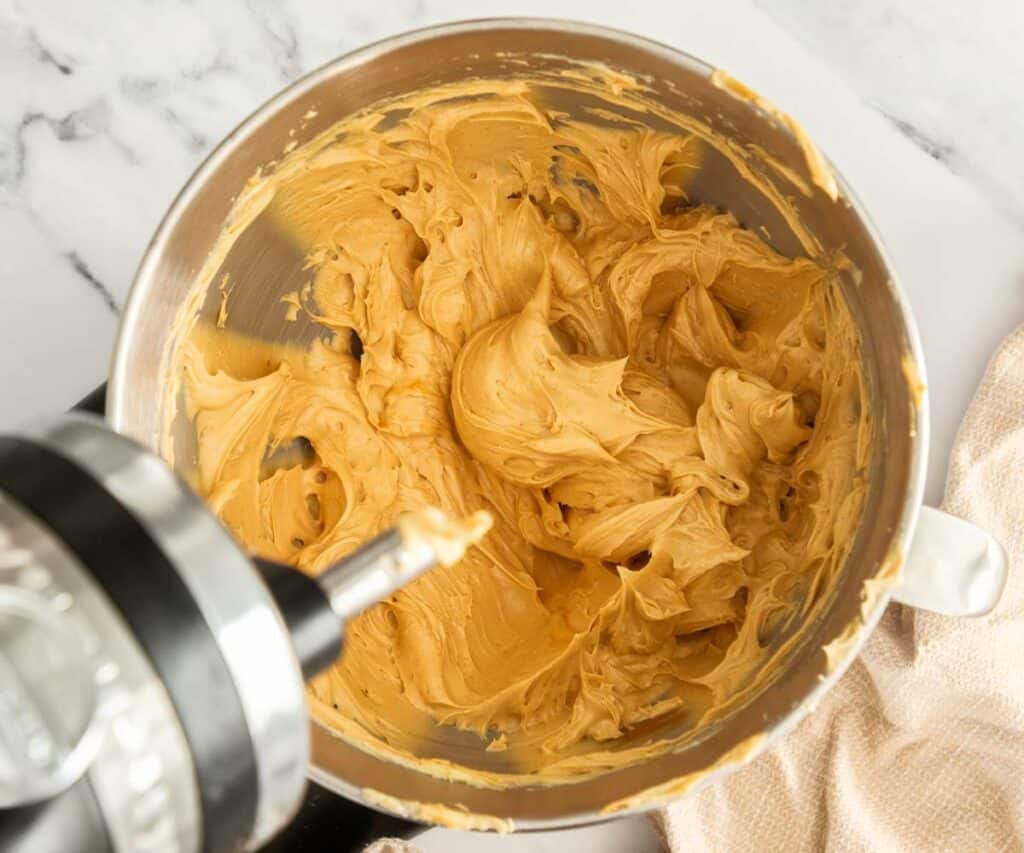
Add praline paste
Add the praline paste and beat through on low and you'll end up with a silky-smooth praline cream.
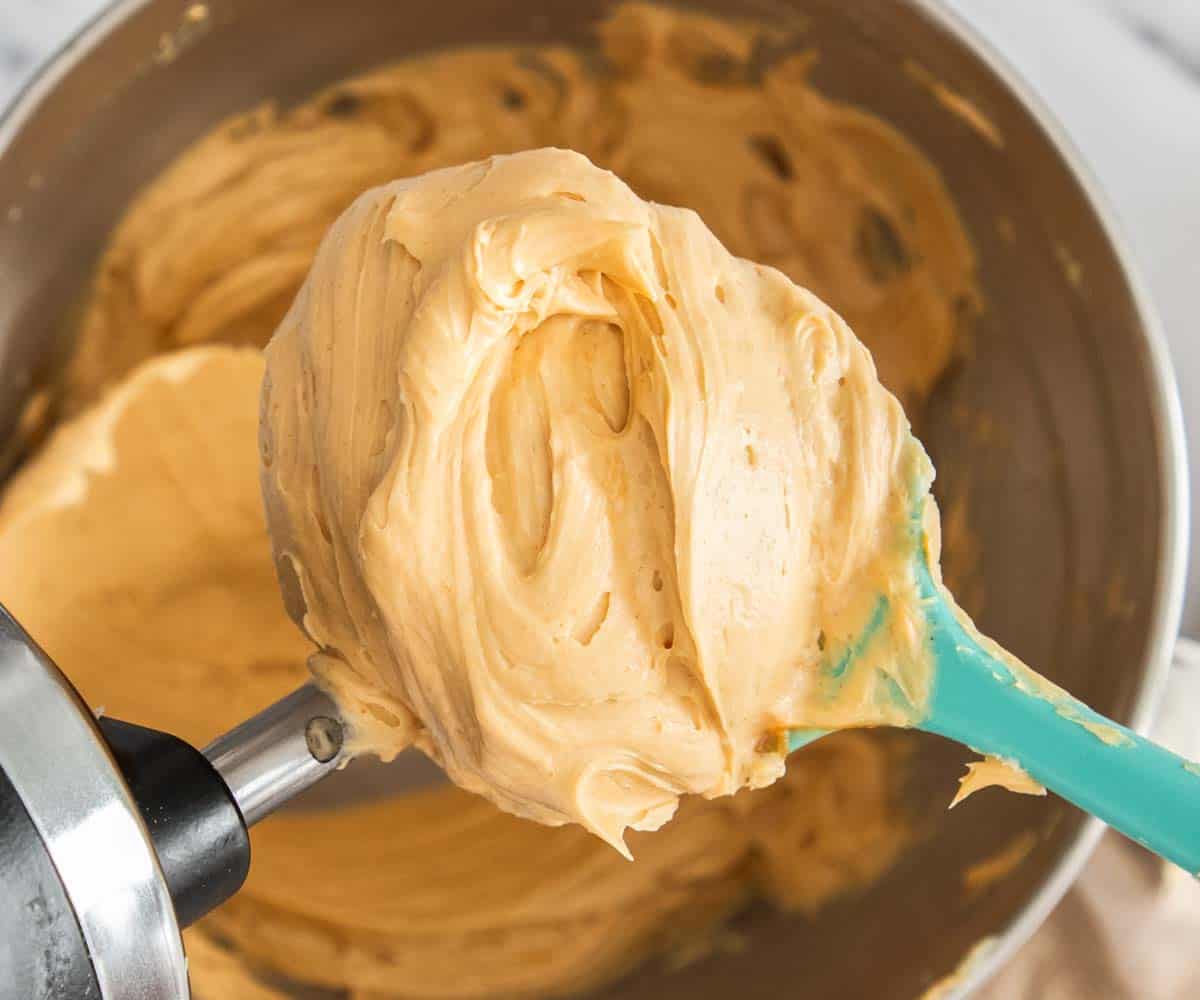
Tips and tricks
- Temper the eggs gradually: Tempering eggs is a method of adding hot liquid to eggs gradually to prevent them from scrambling. It's very easy; just make sure to drizzle the hot liquid into beaten eggs slowly as you whisk. This technique brings the temperature of the eggs up slowly so they don't scramble.
- Boiling the pastry cream: When it comes to a boil, you'll see big bubbles breaking one or two at a time on the surface. It won't come to a rolling boil like water would and if you try to get it to that point you risk overcooking the eggs and giving it an eggy flavour.
- Store with plastic wrap pressed to the surface - this stops the pastry cream from forming a skin on top
- Chill before beating into the butter - this is a thickened pastry cream that must be set before adding it to the beaten butter. It will look a little like set jelly.
- Cool room temperature: You want the butter and the pastry cream to be at similar temperatures when you beat them together, as it will ensure they emulsify more smoothly. Cool room temperature works best. The butter should be softened enough to easily dent, but not greasy looking, and the pastry cream should just be of a similar temperature.
😥 Troubleshooting
| Problem | Likely cause | How to fix it |
|---|---|---|
| My praline crème mousseline split or curdled | Butter and pastry cream different temperatures or pastry cream added too quickly | Let it sit until both soften slightly, then beat again. |
| My crème mousseline is greasy | Butter was too warm | Chill the bowl for 10-15 minutes, then beat again. |
| My crème mousseline has butter lumps | Butter or pastry cream was too cold | Let it warm slightly, then beat again. |
| My praline cream is too soft to pipe | Too warm or under-whipped | Chill briefly, then whip until smooth and pipeable. |
| My pastry cream tastes starchy | Wasn't cooked long enough after it started bubbling | Cook until bubbling, then stir gently for a full minute. |
| My pastry cream is lumpy | Eggs curdled or custard wasn't whisked enough | Strain while warm, whisk constantly next time. |
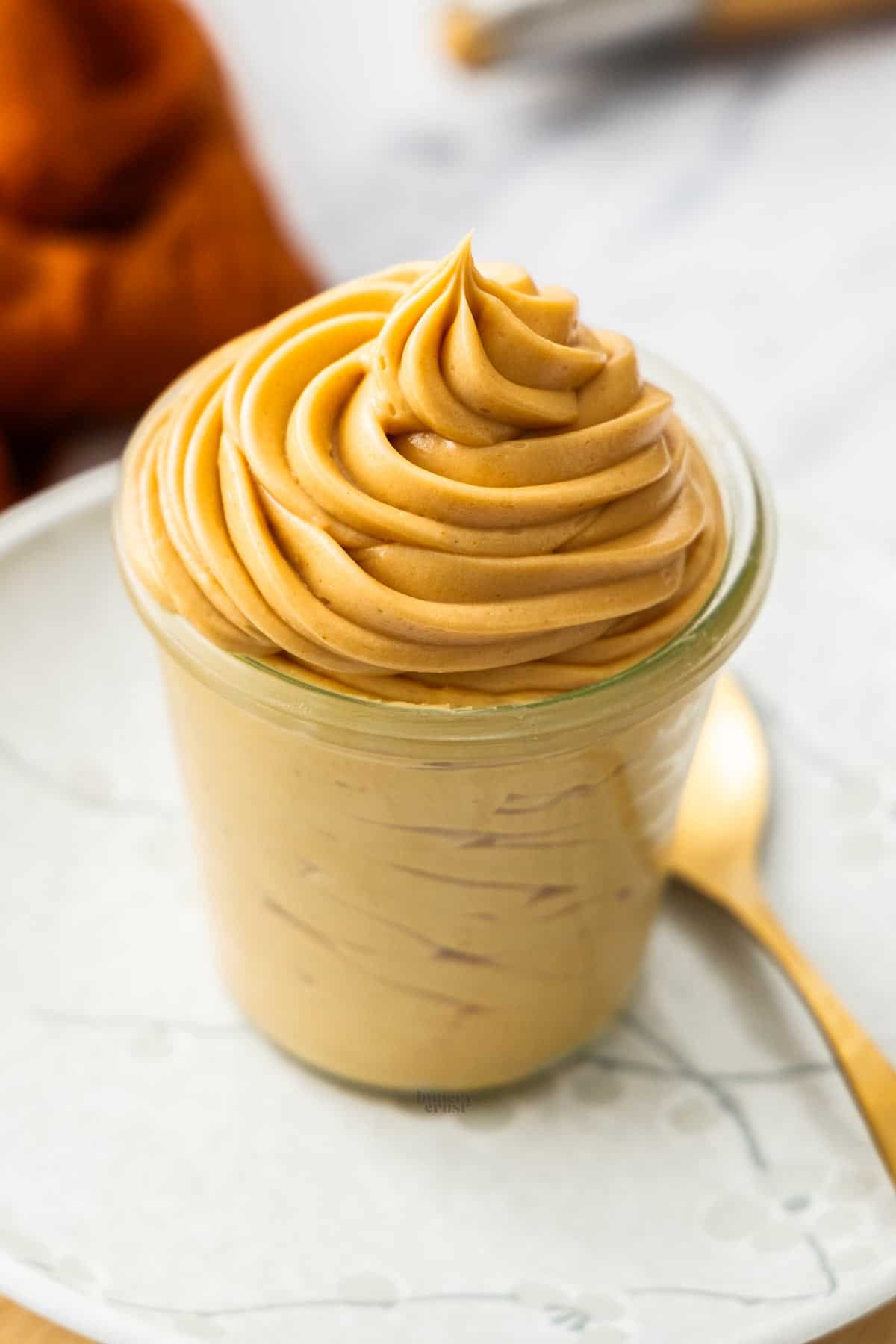
Where to use it
Praline crème mousseline can be used in a number of ways.
- Paris Brest: This is its most classic used
- Choux buns
- Eclairs
- Layer cake and for frosting the tops of cakes
- Inside tart shells
Storage
Praline mousseline cream must be stored in the fridge for up to 3-4 days. Let it come to room temperature before giving it a little whip-up and piping.
I don't recommend freezing it as the texture can be altered.
The pastry cream can also be chilled for 2-3 days before using in your mousseline creme au praline.
Tools I use
- Medium heavy-based saucepan: I love this pan and it's by far the one I use the most. It has a good thick base meaning it will heat gently and evenly and it's such a breeze to keep clean.
- Balloon whisks: I have a few of these, some with a metal whisk and some with a silicone whisk. They all have their purpose but a regular metal one is fine for this recipe.
- Mixing bowls
- Silicone spatulas: These are the ones I use. They're long lasting and they're great for getting every last bit of mixture out of a pan or bowl.
- Stand mixer or handheld electric mixer
❓FAQs
Yes, and it's easy to make at home with this praline paste recipe too.
Unsalted is best so that you can control the flavour. With the amount of butter in this cream, it will taste too salty made with salted butter.
Yes. The pastry cream can be made 2-3 days in advance, chilling it with plastic wrap pressed to the surface. Make sure to eat this within 4 days of making the pastry cream.
More recipes you'll love
If you made this praline crème mousseline recipe,
be sure to leave a ⭐⭐⭐⭐⭐ rating below. Thank you!
Praline Mousseline Cream
Equipment
- Mixing bowls
- Balloon whisk
Ingredients
- 500 ml whole milk (2 cups)
- 100 g white granulated sugar or caster sugar (½ cup / 3 ½oz)
- 55 g cornflour (US cornstarch) (½ cup / 2oz)
- 4 egg yolks from large eggs
- 1 teaspoon vanilla bean paste or vanilla extract
- pinch salt
- 300 g unsalted butter softened (10 ½oz)
- 210 g hazelnut praline paste (¾ cup)
Instructions
- In a heavy based, medium saucepan, over medium heat, heat 1 ½ cups of the milk and all the sugar, stirring to dissolve until it reaches steaming point.
- Add the cornflour, egg yolks and remaining ½ cup of milk to a medium mixing bowl. Whisk, using a balloon whisk until smooth and combined.
- While gently whisking, very slowly drizzle the hot milk into the eggs. Don't pour it too quickly or you'll cook the eggs.
- Return the custard mixture to the pan.
- Cook over medium heat, gently stirring with a whisk the entire time until it starts to thicken and bubble. It will get very thick but just keep moving it around.
- As soon as you see the first bubbles appear, continue cooking and stirring for a full minute to activate the cornflour.
- Remove from the heat and stir in the vanilla and salt.
- Pour the pastry cream into a bowl or container, then press plastic wrap to the surface to prevent a skin from forming. Chill until completely cold.
- Once the pastry cream has set, remove it from the fridge and let it return to cool room temperature.You can proceed before bringing it to room temperature but you risk leaving lumps in your mousseline cream or overmixing it and have excessive air bubbles.
- In a stand mixer with paddle attachment, beat the butter until it's pale and creamy.
- Add the pastry cream one spoonful at a time, beating just until each is combined.
- Add the praline paste and beat on low until just combined.
- Please take a moment to leave a comment & rating. It's appreciated and so helpful.
Notes
- Yield: 3 cups.
- Pastry cream can be chilled for up to 3 days before use and must be eaten within 3-4 days of making it.
- Mousseline cream should be used within 3-4 days of making the pastry cream.
- Nutrition information is based on per cup.

Comments
No Comments