

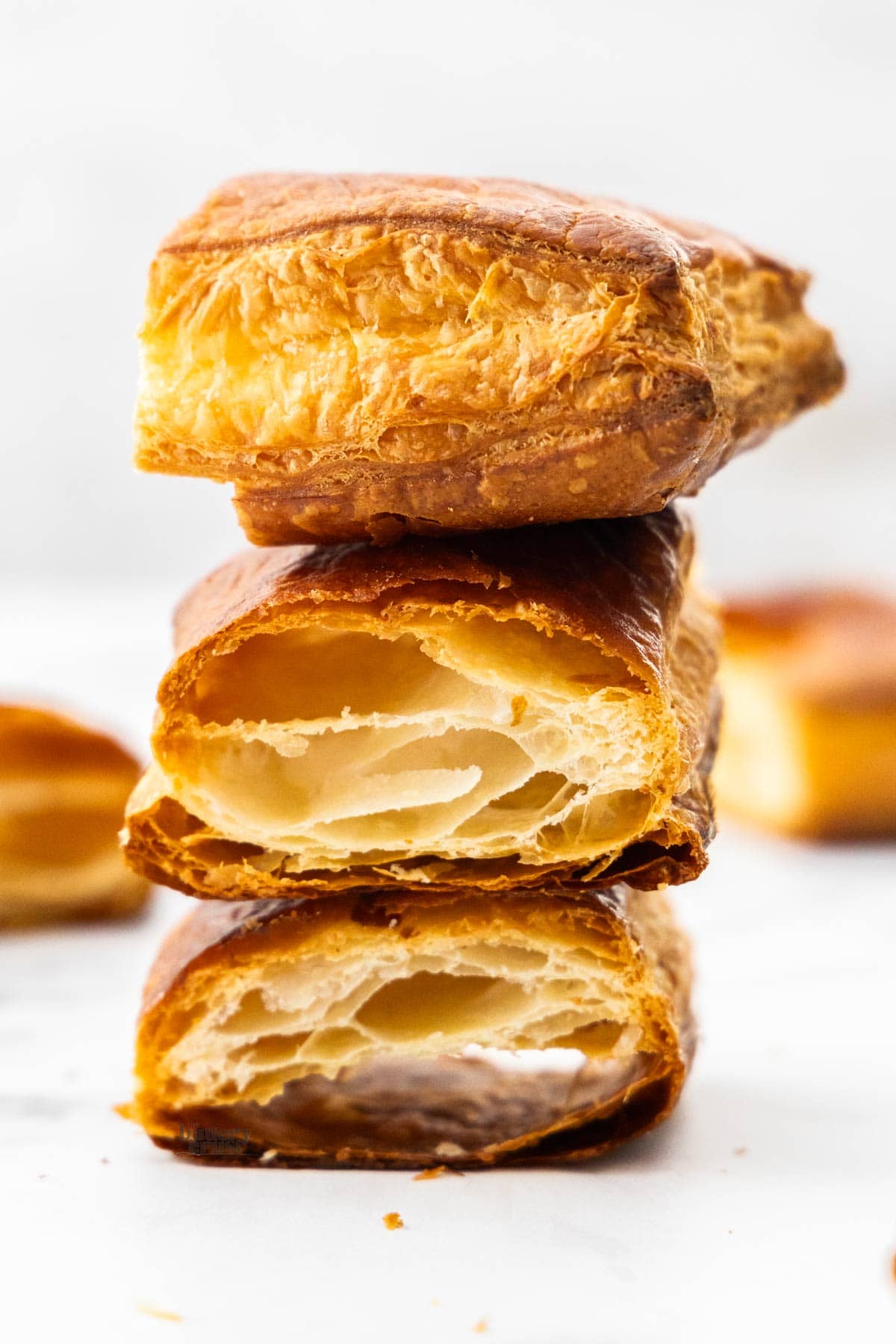
There's something incredibly satisfying about making puff pastry at home and it's truly not as difficult as it looks. Layers upon layers of delicate pastry that bake up golden, buttery and impossibly flaky.
For years, I was in the 'I don't have time in my life to make puff pastry from scratch' camp. That has undoubtedly changed. I definitely prefer homemade puff pastry and it's not as hard as I always thought it was.
This post will walk you through everything you need to know from creating the simple dough to adding a butter block and all the necessary folds and resting times. Now, you, like me, will be able to make puff pastry that is a million times better than the store-bought variety, and what's great is you can spend a morning making a few batches of it to store in the freezer for when you need it.
Never Miss a Recipe!
Get the latest recipes straight to your inbox!
Jump to:
❤️ Why you'll love it
- Classic lamination, just like a French pastry chef would do, creates distinct layers. When properly laminated this dough rises 8-10 times its height in the oven.
- Keep the butter cool but pliable: This is how you'll get the best results since the butter and dough remain as separate, unbroken layers.
- Resting does two jobs at once: It rests the dough, allowing the gluten to relax, making it easier to roll out and it keeps the butter cool enough that it doesn't just melt.
- Even rolling and neat folds will give you the best rise.
- Cold pastry, hot oven: Once you cut your dough, chill or even freeze it before placing it into a hot oven. This is another trick of the pros that will get your dough puffing up more than ever.
What is puff pastry?
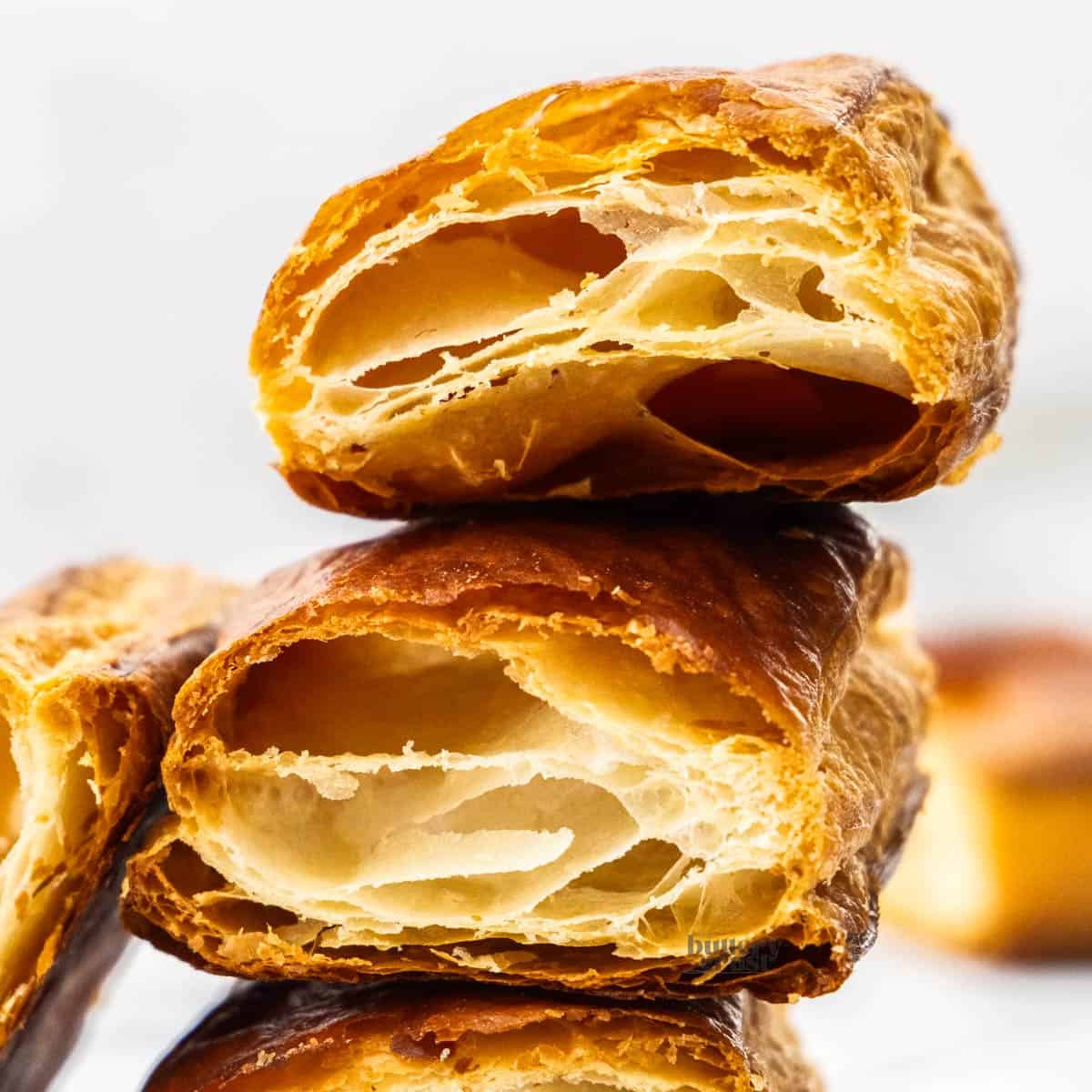
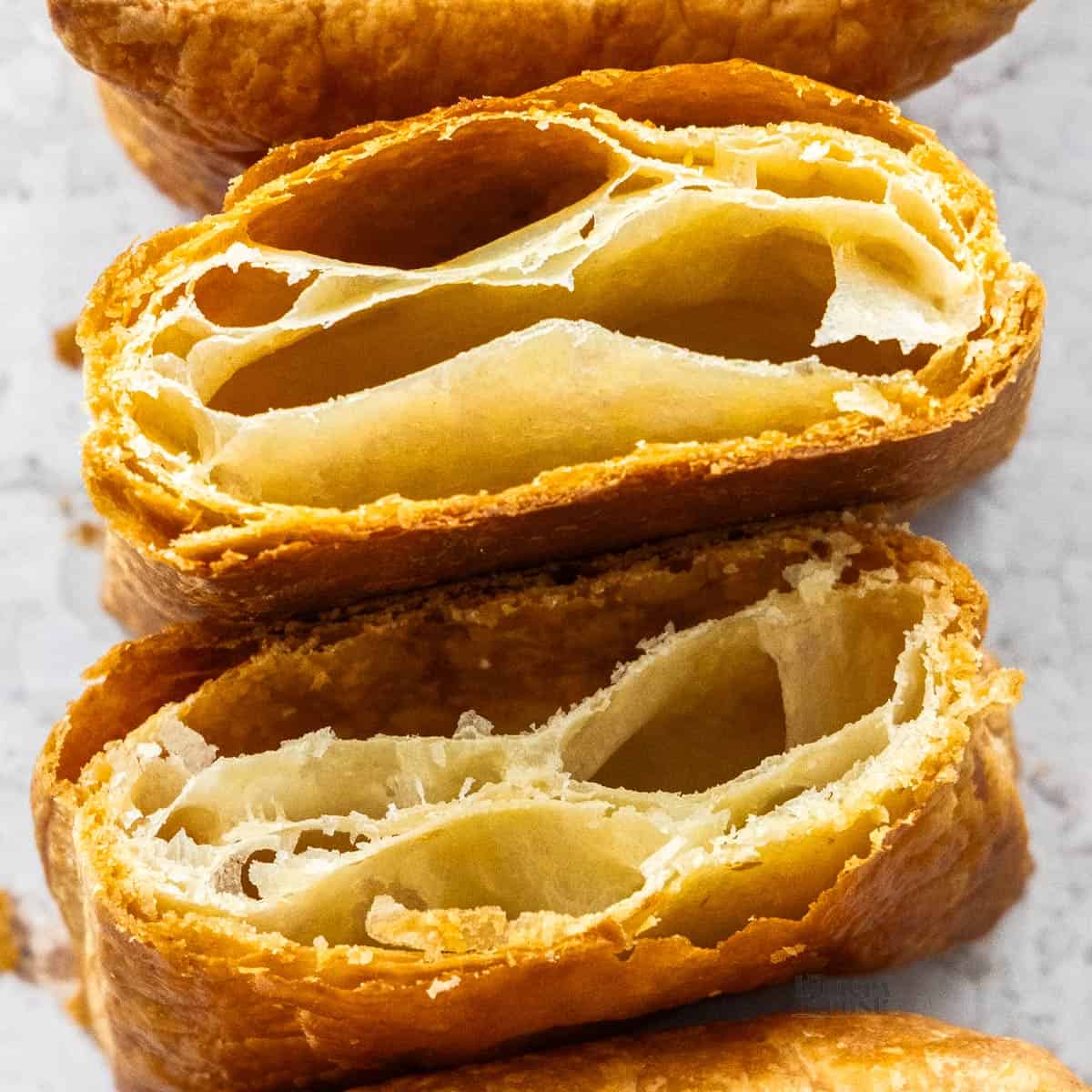
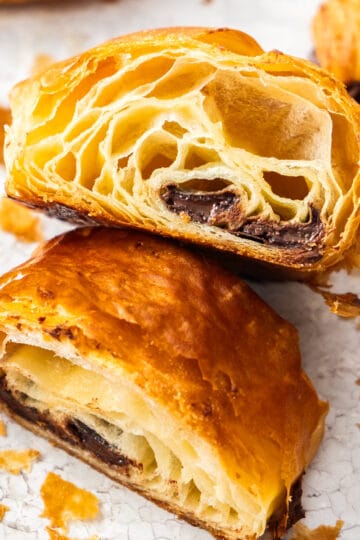
Puff pastry is a French pastry classic (known in French as pâte feuilletée). Laminated with layers of butter, the dough puffs up creating aerated holes and crisp buttery layers.
And laminating is just a fancy way of saying rolling and folding the butter into the dough many times so that the finished article is literally hundreds of leaves of dough separated by hundreds of leaves of butter.
Classic puff pastry vs rough puff vs inverted
There are a number of ways to make puff pastry.
- Classic puff pastry requires a block of butter to be encased in dough which is then rolled and folded a number of times. It's classic for a reason, giving a gorgeous combination of ease to make it whilst still getting wonderfully flaky layers. This post is a classic puff pastry recipe.
- Rough puff pastry is a simplified method using small cubes or grated butter pressed into the dough while mixing then rolled out so the butter is still in chunks but encased throughout the dough. My rough puff is slightly different and will be coming up in a post soon, making it even better than both of the traditional ways of making it.
- Inverted puff pastry is made by adding the butter outside the dough. The butter is softened and mixed with flour, then encases the dough. While I have not tried this method yet, the theory is that the layers are even crisper and flakier and the puff pastry won't shrink as much. I'll report back when I try it.
Ingredients & substitutions
You only need five incredibly simple ingredients for homemade puff pastry and the likelihood is, you already have them on hand.
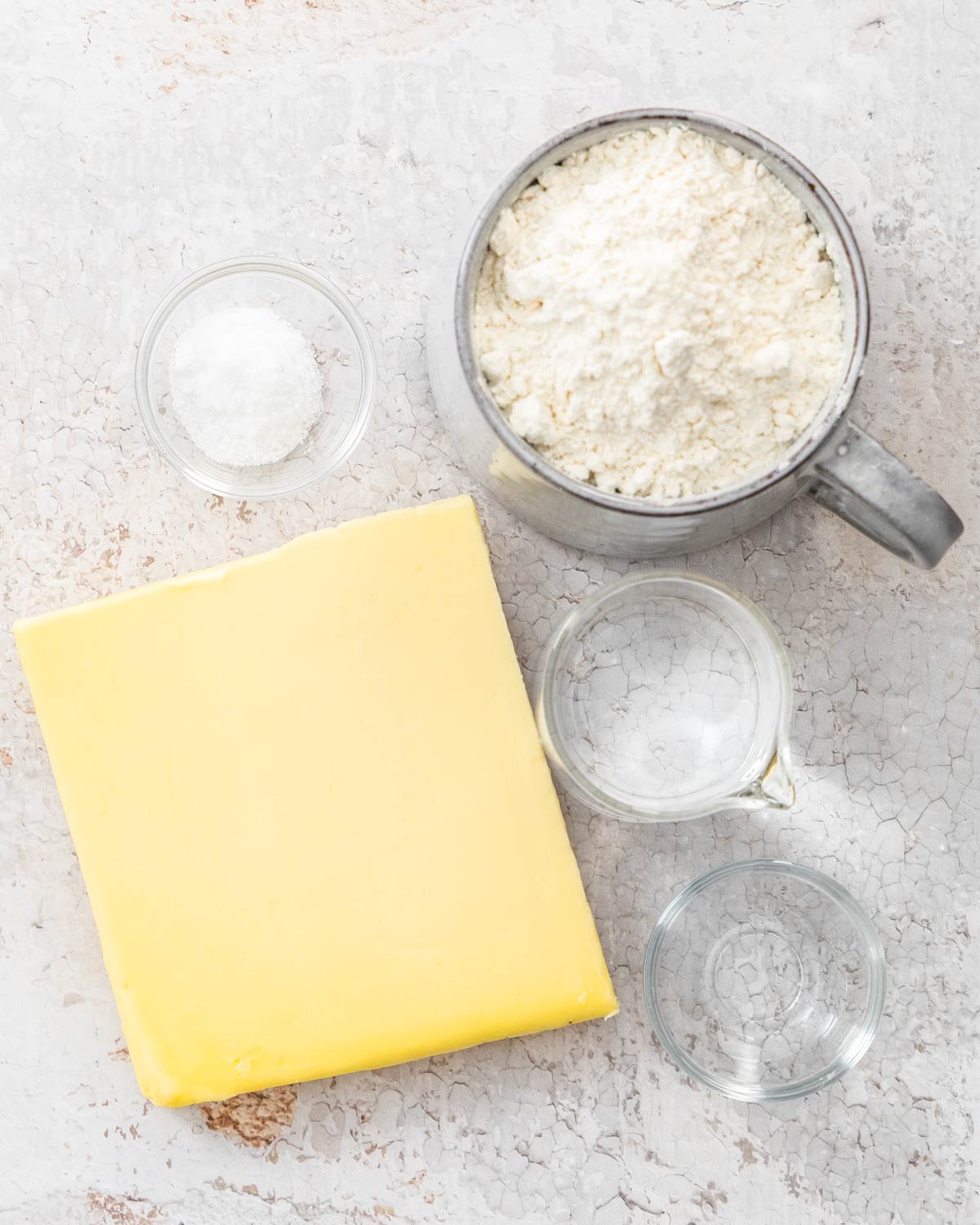
- Bread flour is your best option due to its higher protein - it will give you a better crispness. Plain flour / all-purpose flour will work too.
- Vinegar: Just a little vinegar ensures the puff pastry dough does not oxidise while it is in the fridge. Sometimes the dough can turn a little grey if it's been sitting in the fridge for a few days and does not have any acid in it. It's the same as adding lemon juice over apples to stop them oxidising.
- Salt: Puff pastry usually contains only salt for seasoning. Some people do add sugar and you can certainly do that. I prefer not to. If you want to add sugar just add 1 tablespoon to this recipe.
- Water: As simple as that - just make sure it's cold.
Butter - the most important part
- Butter: This is the really important one because you want butter that has good flavour but also becomes pliable without melting, so it rolls out into the dough without melting.
For best results, use an 82-84% fat content butter. I've found, and this is the same with croissants, that all brands vary in their ability to do the job, so you'll likely have to test different brands to get the best result.
Buttersheets: One I definitely recommend if you can get it is Pepe Saya Buttersheets, and this is not sponsored - I just really love it. They're specifically made for laminating dough, so they stay workable over a much wider temperature range. With these, you can minimise resting time and get the all-important dough temperature right before rolling. I find they're not that much more expensive than a decent brand of butter at the supermarket.
How to make puff pastry
Below you'll find all the steps to making this traditional puff pastry recipe with images and tips to guide you as to how it should look and feel.
- Create the dough: The simple dough before laminating is called the détrempe.
- Butter block: The butter block, known as beurrage, is encased in the dough (détrempe)
- The Turning: This is the process of rolling and folding the paton (the name of the dough once the butter has been enclosed). This repetitive process is what creates the layers in traditional puff pastry.
⬇️Jump to the recipe card for full quantities and instructions.
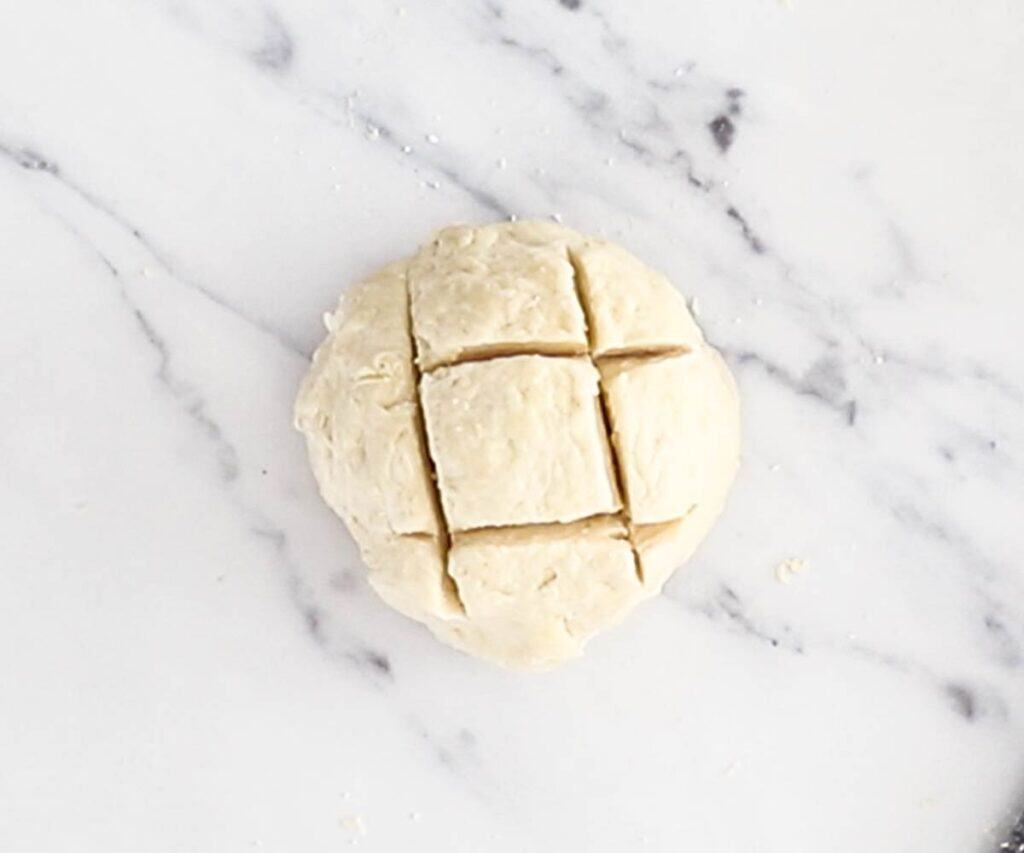
Make the dough (détrempe)
(5 minutes) This is simply a matter of combining the dough ingredients in the dough and mixing until they just hold together in a rough dough.
Do not overwork the dough at this point - it doesn't need to be smooth.
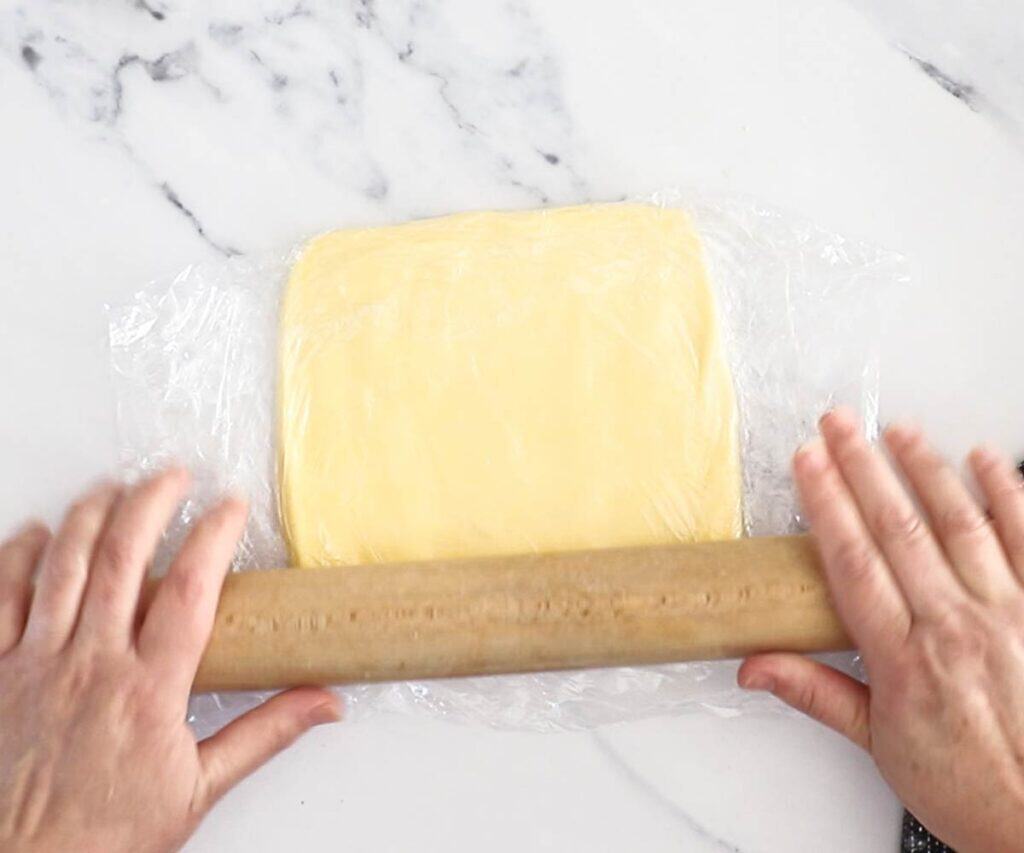
The butter block (beurrage)
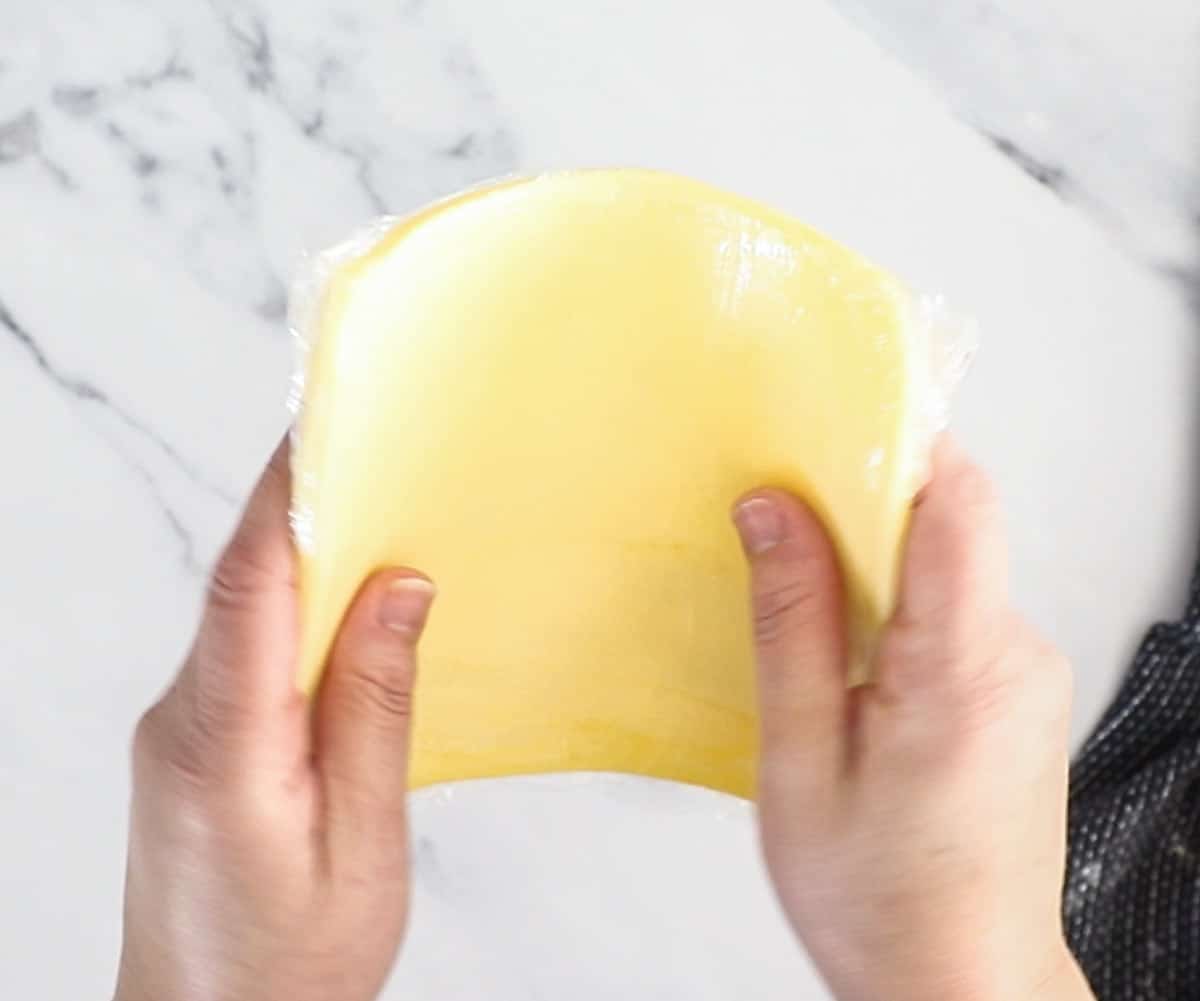
(5 minutes) Slice your butter into roughly 1cm/~½ in slices and place them side by side into a rough square between plastic wrap. Gently pound and roll with a rolling pin until the butter joins and forms a 15cm / 6in square.
This is called the beurrage.
Roll out the dough
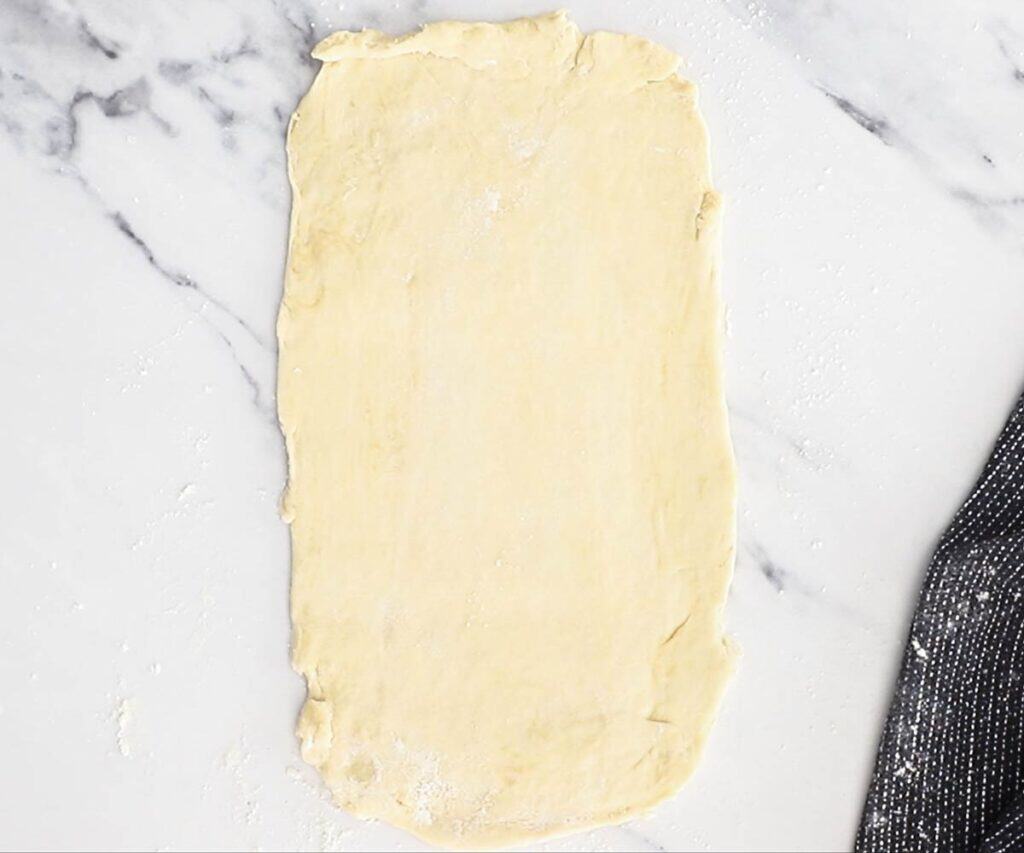
(2 minutes) Roll out the base dough to about 5mm / ⅕ in thick, making it twice as long as it is thick.
It doesn't need to be perfect at this point.
Enclosing the butter
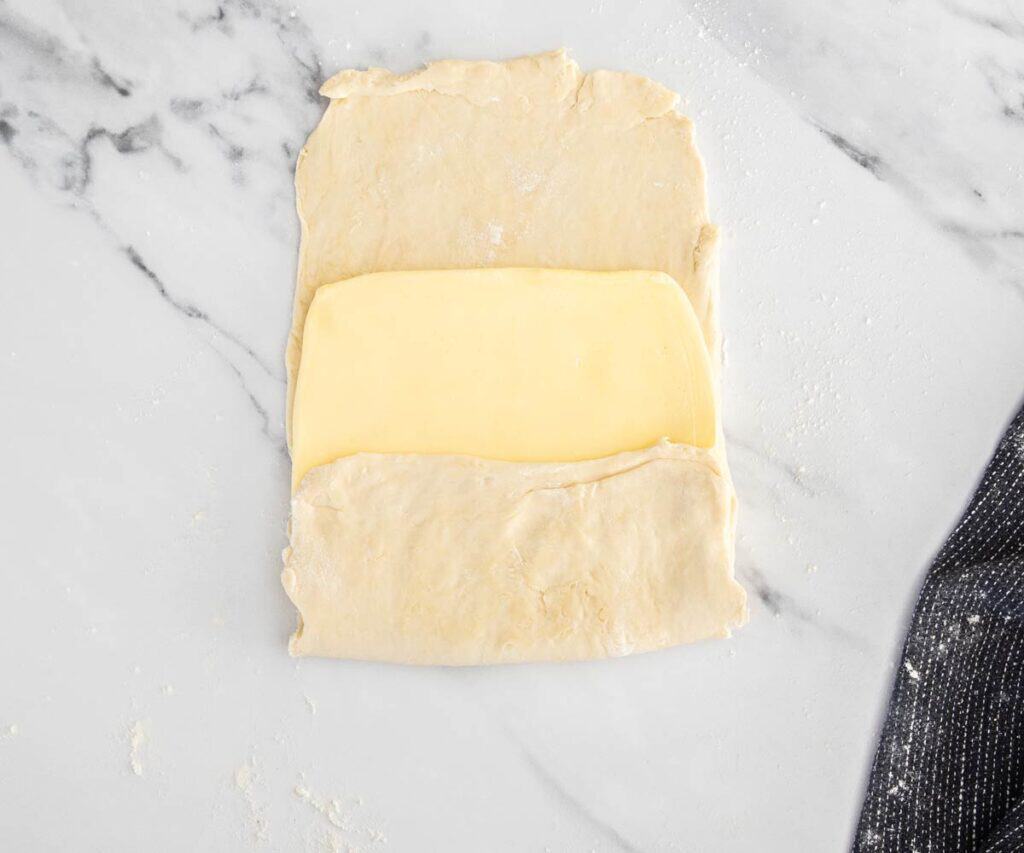
(30 seconds) Make sure your butter can bend without breaking but is not melting like the image above before proceeding. Place the butter block in the centre of your dough rectangle. Then fold the dough over it, starting with the bottom piece.
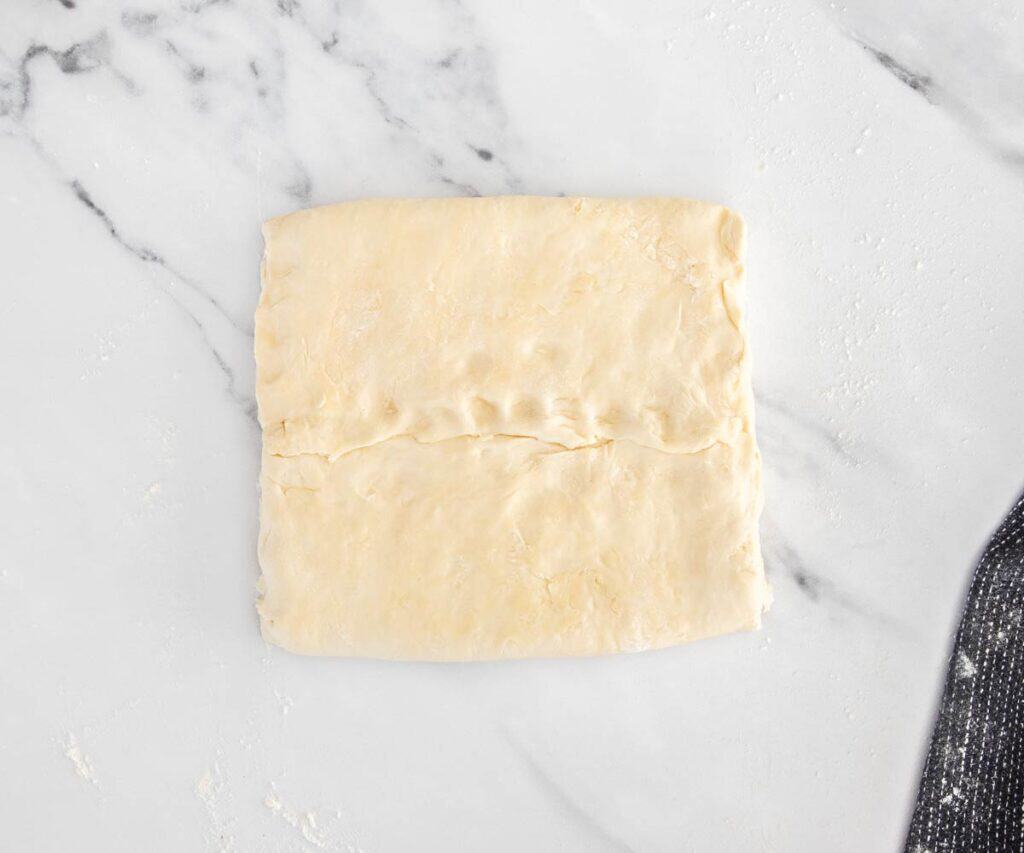
Fully enclosed butter (pâton)
(30 seconds) Now, fold the top piece down, pressing the seam and edges together with your fingertips.
The dough with the butter enclosed is called the pâton.
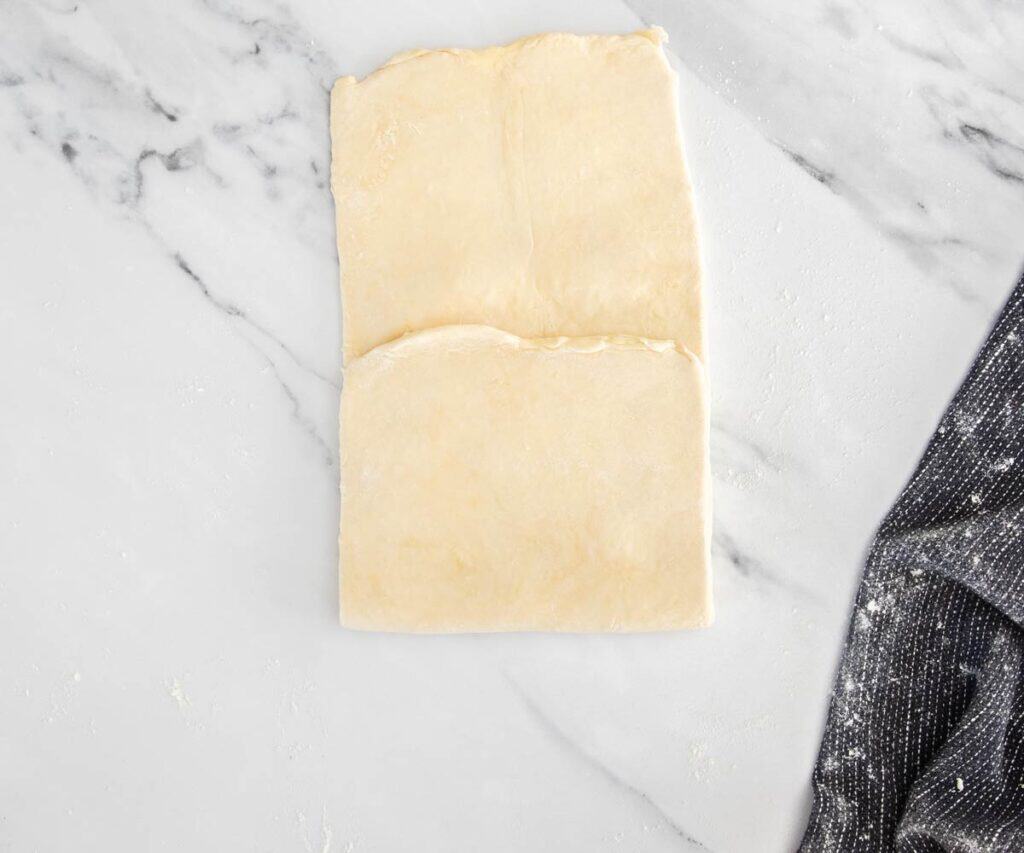
First turn
(5 minutes) Turn the dough a quarter turn (90°) so the seam is now running away from and towards you. Roll it out to about 5mm / ⅕ in thick. At this point, focus more on the dough's length than its width, aiming for roughly 50 x 20 cm / 20 x 8 in.
Imagine the dough in thirds and fold the lower third up over the middle third.
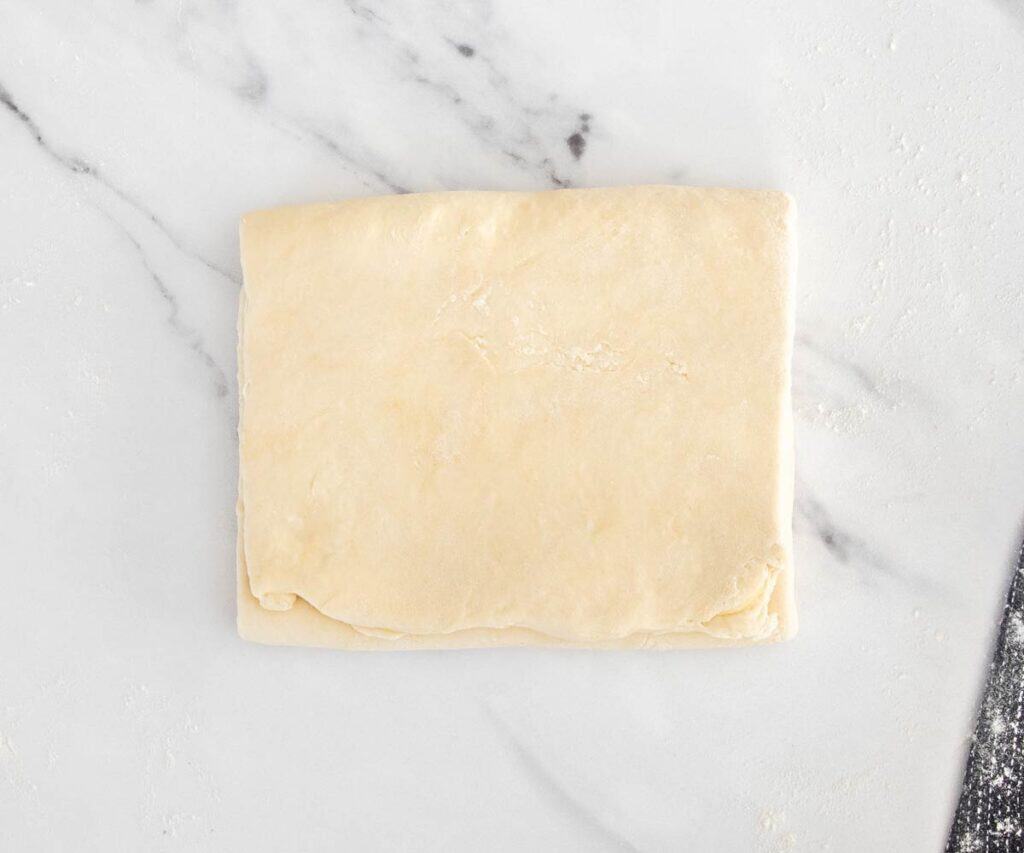
First turn continued
(30 seconds) Now fold the top third down over the top of it.
The first turn is complete; this is called a single fold, simple fold, or letter fold. At the end of the dough, you'll see that you have 3 layers.
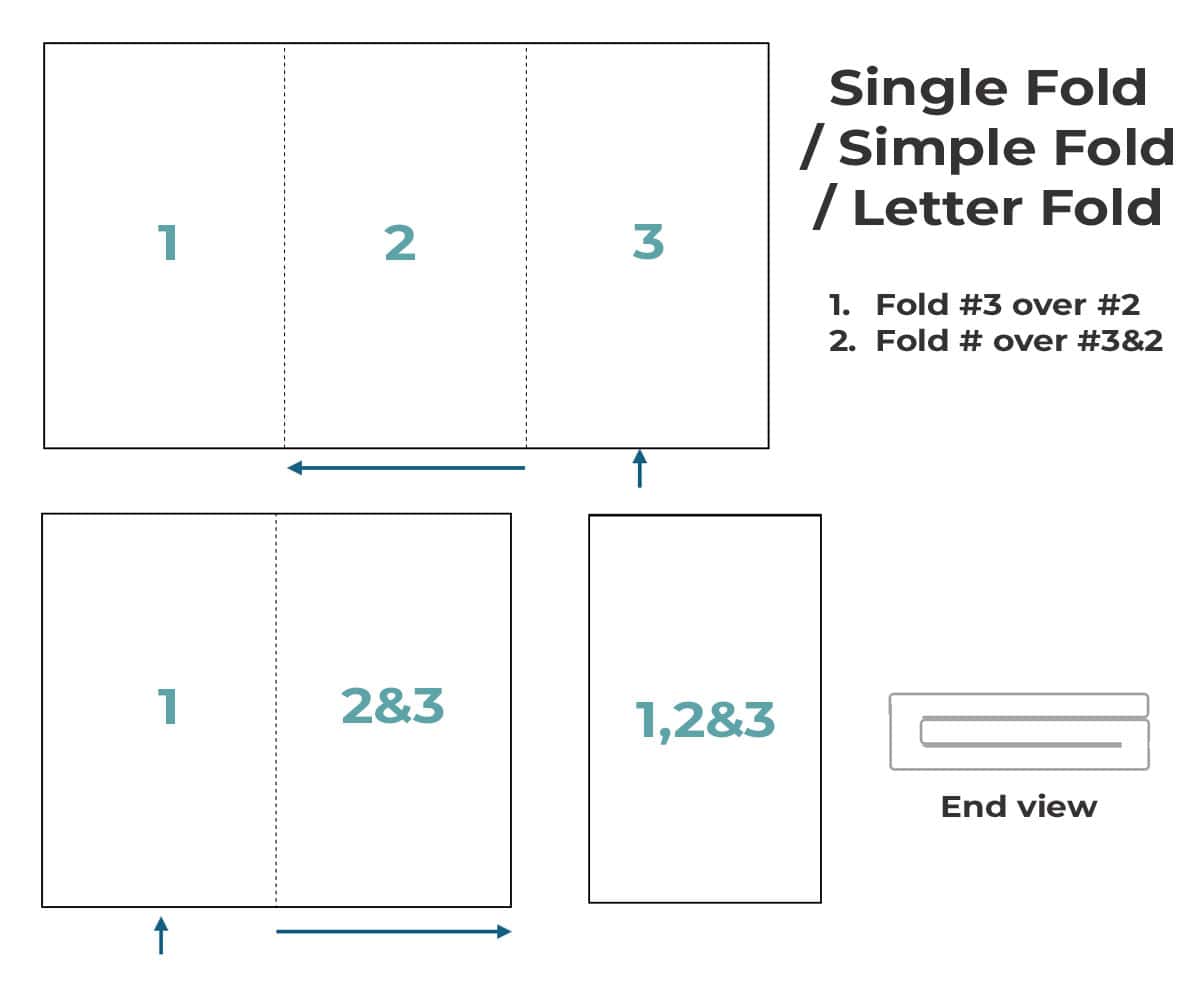
Turning and chilling
If your butter is too soft, melting or greasy and trying to push out of the dough at any point, you need to chill it here for at least 10-15 minutes. If using a buttersheet or the kitchen is cool enough, you may find you can go straight onto the next turn.
You also don't want the butter to get too cold or it will break up as you roll the dough out.
There are three more folds with a rest in between, but these folds are slightly different. If your kitchen is warm or you're using butter that softens very quickly, chill the dough for 10-15 minutes between each turn.
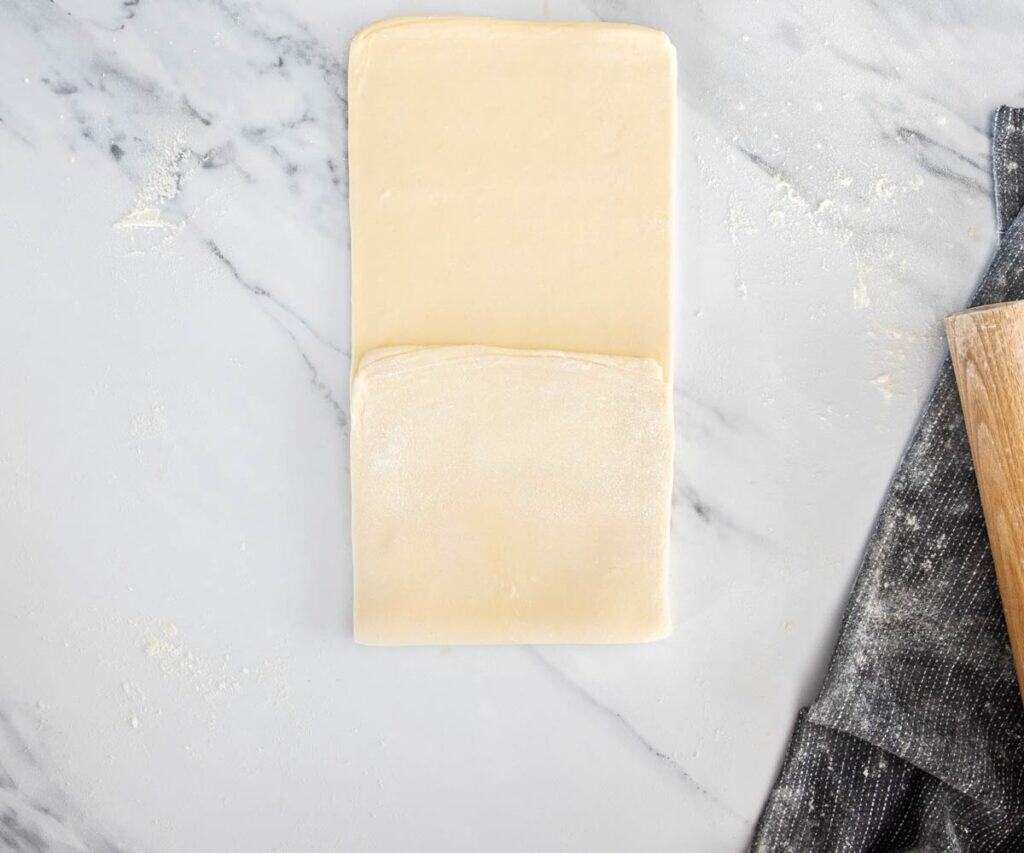
Second, third and fourth turns
(20 minutes + chilling time) Turn the dough a quarter turn (90°) so the seam is now running away from and towards you.
Roll the dough out again (50 x 20 cm / 20 x 8 in). Fold the bottom third up over the middle, just like you did the first time.
As you roll the dough out, tap in the sides from time to time, keeping them as straight as possible.
Save this post!
No spam, I promise 😊
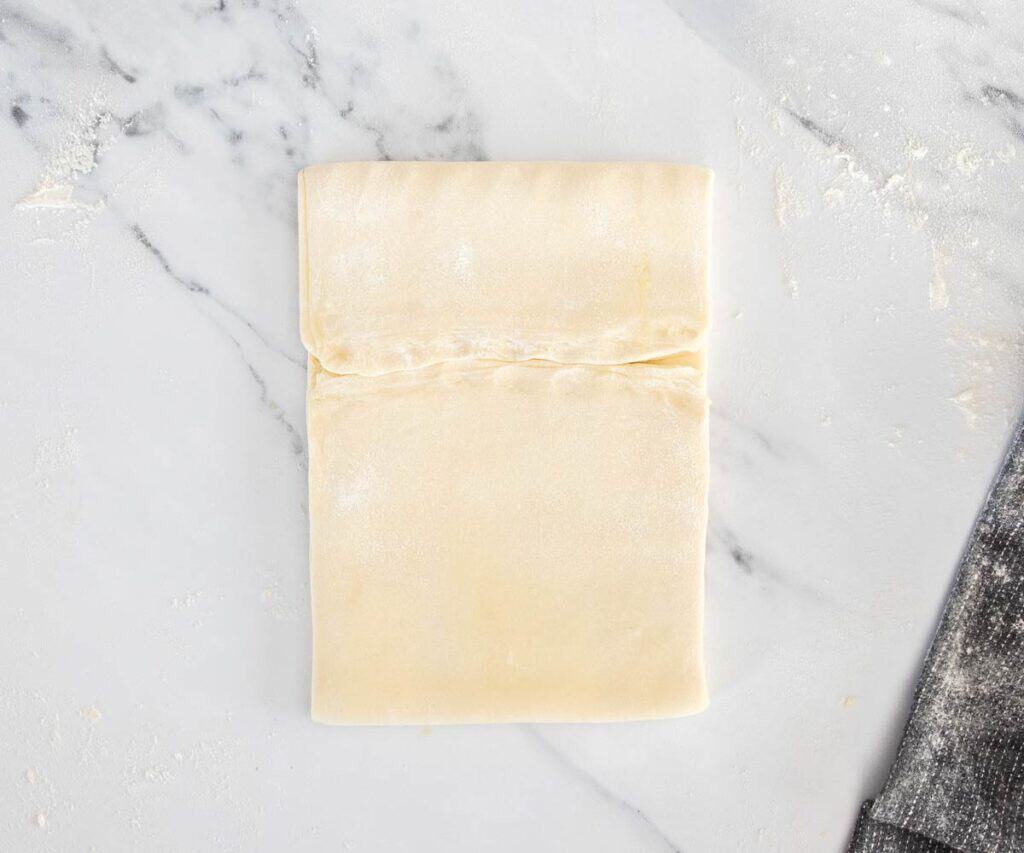
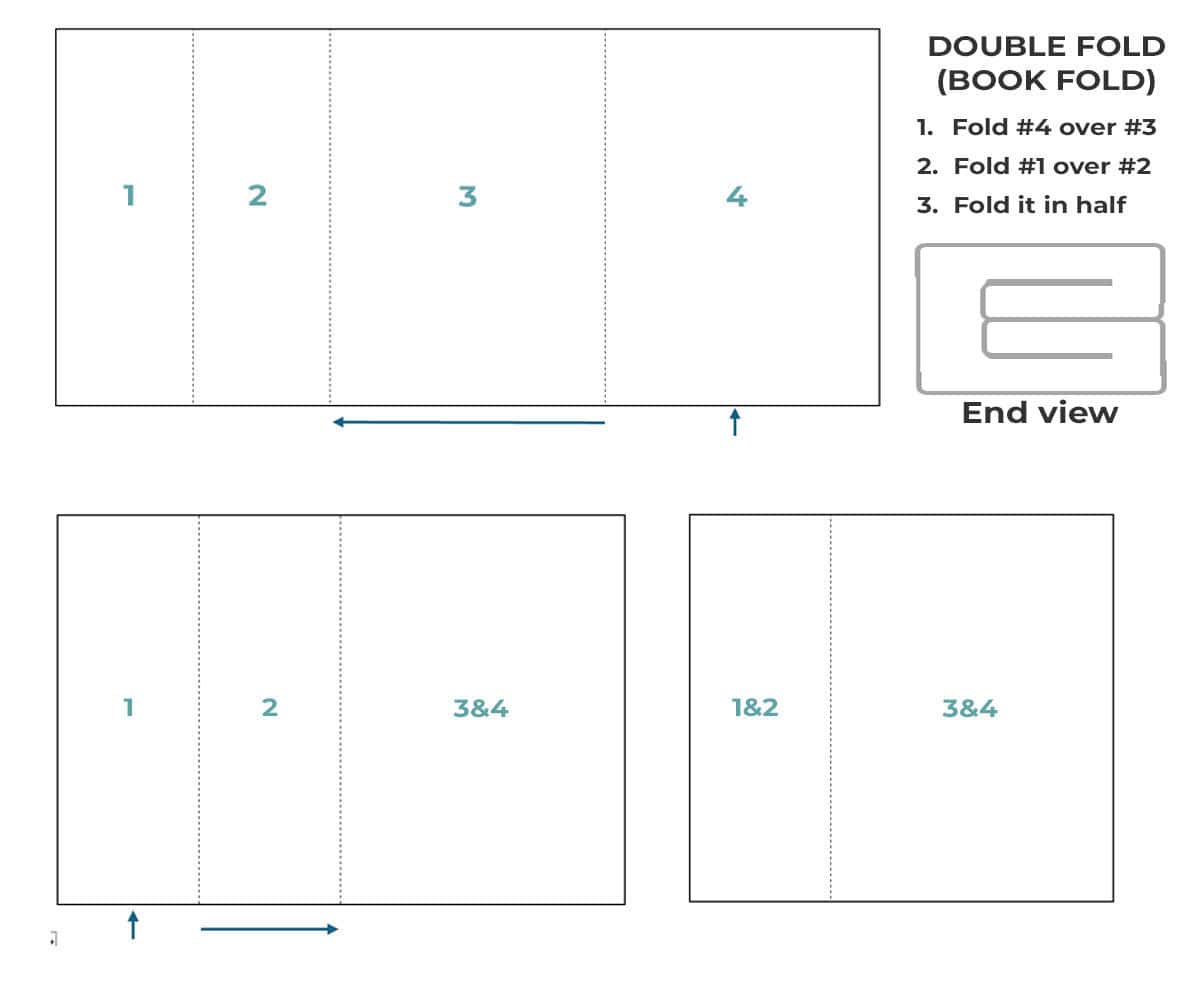
Now, fold the top third in half so the edge meets the edge of the middle one.
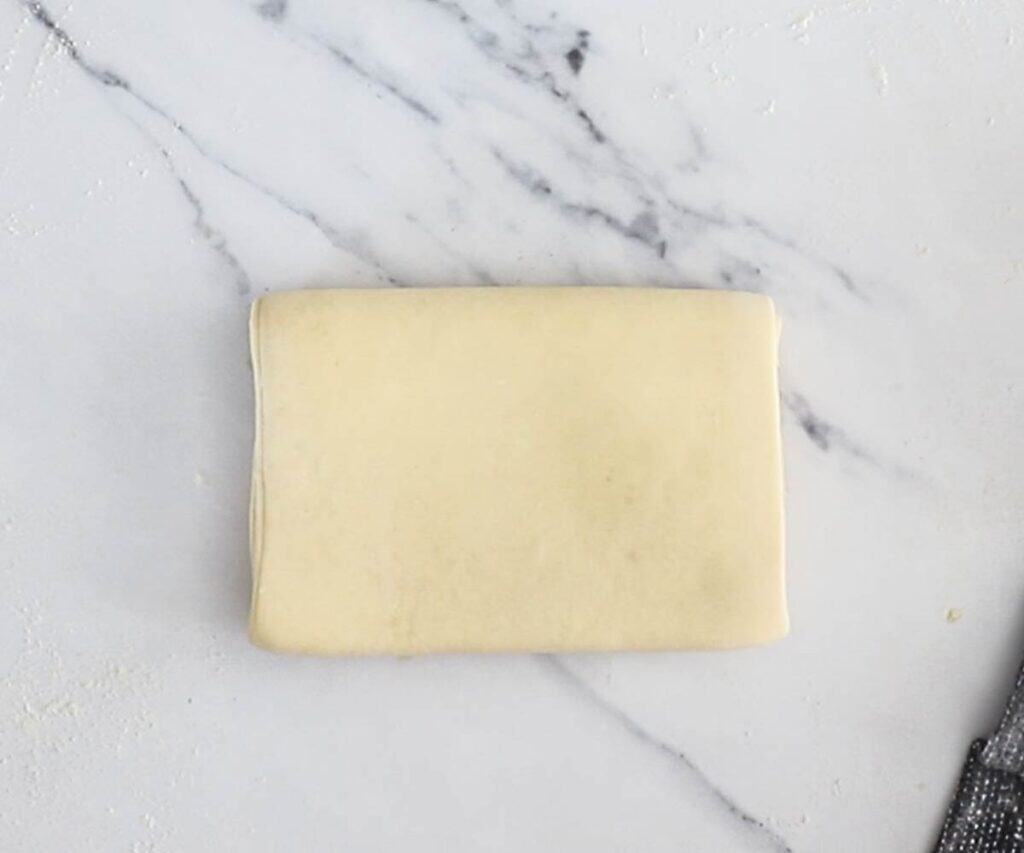
Finally fold it in half, so the seam is inside.
The second turn is complete; this is called a double fold or book fold. At the end, you'll see 4 layers of dough.
Chill the dough for 15-30 minutes after the second turn. Then do the third and fourth turns exactly the same way, chilling if the butter is becoming too soft.
Chill
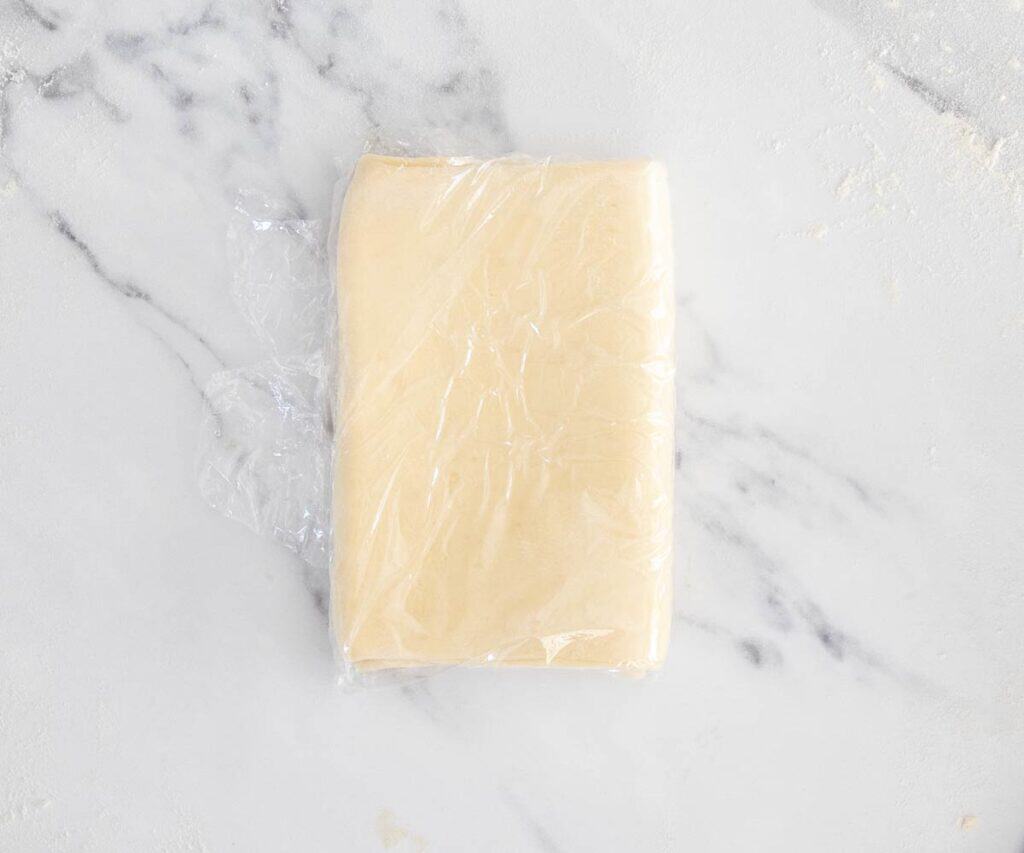
(2 hours) Wrap the dough in plastic wrap and chill for at least 2 hours.
It can be frozen at this point, double-wrapped, for up to 3 months, but it's best to freeze after it's already rolled out (next step).
Roll out the dough
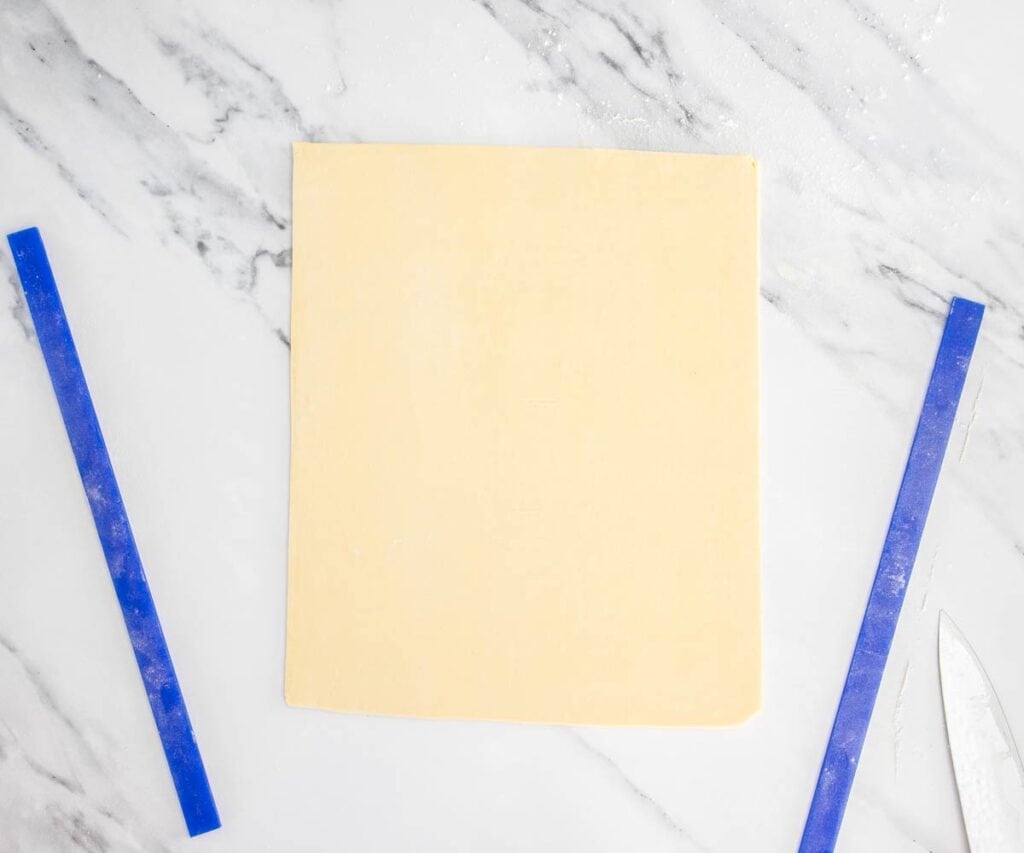
(5 minutes) Let the dough sit at room temperature for 10 minutes for the butter to soften slightly, then roll the dough out to about 3-4mm / ~⅙ inch. Keep the edges as straight as possible so you don't need to trim off as much, then trim the edges straight.
Using rolling pin guides is really helpful for keeping the thickness even.
If you notice the butter breaking up, it's still too cold - let it rest longer.
Store the dough
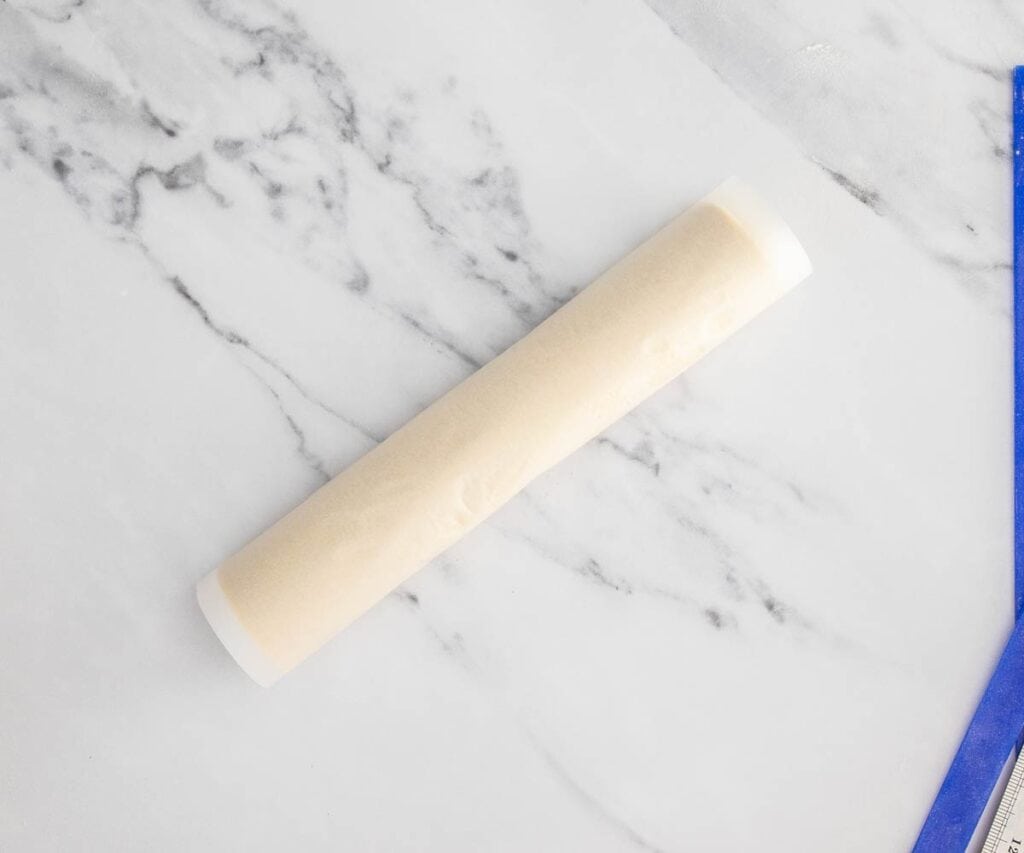
(1 minute) Lay a sheet of baking paper over the sheet of dough, then flip it over and roll it up. Wrap the roll in plastic wrap and chill for 2-3 days or freeze for up to 3 months.
Tips and tricks
- Butter consistency: This is the most important rule for making puff pastry (or even croissants) It would be great if I could give you a temperature to work from, but I've found that butter varieties vary a lot. You want your butter to be pliable - able to be bent without breaking - and not so soft that it's melting.
- Add minimal flour for rolling: Sprinkle a light dusting of flour on your work surface and dough to prevent sticking but not too much or too much of it will work into your dough making it dry.
- Brush away excess flour after each roll: If you don't brush it away, you risk making the dough dry. It will also stop the layers from sealing together properly.
- Don't skip resting and chilling: The more you work the dough, the more you develop the gluten in the flour. Resting the dough allows the gluten to relax. This, in turn, makes it easier to roll. If the dough keeps springing back as you roll it, it needs to rest. Chilling is required to firm the butter up slightly, as it will soften quickly while it is out of the fridge.
- Use a sharp knife or cutter to cut the dough: This will reduce the chance of the layers being crushed together at the edges.
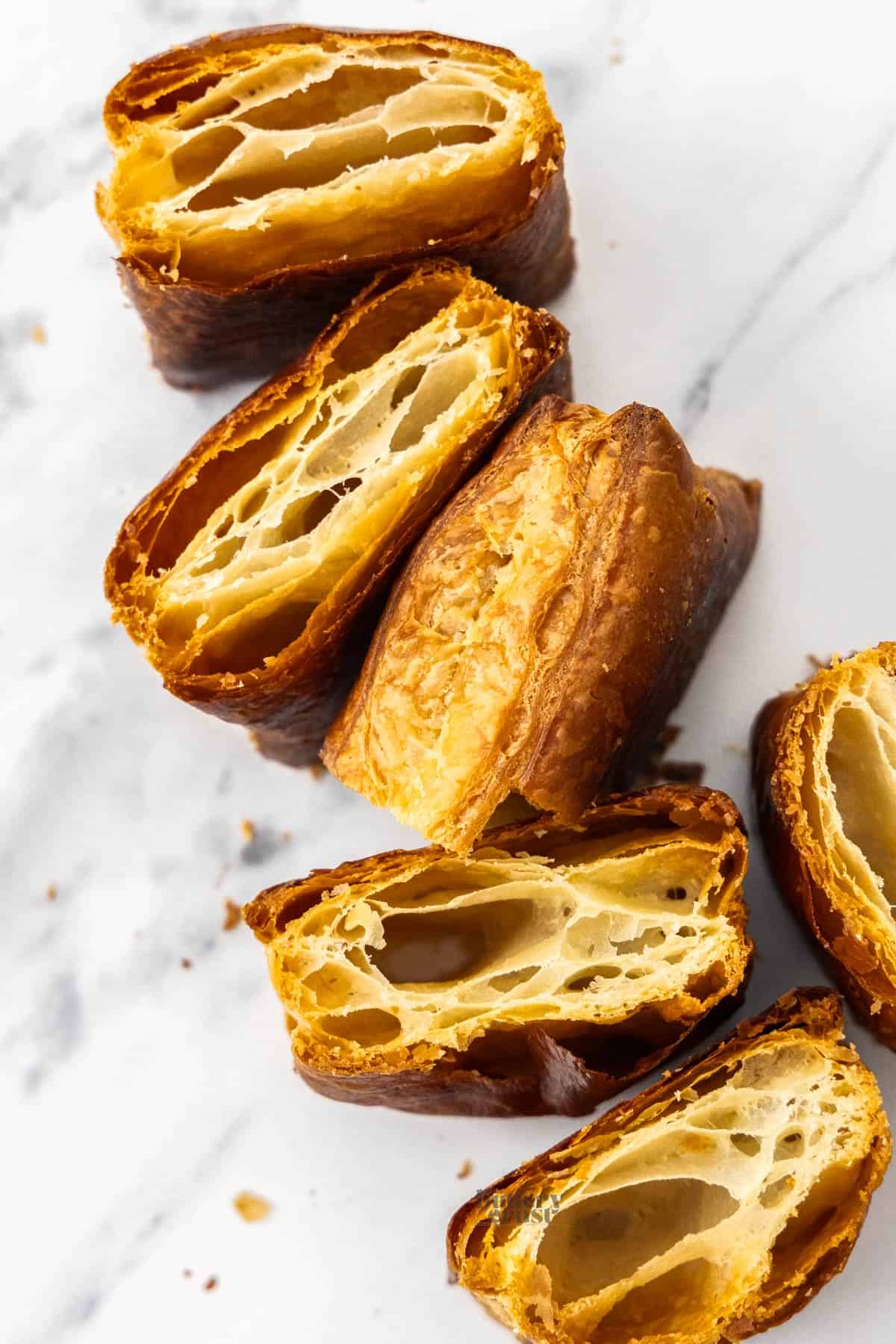
- Cold pastry + hot oven: The colder the butter in the pastry is when it goes into the oven, the better the puff you'll get. As it bakes, the butter slowly softens and melts inside the dough, releasing the steam, which in turn creates the puff and bubbles between the layers.
😥 Troubleshooting
The butter may have become too warm and incorporated into the dough. The dough may have been rolled too thin. The layers may have been compressed when cutting. The pastry may not have been cold enough when it went into the oven.
Pooling butter usually means the butter in the dough was too warm before baking or the oven was not hot enough to begin with.
The butter is too cold. Let the dough sit at room temperature briefly, so the butter becomes more pliable, before trying again.
It's too warm. Wrap the pastry and chill before continuing.
Patch the spot with a little flour and chill for a minute or two before continuing.
The gluten needs time to relax. Cover and refrigerate a little longer before continuing.
Uneven rolling, misaligned folds, squashed edges or uneven butter distribution can all contribute.
How to use puff pastry
- Beef wellington
- Tarts and galettes
- Pot pie lids
- Sausage rolls
- Cheese straws
- Apple turnovers
- Palmiers (elephant ears)
- Tarte Tatin
- Cream Horns
- Danishes
- Mille-feuille
Storage
Fridge
Store puff pastry in the fridge, wrapped in plastic wrap, for 2-3 days before use.
Freezer
Freeze puff pastry rolled up in baking paper, then sealed twice over in plastic wrap, for up to 3 months.
Tools I use
- Rolling pin
- Rolling pin guides; these will allow you to make sure your puff pastry is rolled evenly.
❓FAQs
This is best done by feel rather than temperature, since temperature varies by butter brand. The butter should be cold but flexible, not brittle and not greasy. The butter should bend without breaking.
Yes. It can chill for 2-3 days in the fridge before use or freeze for up to 3 months.
Recipes vary. This puff pastry recipe uses one single fold and three double folds. You can do an extra double fold if you like to get a total of 768 layers.
It's best to thaw it before you use it so you can shape it easily. Thaw it in the fridge overnight for best results, and make sure it stays cold while you use it.
Yes, for up to 3 months.
No. Puff pastry is unleavened. Croissant dough, however, does have yeast.
Technically, you could but leave out the added salt in the recipe. Unsalted butter is better since there is no standard as to how much salt is added to salted butter.
Yes, it can. While puff pastry itself is not normally sweet, the filling is what will decide whether you're making a dessert or not.
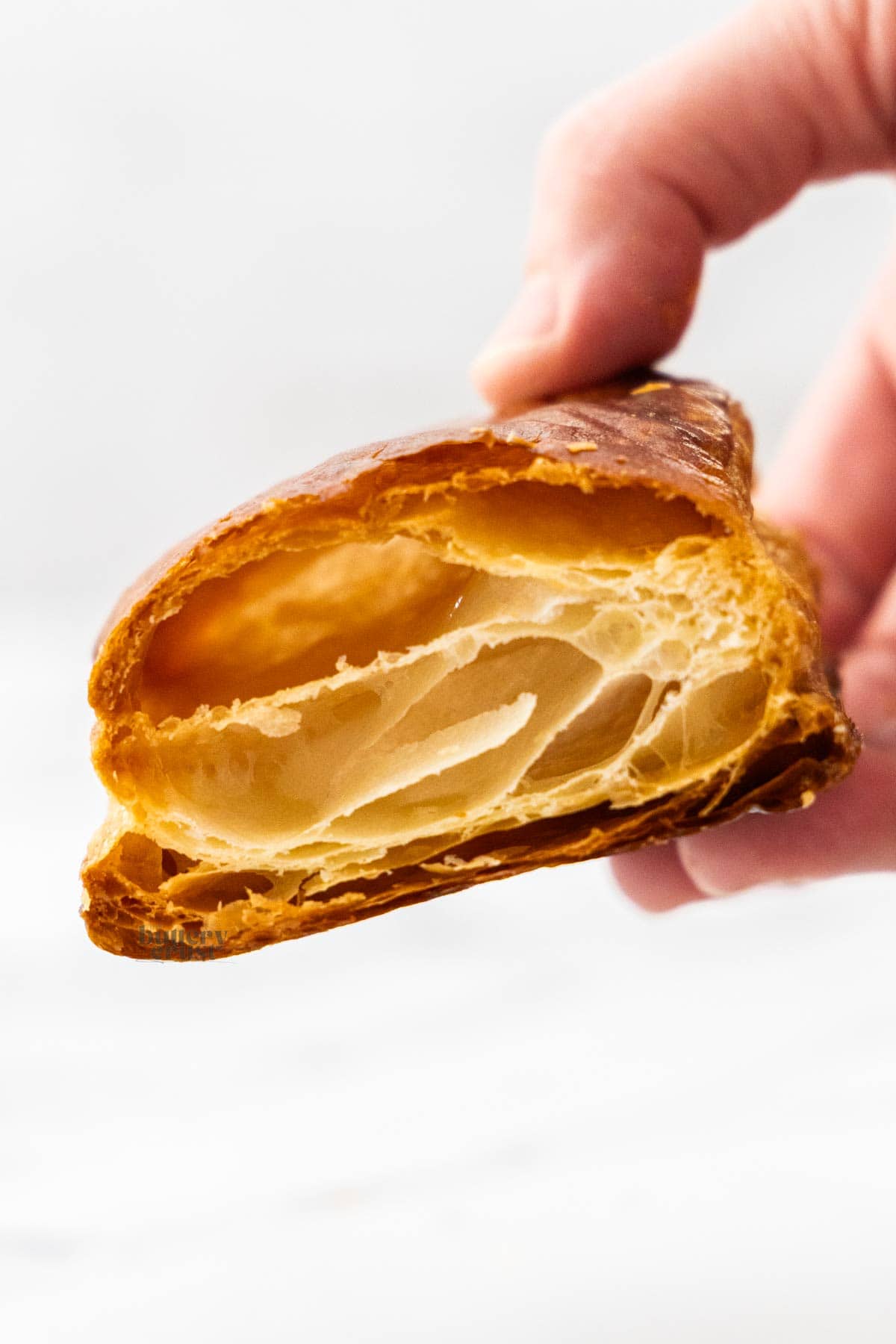
Homemade puff pastry may be a labour of love, but most of that time is simply spent waiting on chilling - the actual hands-on time is minimal. The first glimpse of the amazing rise and those golden, flaky layers will have you already deciding to make another batch.
More recipes you'll love


If you made this classic puff pastry recipe,
be sure to leave a ⭐⭐⭐⭐⭐ rating below. Thank you!
Hungry for more?
- Subscribe to Email, Facebook, Pinterest and Instagram.
- Add TBC to your Google Preferred Sources.
Classic Puff Pastry Recipe
Equipment
- Large measuring bowl
- Rolling Pin
- Rolling pin guides useful but not necessary
Ingredients
- 25 g unsalted butter (~1oz)
- 125 ml cold water (½ cup)
- 1 teaspoon white vinegar
- 225 g bread flour or all-purpose flour
- 5 g salt (scant teaspoon)
- 200 g unsalted butter cold - for butter block (7oz)
Instructions
- THE DOUGH:Melt the 25g of butter and set aside to cool slightly.
- In a small bowl, combine the water and vinegar. Set aside.
- In a medium or large mixing bowl, whisk together the flour and salt until well incorporated.
- Add the water & vinegar mixture and the melted butter and immediately stir with a spoon (don't wait or the butter will begin to solidify in the cold water). When you've mixed as much in as you can with a spoon, use your hands until it just comes together into a ball of rough dough.Tip: Don't overwork the dough at this stage.
- Slice a crosshatch design in the top of the dough, then wrap in plastic wrap and chill for 30 minutes.
- THE BUTTER BLOCK:Slice your butter into roughly 1cm/~½ in slices and place them side by side into a rough square between plastic wrap. Gently pound and roll with a rolling pin until the butter joins and forms a 15cm / 6in square.
- Chill the butter 10-15 minutes until it's pliable and can bend without breaking but does not immediately melt on your hands.
- ENCASE THE BUTTER:Dust a clean work surface with just a little flour, then dust the top of the dough lightly.Tip: Only ever add flour if the dough is sticking to the work surface or the rolling pin.
- Roll the dough out to the same width as the butter block and twice as long - so roughly 15x30cm / 6x12in depending on how square you got the butter block.
- Place the butter block in the centre of the dough, then fold the bottom piece of bare dough up over the middle, followed by the top one, using your fingers to push together a seam in the centre.
- FIRST FOLD:Dust the worksurface and dough if needed.
- Turn the dough so the join points toward and away from you. Roll the dough out to about 5mm / ⅕ in, focusing on making it long rather than wide. It should not go beyond 18-20cm/7-8in wide.
- Use a pastry brush to brush away any excess flour from the top face of the dough.
- Fold the bottom third of the dough up over the middle third. Brush excess flour away. Then pull the top third of dough down over the centre as well, so now you have 3 layers when you look at the end of the dough.This is known as a single fold, simple fold or a letter fold.
- If the butter has significantly softened, chill the dough for 10-15 minutes before continuing.
- SECOND FOLD:Turn the dough so the join is pointing towards and away from you.
- Roll it out again to 5mm / ⅕ in focusing on making it long rather than wide and keep the sides as straight as possible by tapping them in as needed.
- Use a pastry brush to brush away any excess flour from the top face of the dough.
- Fold the bottom third of the dough up over the middle third. Brush excess flour away.
- Now, fold the top third in half, so that the top edge meets the edge of the one folded over the centre.
- Brush away the excess flour, then fold the dough in half so the seam is now inside.This is known as a double fold.
- Chill for 30 minutes.
- THIRD AND FOURTH FOLDS:Repeat steps 15-20 two more times to get two more double folds.
- Chill 2 hours before use.
- STORAGE:Roll the rough puff pastry out to 3-4mm / ⅙ in thick. Use rolling guides if you can to make it even. It should reach a size of about 30x40cm / 12x16in.
- Place a sheet of baking paper over the dough making sure it's long enough to overlap on both ends. Holding the dough and the paper at one end, quickly and confidently flip it over. Fold the edge of the paper over the edge of dough, then simply roll it up.
- Roll it in a double layer of plastic wrap and chill for 2-3 days before use or freeze for up to 3 months allowing it to thaw in the fridge overnight before use.
- BAKING:Brush puff pastry with an egg wash before baking.
- Puff pastry is best baked in a hot oven, 200C (180C fan forced) / 395F for 20-30 minutes until deep golden brown.Timing will depend on how you're using it. It will take less time to bake if it's just topping something or unfilled.
- If you make it, don't forget to leave a comment & rating. Thanks so much 😊
Notes
- Yield: One batch of dough makes about 535g / ~19oz. Recommended rolled out size is about 4mm/⅙in thick and 30x40cm / 12x16in. Rolled out, it is equivalent to 1 ½ square sheets of store-bought puff pastry but puffs up far more.
- Nutrition details are approximate only - scroll below the recipe to find the full nutritional information.

Nutrition
Rough Puff Pastry Recipe
Equipment
- Large measuring bowl
- Rolling Pin
- Rolling pin guides useful but not necessary
Ingredients
- 200 g unsalted butter cold - for butter block (7oz)
- 25 g unsalted butter (~1oz)
- 125 ml cold water (½ cup)
- 1 teaspoon white vinegar
- 225 g bread flour or all-purpose flour
- 5 g salt (scant teaspoon)
Instructions
- THE DOUGH:Grate the 200g of butter and chill until required.
- Grate the 25g of butter and set aside.
- In a small bowl, combine the water and vinegar. Set aside.
- In a medium or large mixing bowl, whisk together the flour and salt until well incorporated.
- Add the water & vinegar mixture and the melted butter (not the grated butter) and immediately stir with a spoon (don't wait or the butter will begin to solidify in the cold water). When you've mixed as much in as you can with a spoon, use your hands until it just comes together into a ball of rough dough.Tip: Don't overwork the dough at this stage.
- Slice a crosshatch design in the top of the dough, then wrap in plastic wrap and chill for 30 minutes.
- ENCASE THE BUTTER:Dust a clean work surface with just a little flour, then dust the top of the dough lightly.Tip: Only ever add flour if the dough is sticking to the work surface or the rolling pin.
- Roll the dough out to the same width as the butter block and twice as long - so roughly 15x30cm / 6x12in depending on how square you got the butter block.
- Scatter the grated butter evenly over just ⅔ of the dough, then press down lightly with your hands. Fold the bare end of dough over the centre, then fold the final third (topped with grated butter) over that and press down lightly.
- FIRST FOLD:Dust the worksurface and dough if needed.
- Turn the dough so the join points toward and away from you. Roll the dough out to about 5mm / ⅕ in, focusing on making it long rather than wide. It should not go beyond 18-20cm/7-8in wide.
- Use a pastry brush to brush away any excess flour from the top face of the dough.
- Fold the bottom third of the dough up over the middle third. Brush excess flour away. Then pull the top third of dough down over the centre as well, so now you have 3 layers when you look at the end of the dough.This is known as a single fold, simple fold or a letter fold.
- If the butter has significantly softened, chill the dough for 10-15 minutes before continuing.
- SECOND FOLD:Turn the dough so the join is pointing towards and away from you.
- Roll it out again to 5mm / ⅕ in focusing on making it long rather than wide and keep the sides as straight as possible by tapping them in as needed.
- Use a pastry brush to brush away any excess flour from the top face of the dough.
- Fold the bottom third of the dough up over the middle third. Brush excess flour away.
- Now, fold the top third in half, so that the top edge meets the edge of the one folded over the centre.
- Brush away the excess flour, then fold the dough in half so the seam is now inside.This is known as a double fold.
- Chill for 30 minutes.
- THIRD AND FOURTH FOLDS:Repeat steps 15-20 two more times to get two more double folds.
- Chill 45 minutes before use.
- STORAGE:Roll the rough puff pastry out to 3-4mm / ⅙ in thick. Use rolling guides if you can to make it even. It should reach a size of about 30x40cm / 12x16in.
- Place a sheet of baking paper over the dough making sure it's long enough to overlap on both ends. Holding the dough and the paper at one end, quickly and confidently flip it over. Fold the edge of the paper over the edge of dough, then simply roll it up.
- Roll it in a double layer of plastic wrap and chill for 2-3 days before use or freeze for up to 3 months allowing it to thaw in the fridge overnight before use.
- BAKING:Brush puff pastry with an egg wash before baking.
- Puff pastry is best baked in a hot oven, 200C (180C fan forced) / 395F for 20-30 minutes until deep golden brown.Timing will depend on how you're using it. It will take less time to bake if it's just topping something or unfilled.
- If you make it, don't forget to leave a comment & rating. Thanks so much 😊
Notes
- Yield: One batch of dough makes about 535g / ~19oz. Recommended rolled out size is about 4mm/⅙in thick and 30x40cm / 12x16in. Rolled out, it is equivalent to 1 ½ square sheets of store-bought puff pastry but puffs up far more.
- Nutrition details are approximate only - scroll below the recipe to find the full nutritional information.
Comments
No Comments