
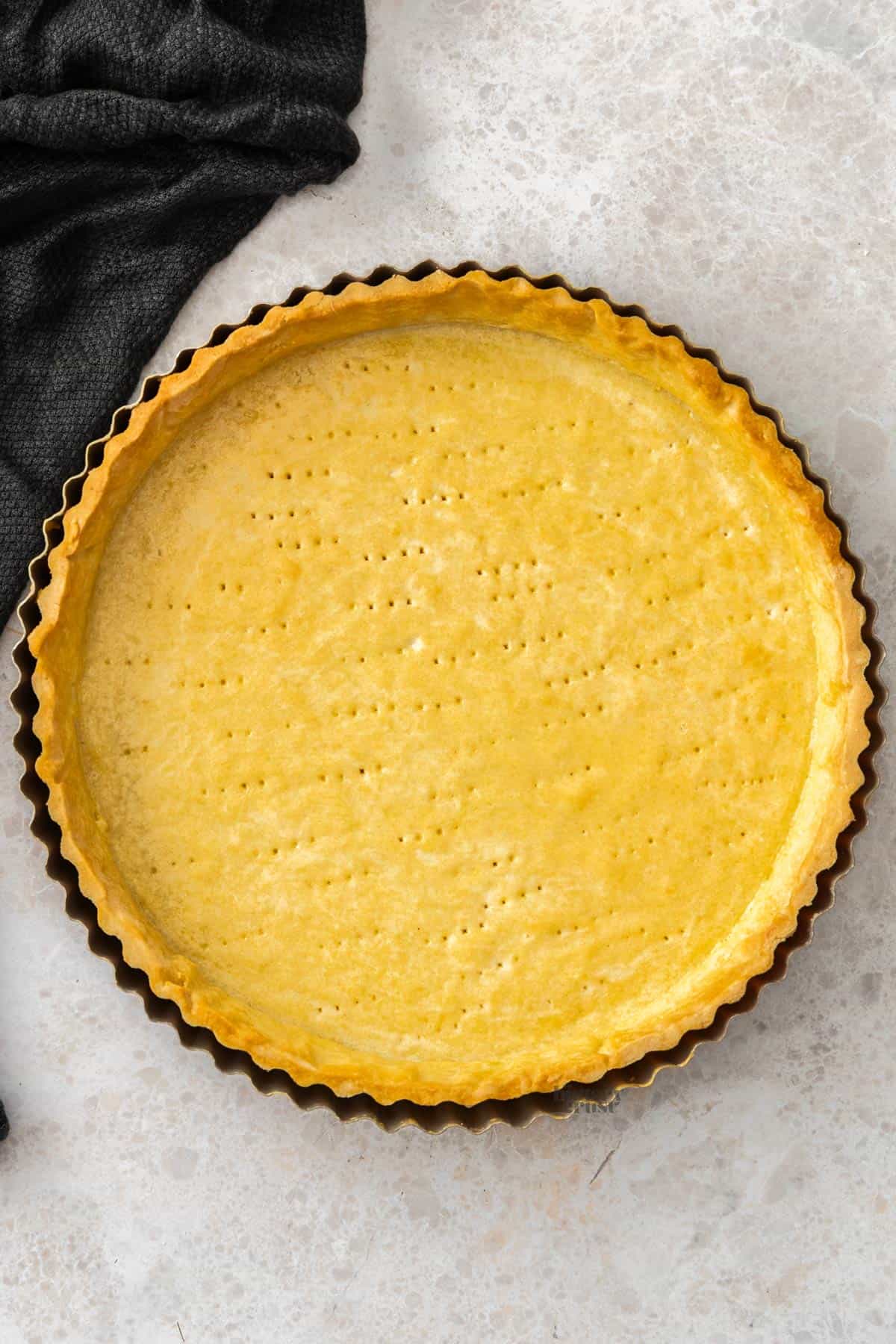
Classic and wonderfully reliable, pâte sucrée, a French sweet pastry, will become your go-to for delicious, elegant tarts. Crisp, buttery and tender it creates a beautiful shell that's perfect for larger tarts, fruit-filled tarts and anywhere you need a sturdy tart shell.
Made using the creaming method, this dough turns out buttery, rich and cookie-like and is surprisingly forgiving. It shapes easily into a tart pan - you can roll it or press it - and holds it's shape during baking.
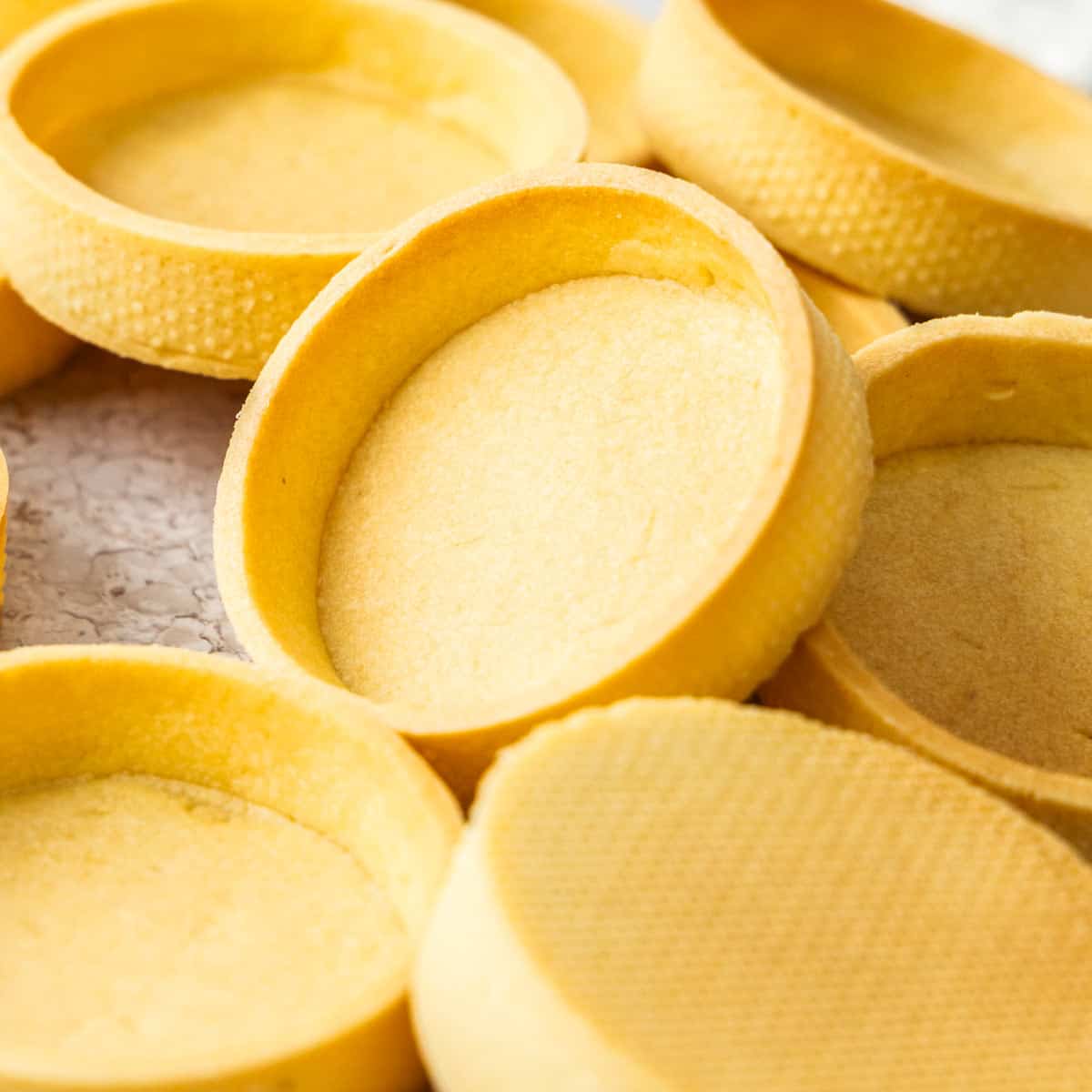
Try this pâte sabée for small or mini tarts.
Never Miss a Recipe!
Get the latest recipes straight to your inbox!
Jump to:
❤️ Why this recipe works
- Beautifully structured - bakes up crispy and sturdy and slices neatly
- Sweet-buttery flavour - richer than standard pie dough with a delicate cookie-like finish
- Perfect for larger tarts - is ideal when you have substantial fillings and want to serve neat slices
- Easy and forgiving - the dough can be rolled out but is easy to patch too, if needed
- Reliable, make-ahead pastry - once made it can be chilled for a few days or frozen for up to 3 months.
What is Pâte Sucrée?
Pâte Sucrée (pronounced paht su-kray) is a classic French sweet tart crust often used for larger tarts or tarts with heavier fillings.
Similar to pâte sabée, pâte sucrée has a little more structure so is less delicate but still very tender. This means it can hold heavier fillings and cuts more neatly making it the better dough for larger tarts. While not strictly so, pâte sucrée tends to be richer and sweeter too - the name literally translates to "sweet dough".
Pâte sucrée is made using the creaming method as opposed to the sand method (sablage) used to make pâte sabée.
Ingredients & substitutions
The ingredients in this sweet French tart crust are very simple and you will likely have all of these already.
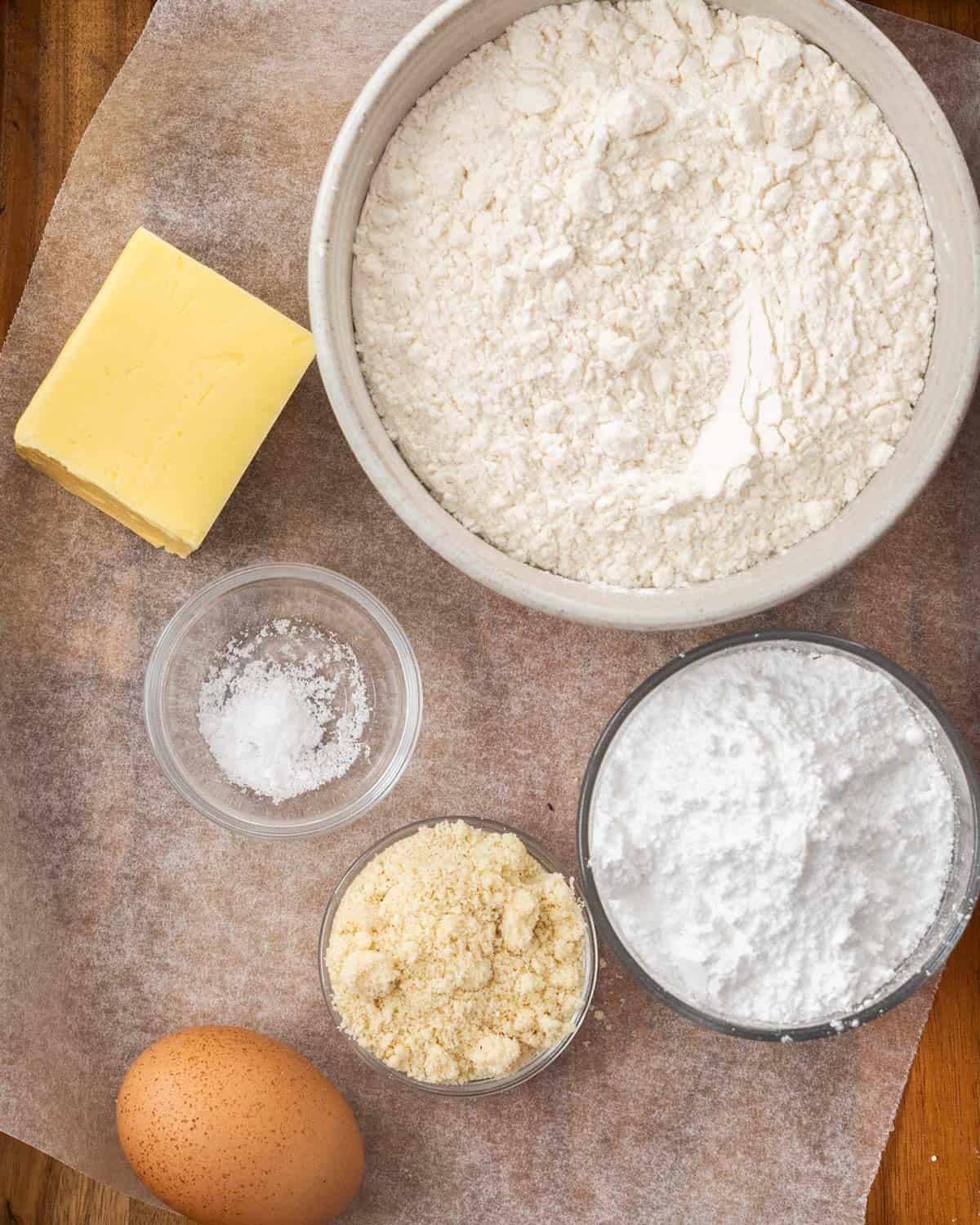
- Flour: For a sturdier, more structured finish than pâte sabée, pâte sucrée pastry uses plain flour (aka all-purpose flour) in place of the more delicate pastry flour which wouldn't be strong enough for larger tarts with heavy fillings.
- Icing sugar (aka powdered sugar) is used to help with the delicate texture.
- Unsalted butter is preferred and make sure it doesn't have any added water (check the ingredients list). You can use salted butter if that's what you have on hand but leave out the extra salt called for in the recipe.
- Almond meal (aka ground almonds) is used to add a slight nuttiness and the delicate texture French pastries are known for.
- Egg: I use one large egg but since egg sizes vary around the world, weigh it if you can. You want 45-50g egg.
Make sure your butter and egg are at room temperature before you begin. Perfect pâte sucrée relies on the creaming together of the butter and sugar. If you're egg is cold, your butter will firm up again.
How to make pâte sucrée
This French sweet pastry is extremely easy to make, and while you can make it without one, a stand mixer makes it even easier!
- Beat together the dough
- Roll it out and shape
- Chill
- Bake
This pastry is made using the creaming method which is what gives it it's tender, crisp texture.
⬇️Jump to the recipe card for full quantities and instructions.
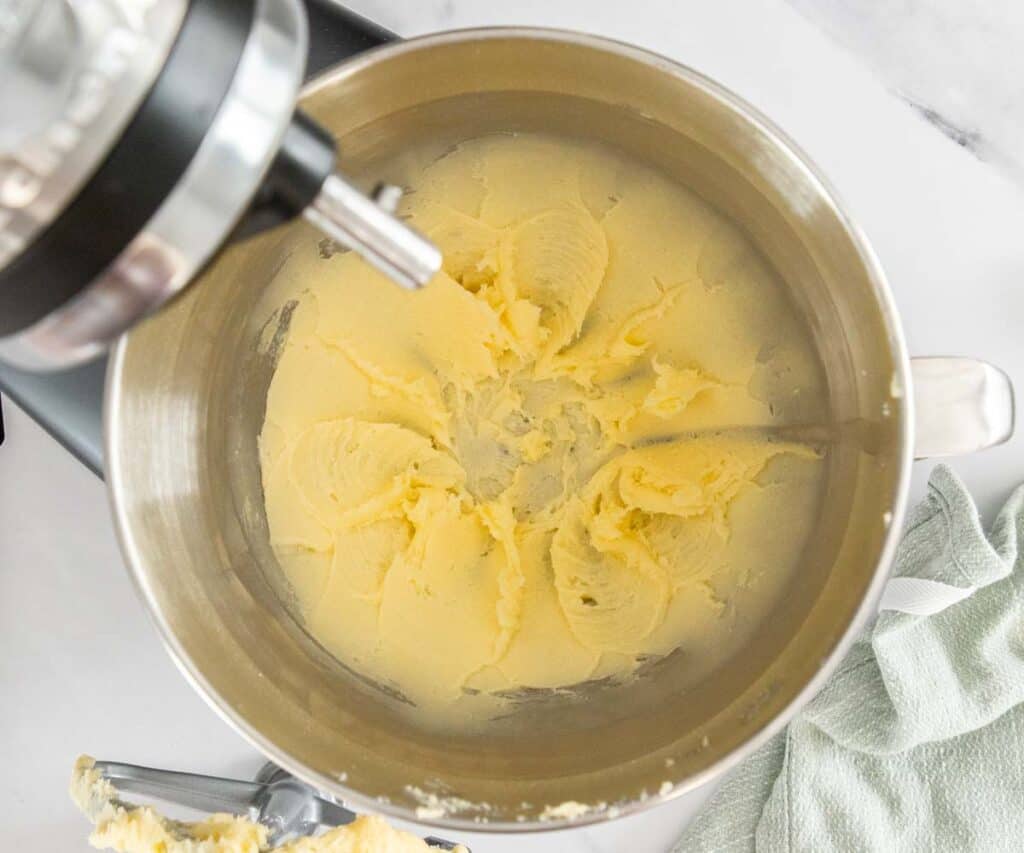
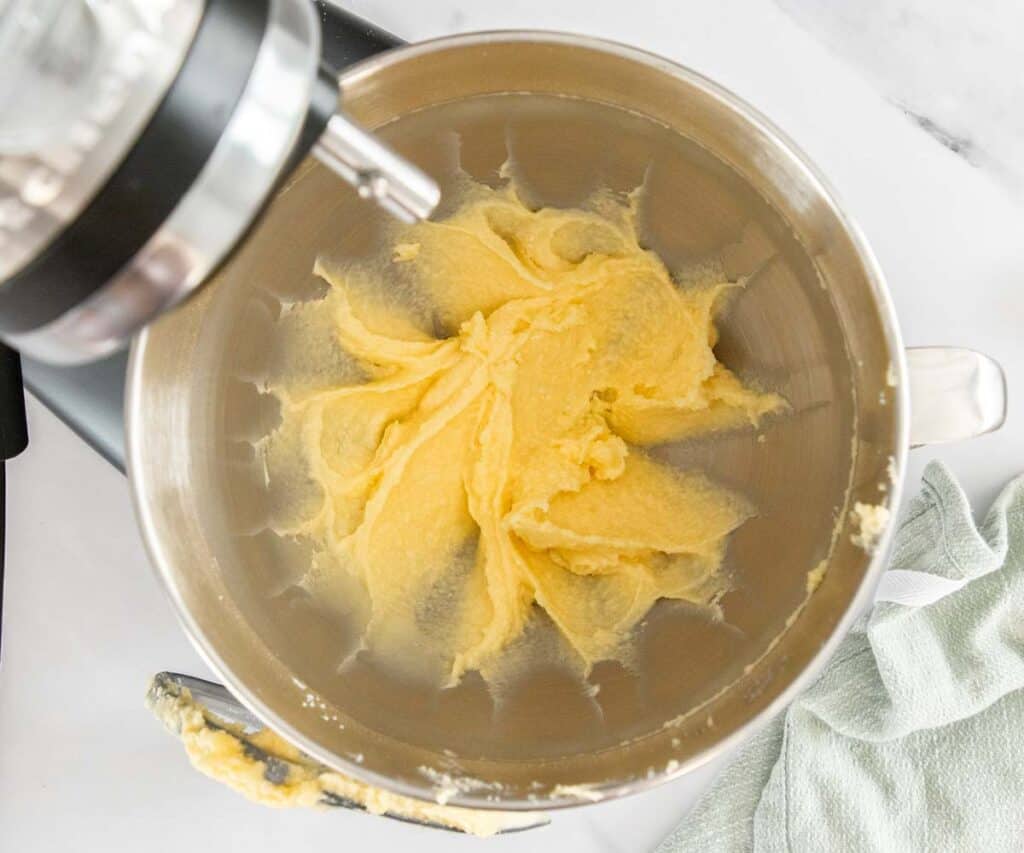
Cream butter and sugar
(1 minute) You don't need to aerate the butter or get it very pale, you only need to beat the butter and sugar until it looks smooth.
Add the egg
(1 minute) Scrape down the sides of the bowl first, then add the egg and beat it in. If it looks a little bit split at this stage that's fine but if you see clear lumps of butter, keep beating (it's likely your butter has chilled again).
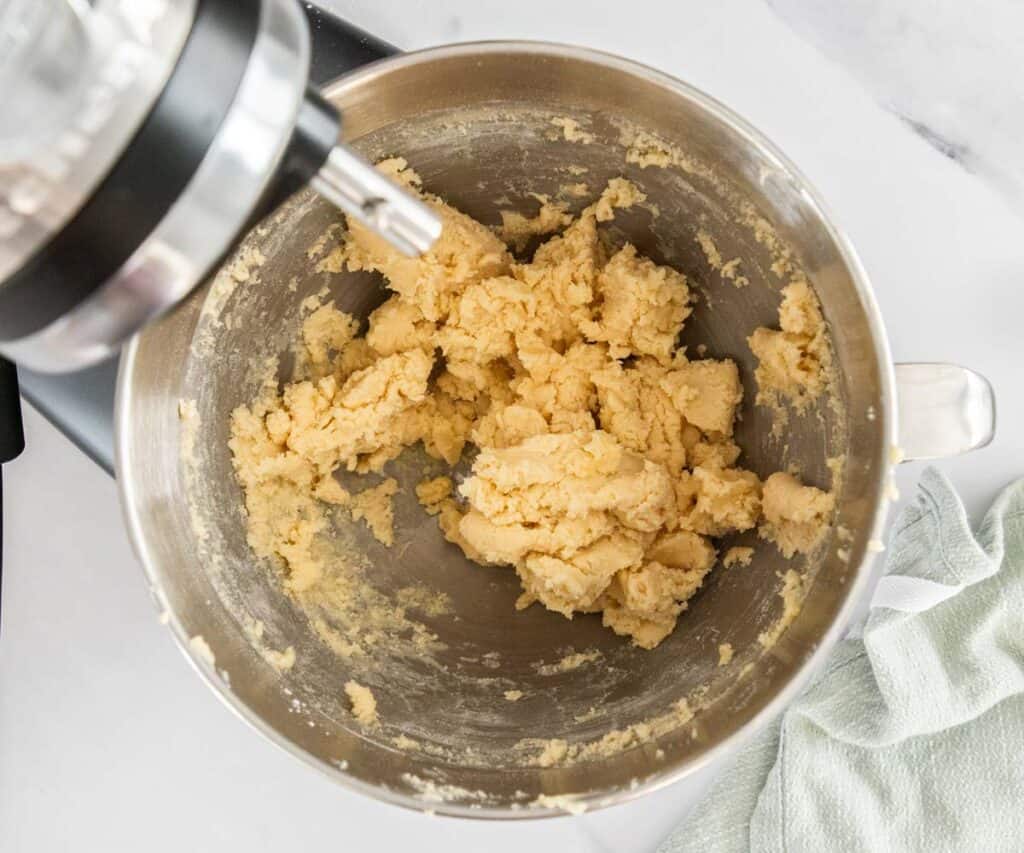
Dry ingredients
(1 minute) Again, scrape down the sides of the bowl then add the dry ingredients - flour, almond meal, salt - and beat until it clumps.
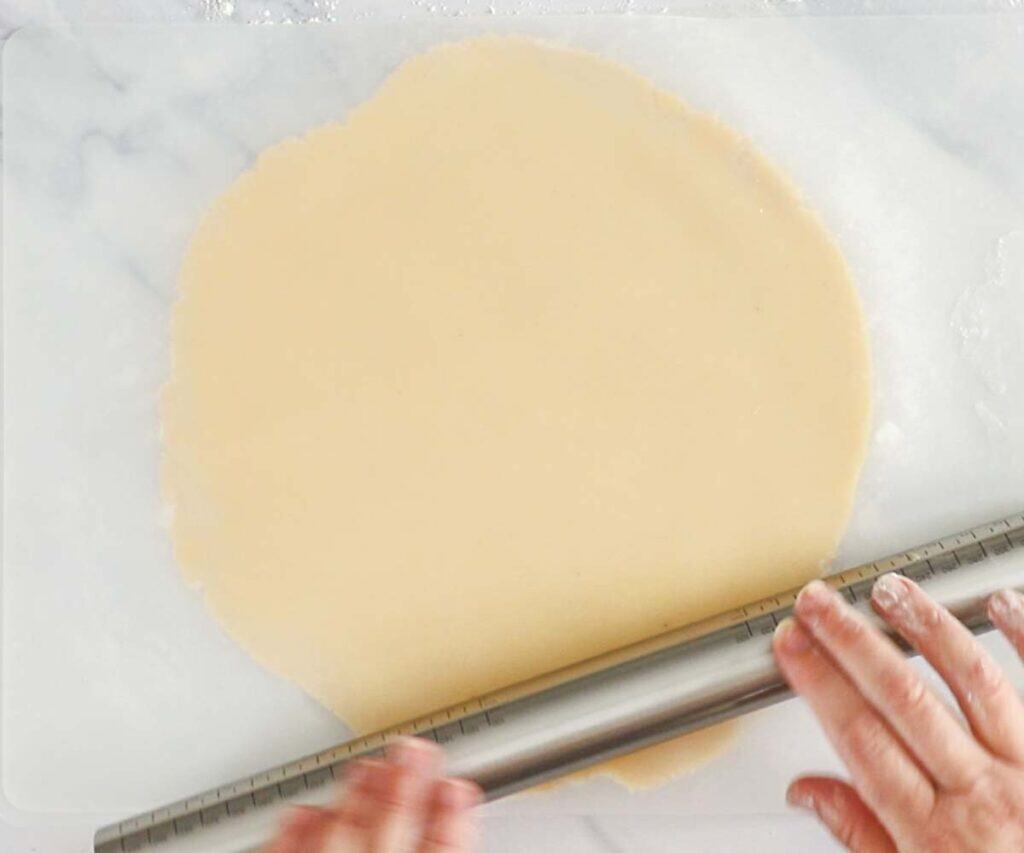
Roll it out
(2 minutes) Form the dough into a smooth disk, then place it, lightly dusted with flour, between two sheets of baking paper or silicone mats. Roll it out to about 28cm/11inch wide and 4mm/⅙ inch thick.
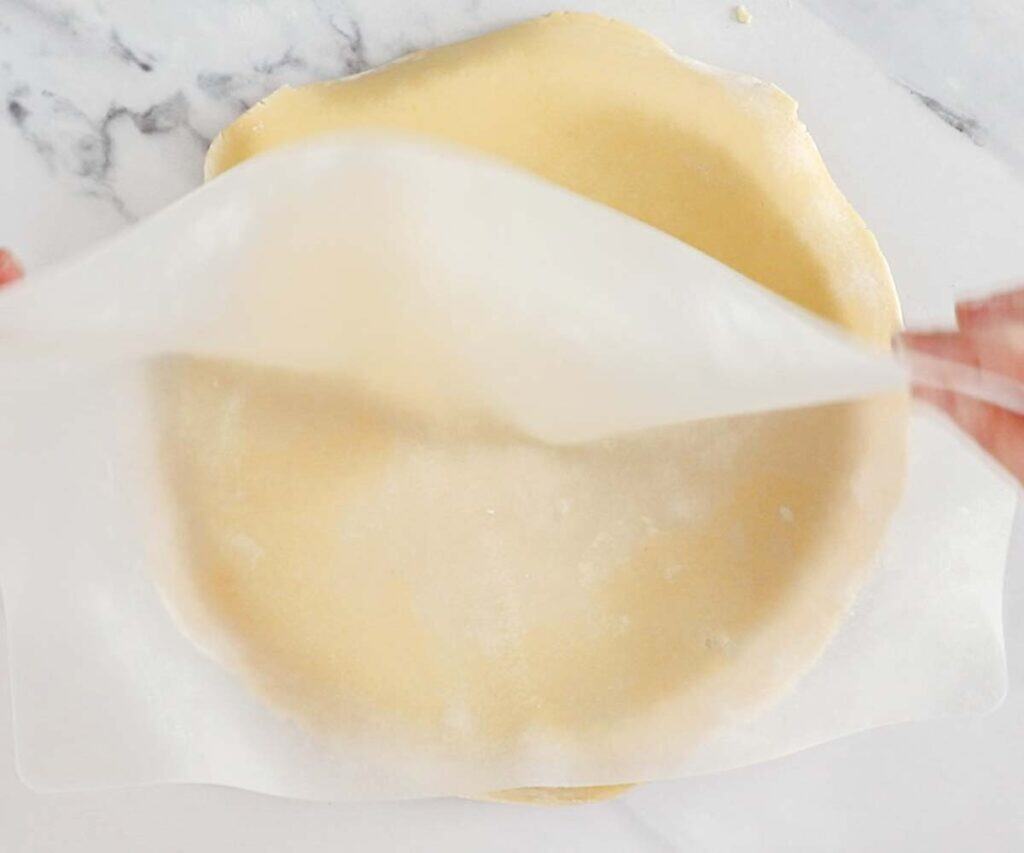
Transfer to the pan
(1 minute) Remove one piece of paper or silicone mat, then use the other to lift and gently place your pastry over a 23cm/9inch fluted tart pan then peel the remaining sheet away carefully.
While this recipe makes enough dough for one 9 inch wide pan or 8x 3 inch tart rings, you can use any shape or size tart pan for your pâte sucrée pastry.
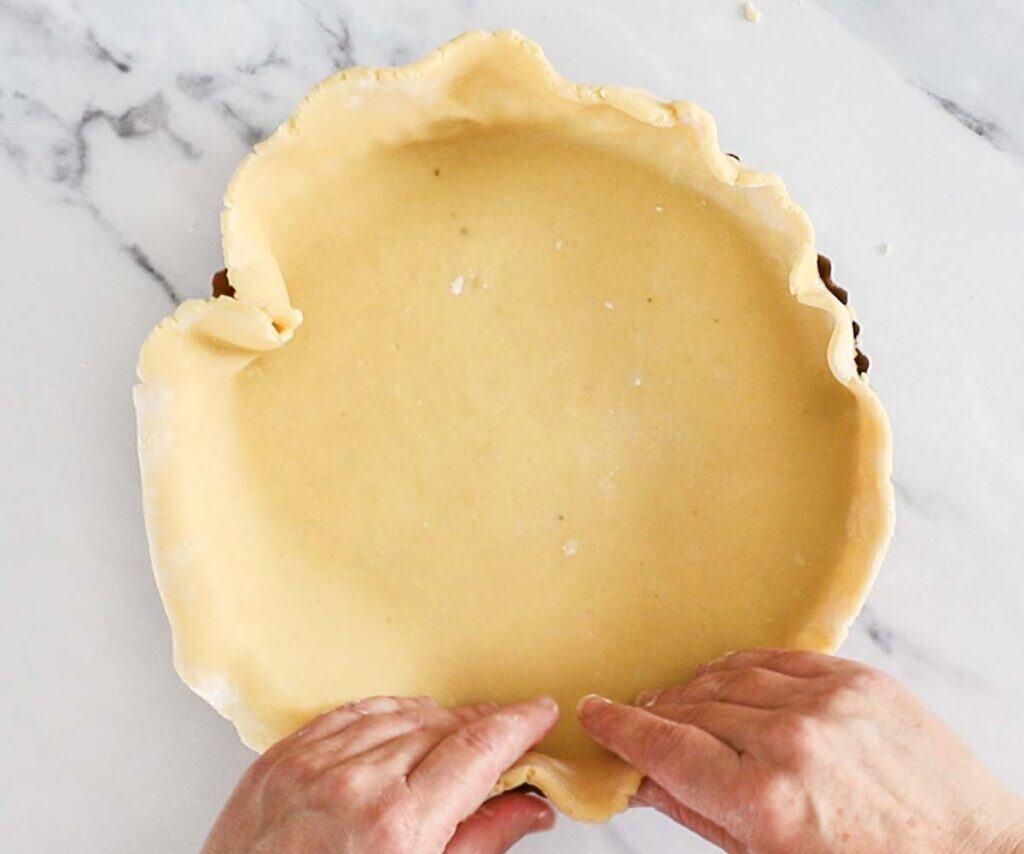
Shape the pâte sucrée
(2 minutes) Carefully push and nudge the edges down into the corners of the tart pan (don't press from the middle out). This pastry softens quickly due to the high butter to flour ratio. Chill it if it's becoming to difficult to handle.
Save this post!
No spam, I promise 😊
Pâte sucrée pastry is VERY forgiving. If you find it breaking as you put it into your pan, you can easily just patch the cracks up. If you prefer, you can also pull it together again and re-roll it.
If you want to skip rolling it altogether, just place the dough into your pan and press it out to the shape of the pan. Finally, you can freeze this dough and then just grate it into your pan straight from the freezer and press it together too.
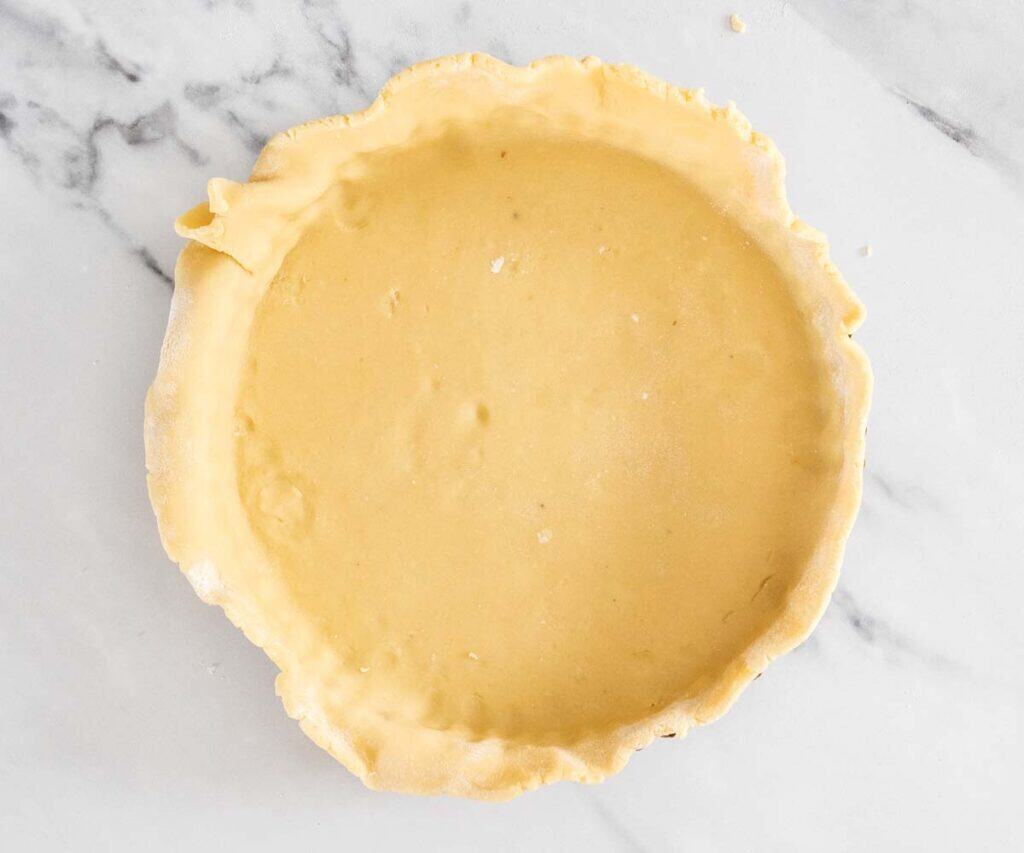
Chill
(1 hour, min) Do not skip this step! With the edge pieces standing upright (so they don't break or trim them off slightly if they're weighing down the edges), chill the dough for 1-2 hours (or up to 3 days!). The longer you chill it, the less it will shrink.
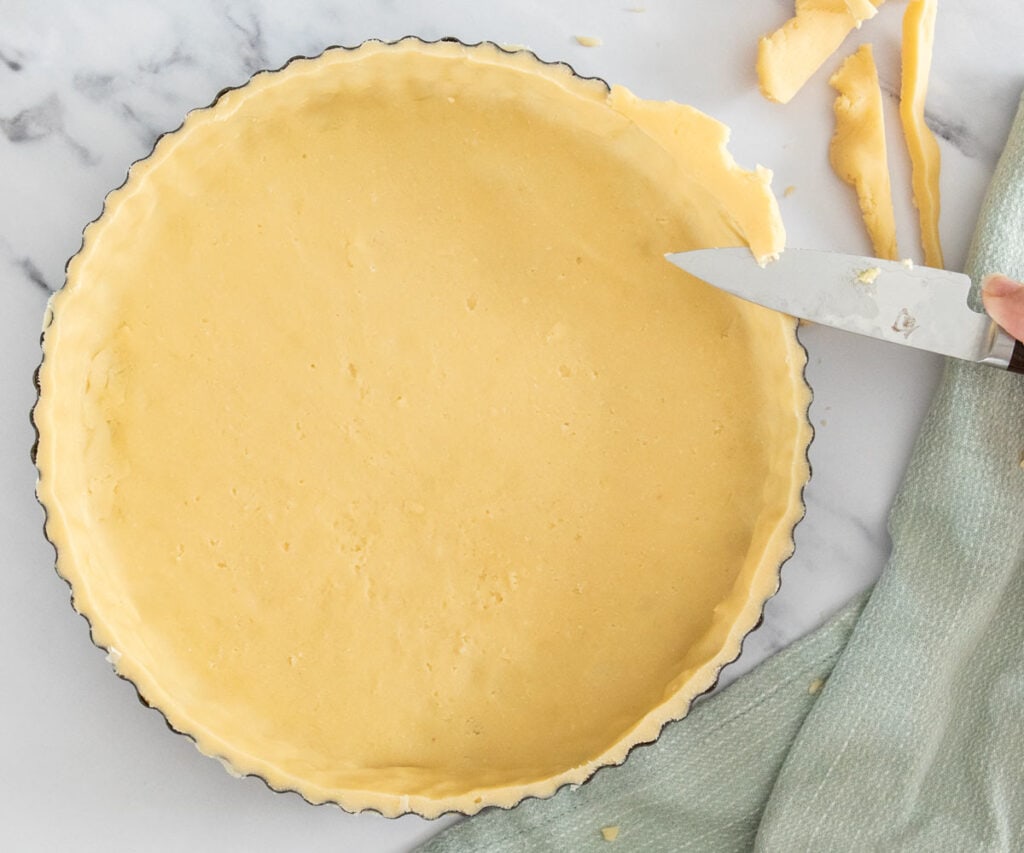
Trim
(30 seconds) Use a sharp knife laying flat to the edge of the pan to trim away the overhanging pastry.
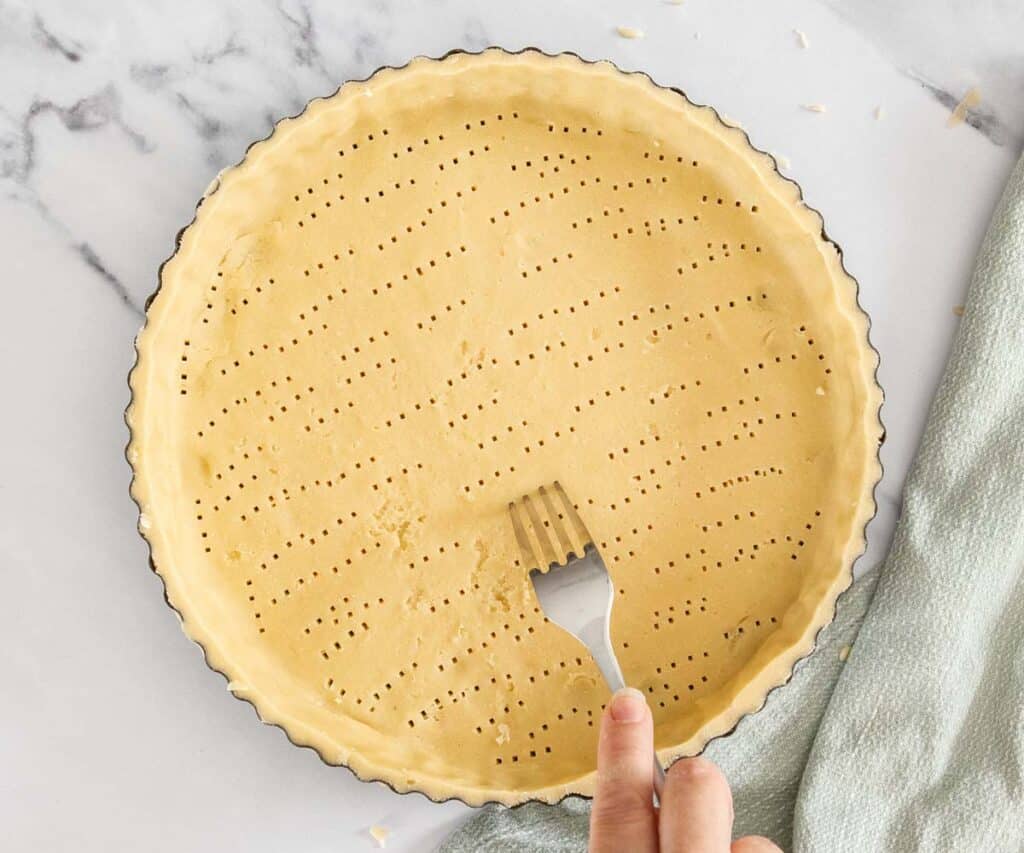
Dock
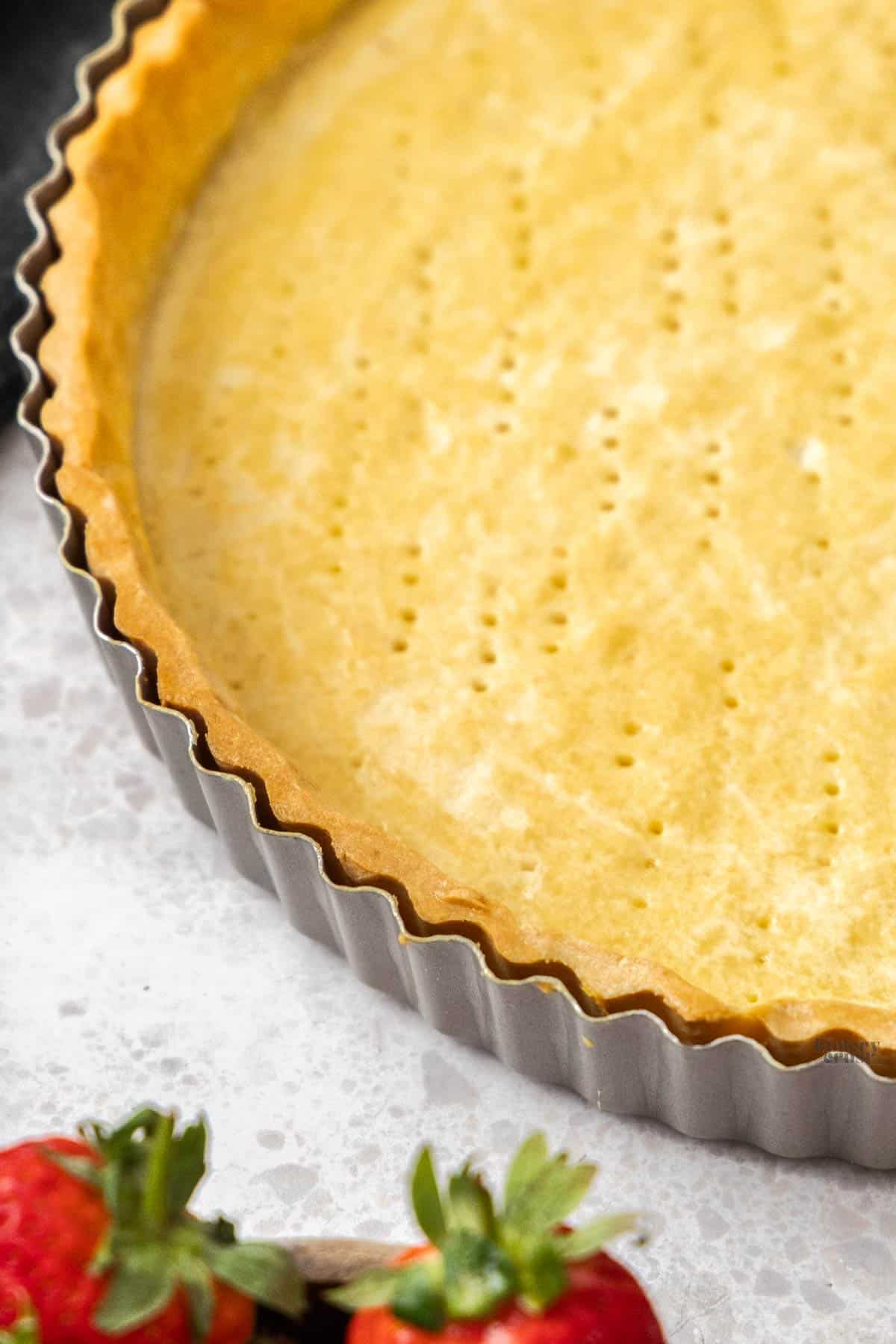
(30 seconds) Dock the pastry (aka prick little holes all over with a fork). This allows steam to escape as it bakes and stops the base from lifting up.
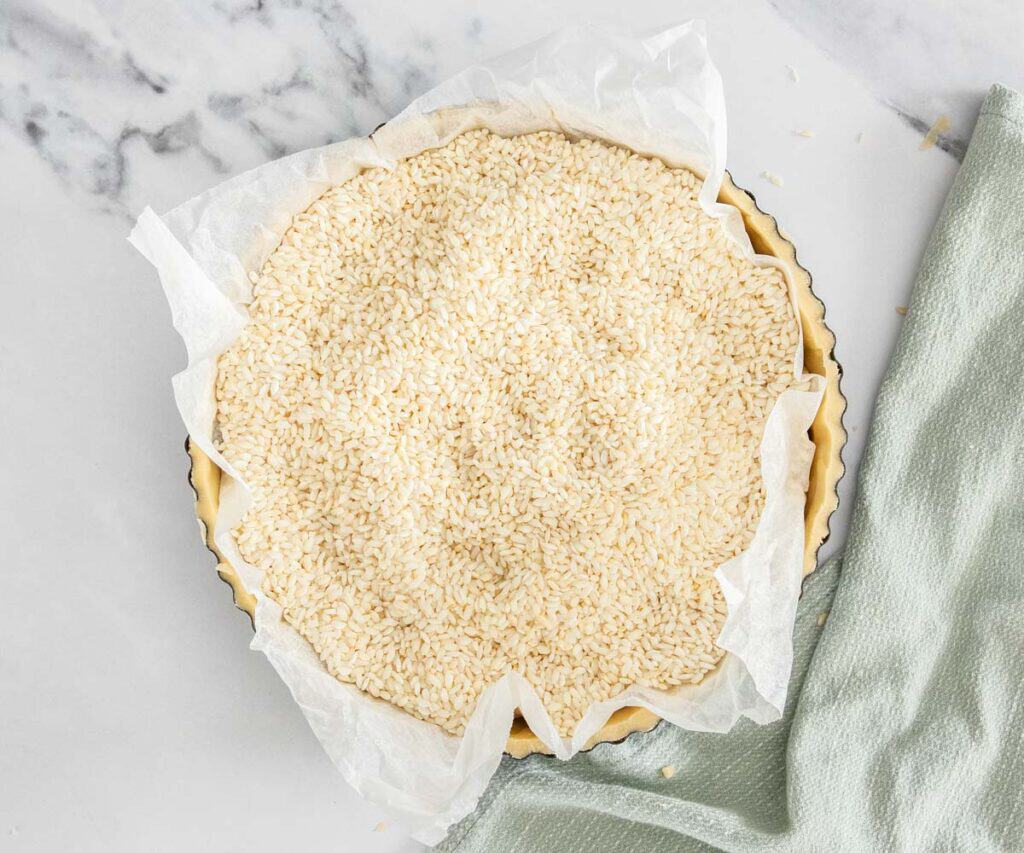
Add pie weights
(1 minute) Lay a sheet of crumpled baking paper into the tart shell and fill with pie weights (ceramic beads, coins, rice or lentils all work).
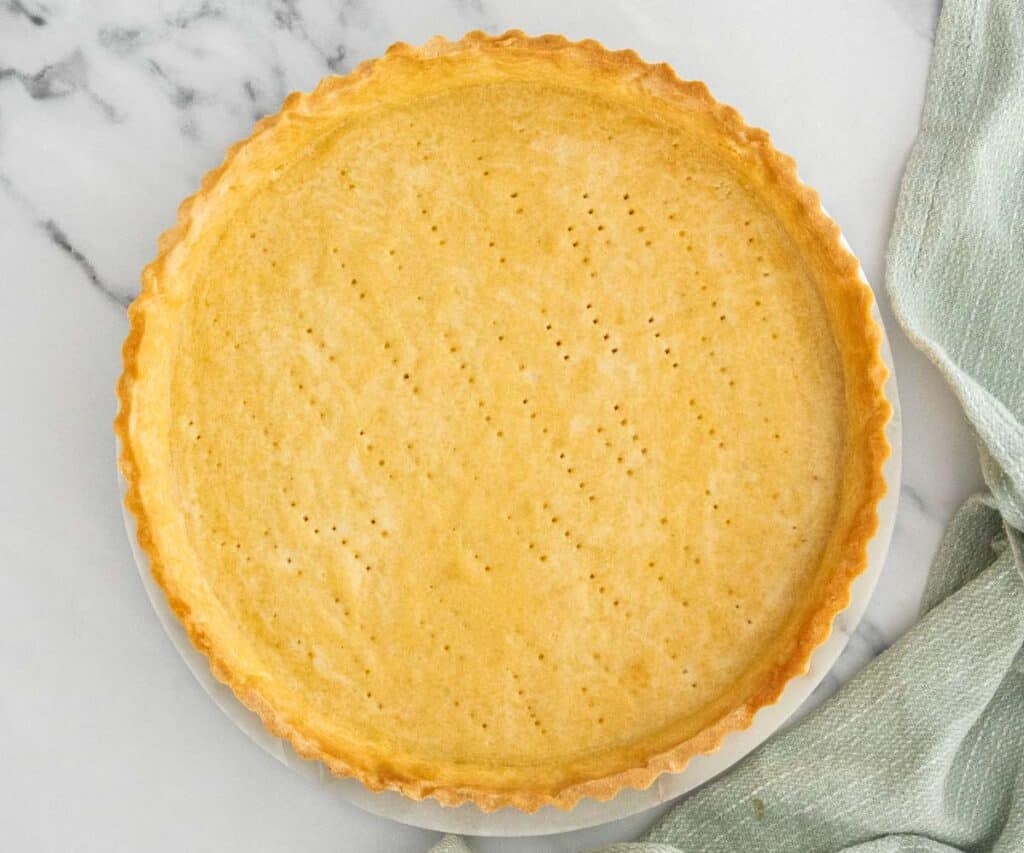
Blind bake (optional)
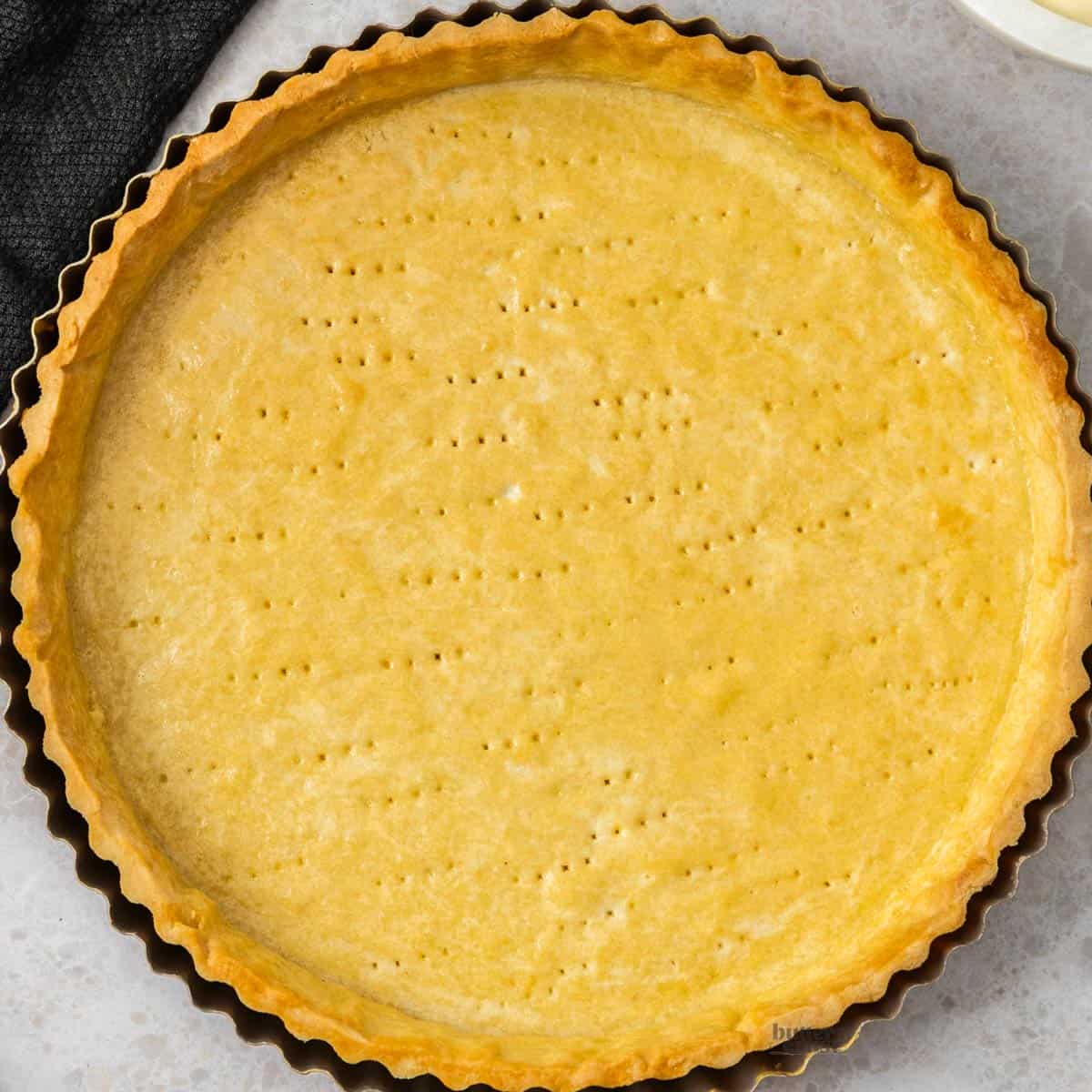
(35-40 minutes) You can bake the tart shell so that you can add cold fillings or leave it unbaked and add fillings that will be baked. To blind bake, bake for 15 minutes, remove the paper and baking weights, then bake a further 20-25 minutes until pale golden brown.
Tips and tricks
- Room temperature butter and egg are important. This allows everything to blend together smoothly as you mix.
- This dough is sticky and short so it can break easily or stick to your rolling pin. I like to roll mine between two clear silicone sheets (or baking paper) with just a little dusting of flour to make the process easier.
- When you transfer the dough to your tart pan, lift the paper gently to make sure your pastry is holding to it before you flip it over.
- Fan forced works best: If you can, use the fan force setting on your oven as it seems to give the best result.
- If adding a cold filling that is a little wet, you can prevent your dough from getting soggy by brushing with an egg wash 5 minutes before it finishes baking.
Should I blind bake my pastry?
So how do you choose whether to bake your pastry, and how long for, before filling it?
- Raw: Use a raw tart shell, when the filling is not too wet and will be baked for at least 40-45 minutes once filled (for instance, frangipane tarts).
- Par-baked: Partially bake the tart shell 15-20 minutes when the filling will not take too long to cook or when the filling is particularly wet before baking (for instance, a creme brulee tart where a runny custard is added before baking).
- Fully baked: Use this option when your filling does not require baking (for instance when adding pastry cream and fruit).
😥 Troubleshooting
If your egg is cold, you might find that it causes your butter to set again and form big lumps. You can just beat this out on low speed over a couple of minutes.
This is quite normal for pâte sucrée as it's a very short pastry. It's also very forgiving so you can patch it as you need to. You can even skip rolling it entirely and just press it into your tart pan.
Most often a shrinking tart crust is caused by not chilling it for long enough. The longer you chill the better but at least 1 hour is non-negotiable. Sometimes, overworking the dough can also cause it to shrink.
How to use French sweet pastry
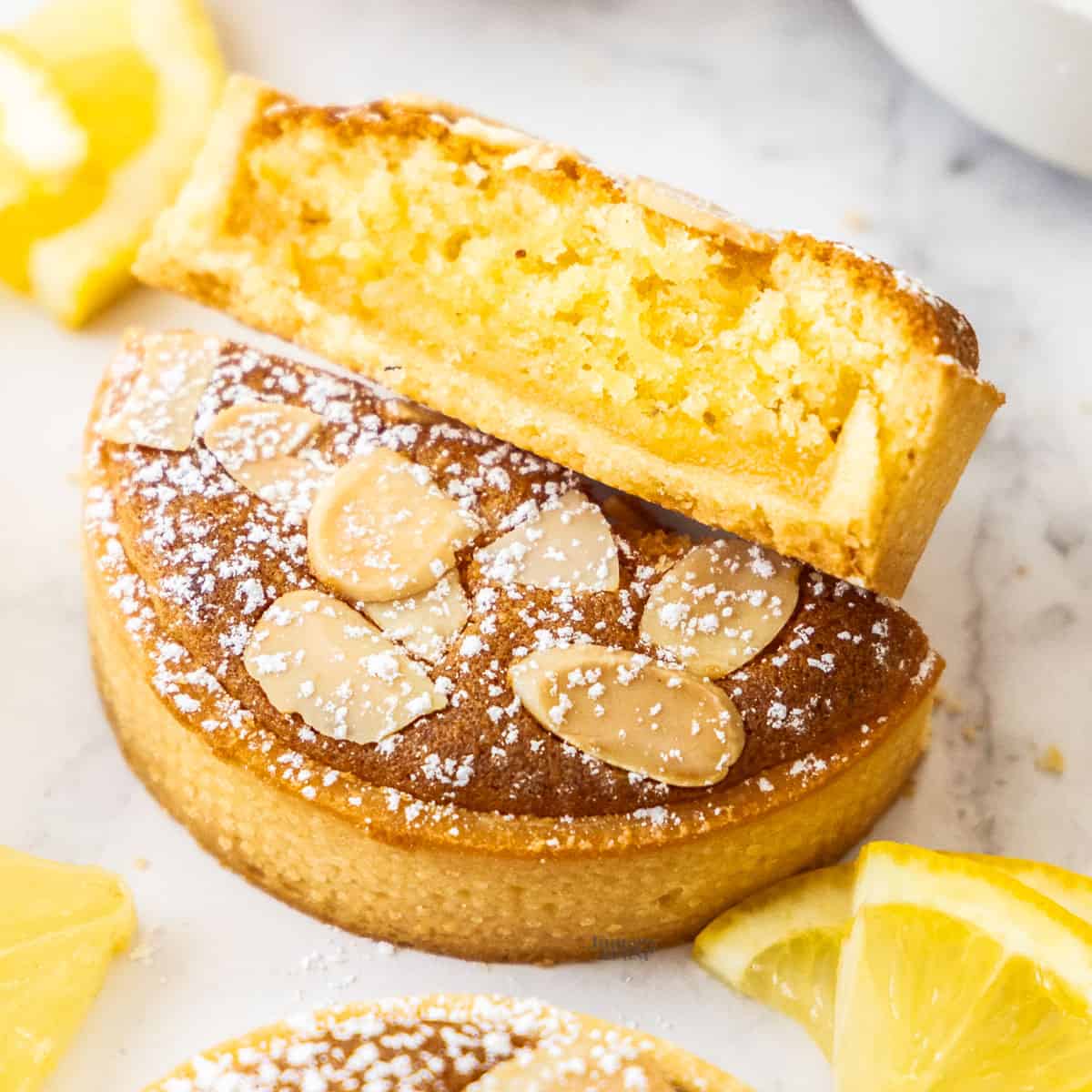
- Frangipane tart - add a batch of frangipane to an unbaked tart shell and top with soft fruit like raspberries, strawberries, apricots or peaches then bake until golden brown.
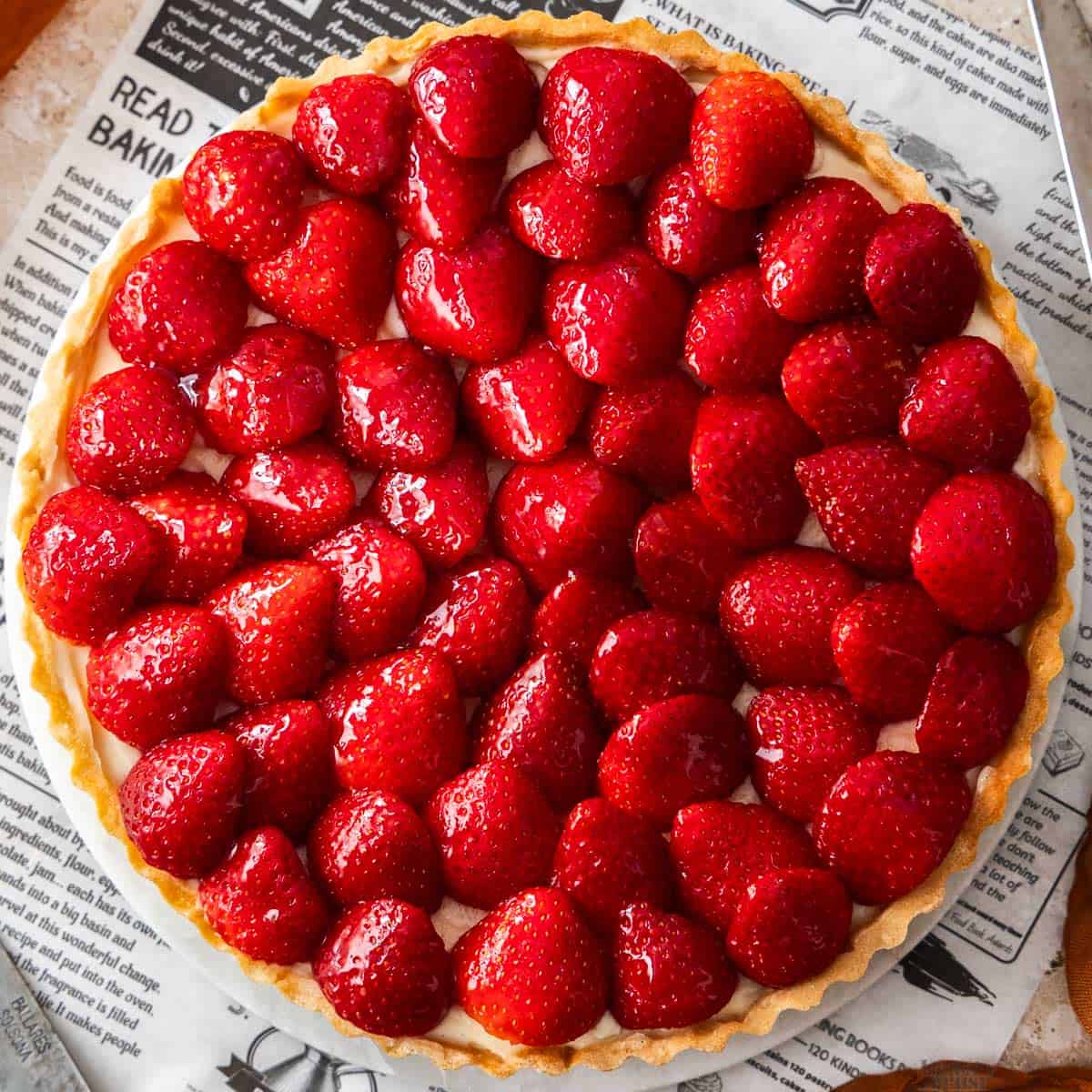
- French fruit tart or strawberry tart - it makes perfect fruit tart pastry. Add a thick pastry cream to a baked tart shell and top with fruit of your choice.
- Apple tart: Fill the baked tart shell with cinnamon apple compote and top with some crunchy crumble topping.
- Caramel creme brulee tart - a caramel custard filling topped with crunchy sugar topping.
Storage
Room temp
You can store the baked tart shell at room temperature for 2-3 days, unfilled.
Fridge
Pate sucree dough can be wrapped in plastic wrap and chilled for 2-3 days before baking. You can do this either as a lump of dough or already shaped into your pan/s.
Freezer
The sweet pastry dough can be frozen, wrapped well in plastic wrap, for up to 3 months. You can do this either as a lump of pastry or already shaped into your pan/s.
Tools I use
- Kitchen Aid stand mixer: I love my Kitchen aid. It's helpful here but by no means a necessity. You can make the dough by hand in a mixing bowl or with a handheld electric mixer too.
- Silicone spatula: I use these for everything. They're just so good at getting every last bit of anything out of a bowl.
- Silicone mats: I love using these clear silicone mats for rolling my dough (it makes it so easy to remove and keeps the dough smooth) but you can use baking mats or baking paper.
- Rolling pin
- 23cm/9 inch fluted tart pan (or around about that size) is what I've used here. You can use any shape or size tart pan (if it's larger, make a double batch and just make sure to roll it to 4mm thick) or even tart rings.
❓FAQs
Pâte sucrée is the most commonly used French sweet tart crust. It's best use is for large sweet tarts where it's sturdier structure allows it to cut neatly and hold weighty fillings but still remain tender.
Absolutely. It will look neater if you roll it but that is the only benefit to rolling. It works perfectly well pressed into the pan - just try to make sure it's even. You can even grate it when it's frozen, straight into the pan and press it out.
Whether or not you blind bake your tart crust depends on how you're filling it. If your fillings are not going to be baked, then yes, you need to bake it first. If you are adding filling that will be baked, then you can par-bake or leave it raw depending on how long that filling requires baking.
Yes. You can chill the raw pastry in the fridge for 2-3 days or freeze it for up to 3 months.
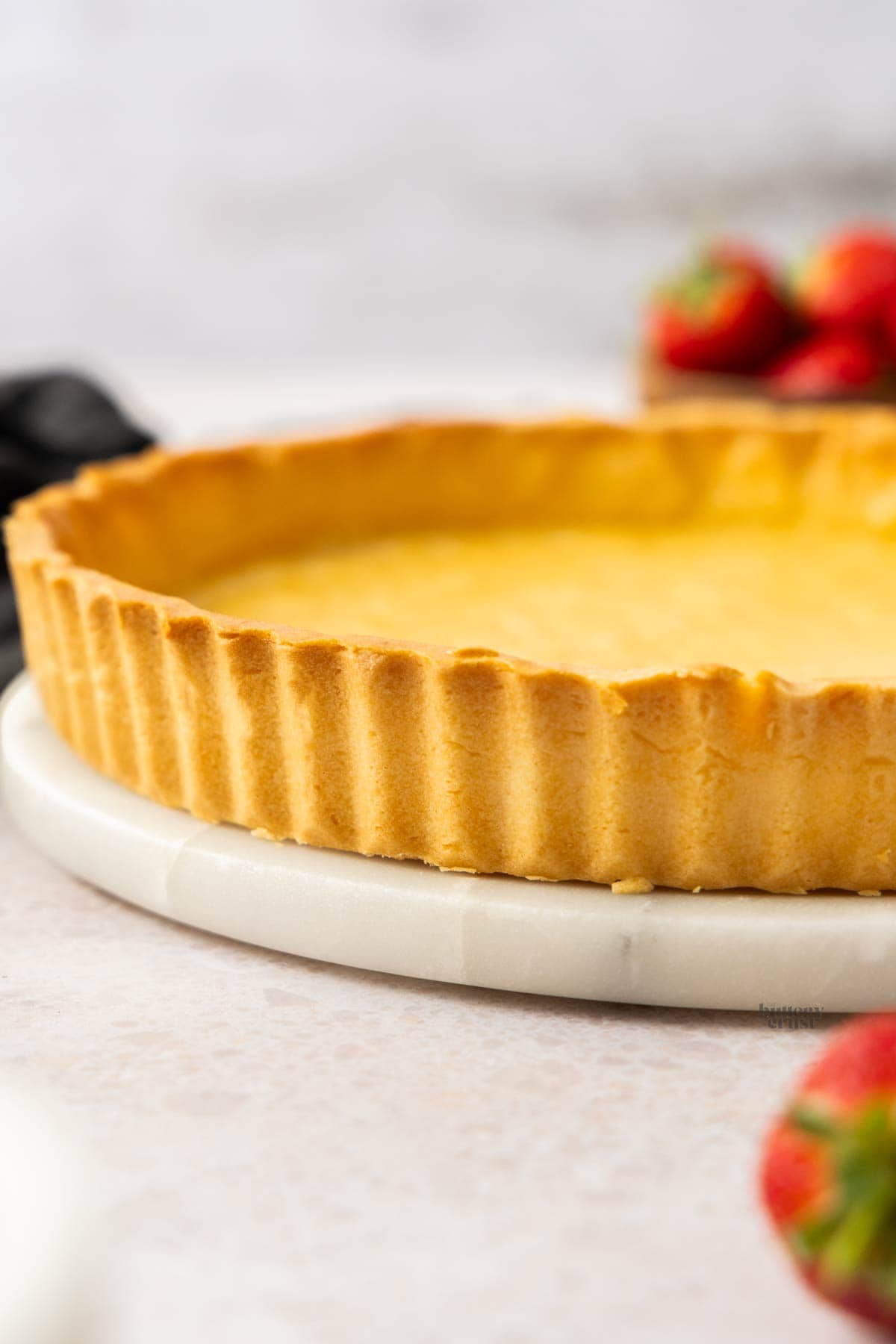
I really hope this pâte sucrée recipe is one you'll come back to again and again. It's simple, elegant and an incredibly useful recipe to have in your baking repertoire. Make it once and I know you'll love it as much as I do.
If you made this pâte sucrée tart pastry recipe,
be sure to leave a ⭐⭐⭐⭐⭐ rating below. Thank you!
Pâte Sucrée (French Sweet Shortcrust Pastry)
Equipment
- Stand mixer helpful, but not essential
- Baking paper or baking mats for rolling
- ~23cm/~9 inch fluted tart pan
Ingredients
- 95 g icing sugar (powdered sugar) (¾ cup / ~3 ½oz)
- 100 g unsalted butter softened (3 ½ oz)
- 1 large egg (roughly 50g / 1 ¾oz)
- 225 g plain flour (all purpose flour) (8oz)
- 2 tablespoons almond meal (ground almonds) (18g / ⅔ oz)
- ¼ teaspoon salt
Instructions
- In the bowl of a stand mixer, add the sugar and butter. Beat on low until smooth (you don't want to aerate it)
- Scrape down the sides of the bowl. Add the egg and beat on low again until it comes together. It may look a little split but that's fine.
- Add the flour, almond meal and salt and beat on low until it clumps together.
- Turn the pastry out onto a clean work surface and gently pull it together. Shape it into a round disk.
- Between two sheets of baking paper or silicone mats, floured very lightly on each side, roll the dough out to about 4-5mm thick or about 11 inches in diameter.
- Peel away the top layer of baking paper or silicone and use the other to lift and carefully lay it over a 9 inch round tart pan with removeable base.
- Press the dough down in to the corners all the way round, then press it gently into the scalloped sides. Leave the overhang standing upright and place the tart pan into the fridge to chill for 1-2 hours or overnight. If your freezer has space you can place it in there.
- TO BAKE THE TART SHELL:You only need to bake your pastry if you are adding cold filling that will not be baked later. You can partially bake it for 15 minutes, to step 12 (if it will return to the oven with a wet filling) or fully bake it for no bake fillings. You don't need to blind-bake at all for some fillings (like frangipane).
- Preheat the oven to 180C (160C fan) / 350F. I prefer fan for this tart shell.
- Use a fork to prick the pastry base all over. Use a small sharp knife laid flat to the edge of the tart pan, to trim off the excess pastry.
- Line the tart shell with a sheet of baking paper and fill with pie weights or rice. Fill it quite full and making sure it's pressed up tight against the edges.
- Bake for 15 minutes.
- Carefully remove the baking paper and rice (or weights) and bake a further 15 minutes or until turning pale golden.
- If you're going to be filling the tart shell with a wet filling like pastry cream, you can take the optional step to brush the base and inside-sides with egg wash and bake for a further 5 minutes. This will add a film between the pastry and the filling to reduce the chances of the pastry turning soggy.
- Please take a moment to leave a comment & rating. It's appreciated and so helpful.
Notes
- Yield: This recipe makes enough pâte sucrée for a 9 inch tart pan or 8-10 mini tarts (using 8cm /~3 ¼ inch tart rings).
- Weigh ingredients with a kitchen scale for the best result.
- All ovens vary. Check for doneness 3-4 minutes before the recipe suggests.
- Pâte sucrée can be made ahead. Chill in the fridge for 2-3 days or the freezer for up to 3 months, wrapped well in plastic wrap, before baking.
- Leftover dough can be frozen for another time (you can store all your scraps then use them all up for a large tart later down the line).

Comments
No Comments