
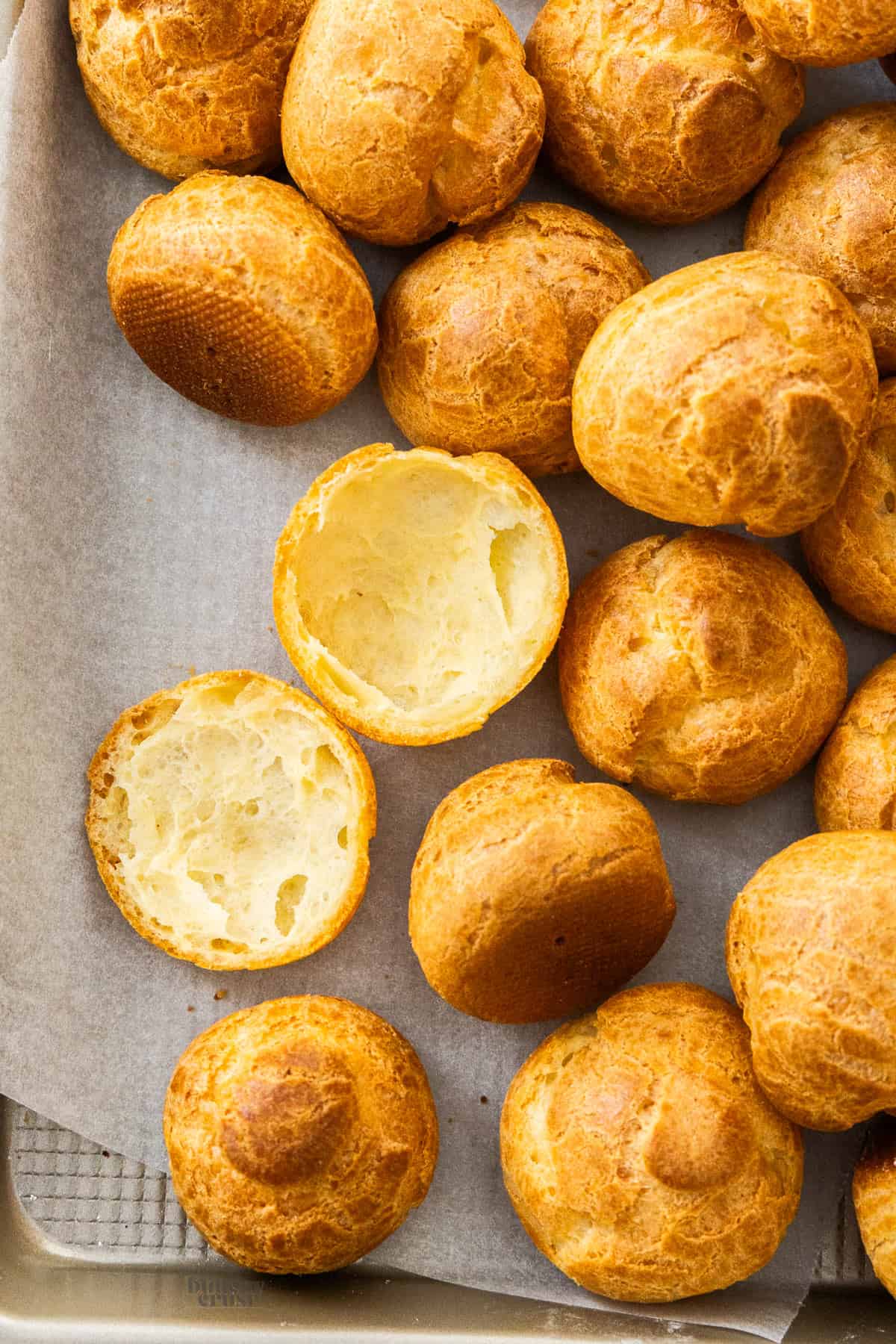
Choux pastry (or pâte à choux in French) is a staple in French pastry making. Crisp and golden on the outside, soft and almost custardy inside with a hollow centre, it's the perfect vehicle for all kinds of fillings, sweet or savoury.
While some find it intimidating, mastering choux pastry will open up a world of gorgeous pastries. Choux can be baked into choux buns, eclairs, chouxnuts and more but it's also brilliant for frying into crullers and gougeres. And contrary to its reputation of being a tricky pastry to master, it's actually very achievable.
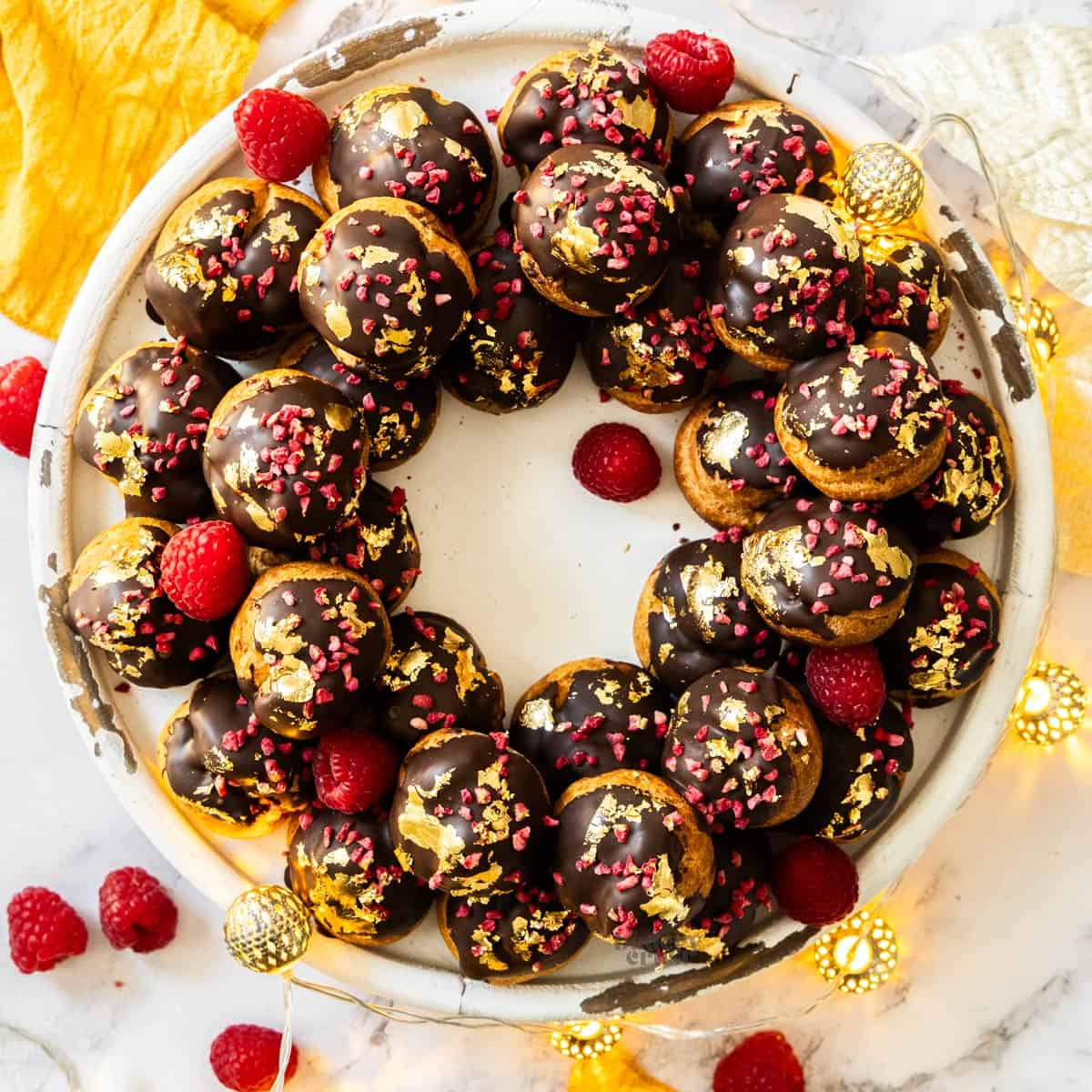
Try this raspberry profiterole wreath.
Never Miss a Recipe!
Get the latest recipes straight to your inbox!
Jump to:
- ❤️ Why you'll love it
- What is choux pastry?
- Ingredients & substitutions
- How to make choux pastry
- Troubleshooting choux dough consistency
- Tips and tricks
- What to make with choux pastry
- Storage
- Yield
- Choux pastry fillings
- Try the Custom Choux Recipe Builder
- More recipes you'll love
- How to make Choux Pastry
- 💬 Comments
❤️ Why you'll love it
- It's quick to make and can be done by hand or using a stand mixer.
- Easier than you might think - even an imperfect choux tastes delicious.
- Made with kitchen staples - water, eggs, sugar, salt, flour, butter, milk.
- Make-ahead friendly - both baked and unbaked.
- Freezer-friendly too - baked and unbaked.
- Forgiving - it doesn't need to be perfect to be delicious.
- Versatile - sweet or savoury, use it for profiteroles, eclairs, chouxnuts, croquembouche, paris brest, chouquettes and more.
What is choux pastry?
Choux (pronounced shoe or shoo) is a French pastry used to make numerous desserts. It's name in French is pâte à choux. The dough can be baked or fried and once cooked is puffy and crisp on the outside with a mostly hollow inside, save for some lovely soft bits.
While choux translates to the not-so-flattering "cabbage" due to the way it looks when baked as choux buns or cream puffs, it's actually a beautiful and very versatile pastry. It's only very lightly sweetened so it works with both sweet and savoury fillings.
Making choux is a little science but also it requires you to be able to see the stages so it's not as easy as saying you need this much flour and this egg. While any recipe will give you a great starting point, it's not until you've made it a few times and begin to understand what the dough should look like that you'll starting turning out masterpieces. Never fear; even a choux that didn't rise properly or wasn't perfectly piped will still taste amazing!
Ingredients & substitutions
With just 7-8 basic ingredients that many will already keep in their pantry or fridge, you can whip up a batch of choux buns or eclairs at the drop of a hat.
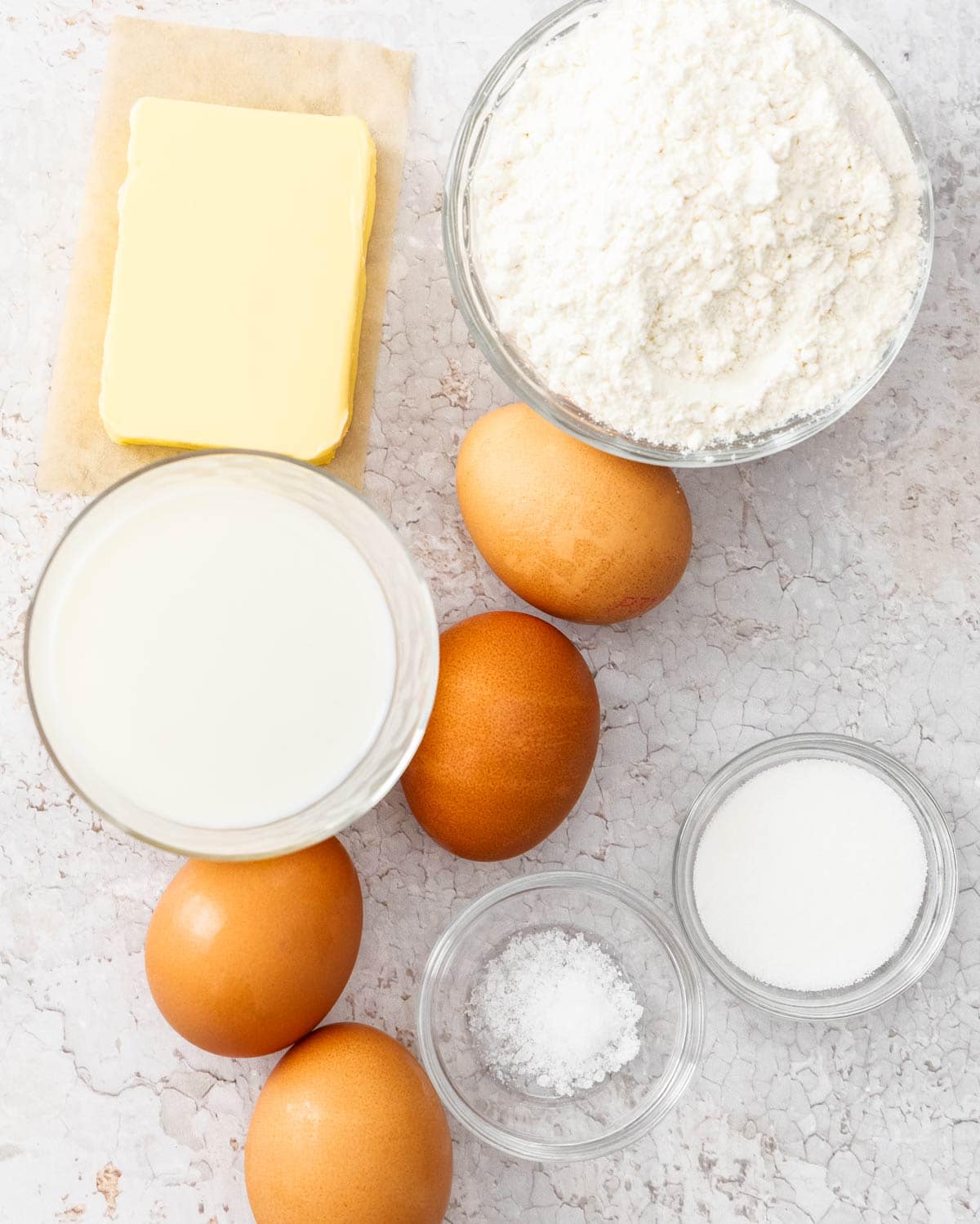
Jump to the recipe card for full quantities and instructions.
- Milk & water: For this basic recipe, I use a combination of water and milk. Milk adds richness, flavour but also makes the choux brown quicker. This can lead to burning if you make it to a size that needs to bake longer. You can use all milk or all water. If you use all water, you may need less eggs, while using all milk might mean you need more eggs. All water will lead to a crisper pastry.
- Flour: For this basic recipe, you just need regular plain flour / all-purpose flour. Choux can also be made with bread flour - with it's higher protein it will produce a sturdier and slightly thicker shell. Bread flour will absorb more liquid so you may need more eggs to get the right consistency. You could also use pastry flour or cake flour which will give you a lighter and softer shell.
- Butter: Use a good-quality unsalted butter with no added water - check the ingredients label to make sure.
- Sugar: You just need white granulated sugar for this recipe but other types of sugar will work too. You can use brown sugar for instance which will give a slightly different flavour.
- Eggs: Large eggs are what I use for this recipe. You'll need 4-5 eggs but the exact amount you need will depend on how much moisture is left in your dough after cooking-in the flour which is done in a saucepan before piping the dough. It will also depend on they type of flour you use and even down to the brand. Don't worry, I'll guide you here with the right signs to look for.
With any baking recipe, but especially choux, I recommend using a kitchen scale and I also recommend using grams. It's the most precise method and will remove at least a few obstacles you'd need to worry about otherwise (ie, too much flour making them dry).
How to make choux pastry
There are two stages to making choux pastry;
- The panade is essentially a thick cooked flour paste. Flour mixed with butter and liquid (water, milk or a combination of the two) is cooked together into a thick dough.
- The eggs are the second stage and add protein, fat and moisture. They enrich the dough and help with the structure.
Jump to the recipe card for full quantities and instructions.
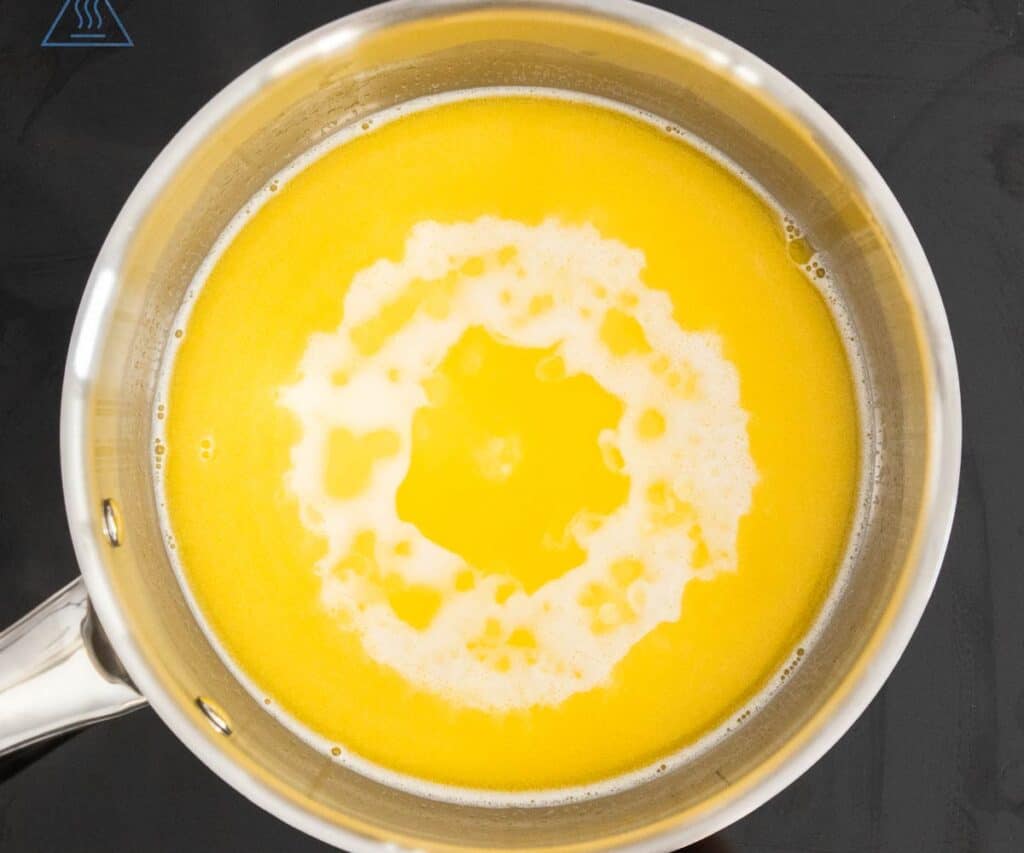
Melt the butter
Start by heating butter, water, milk and sugar in a medium saucepan over medium heat. Stir until the butter melts.
Add the flour
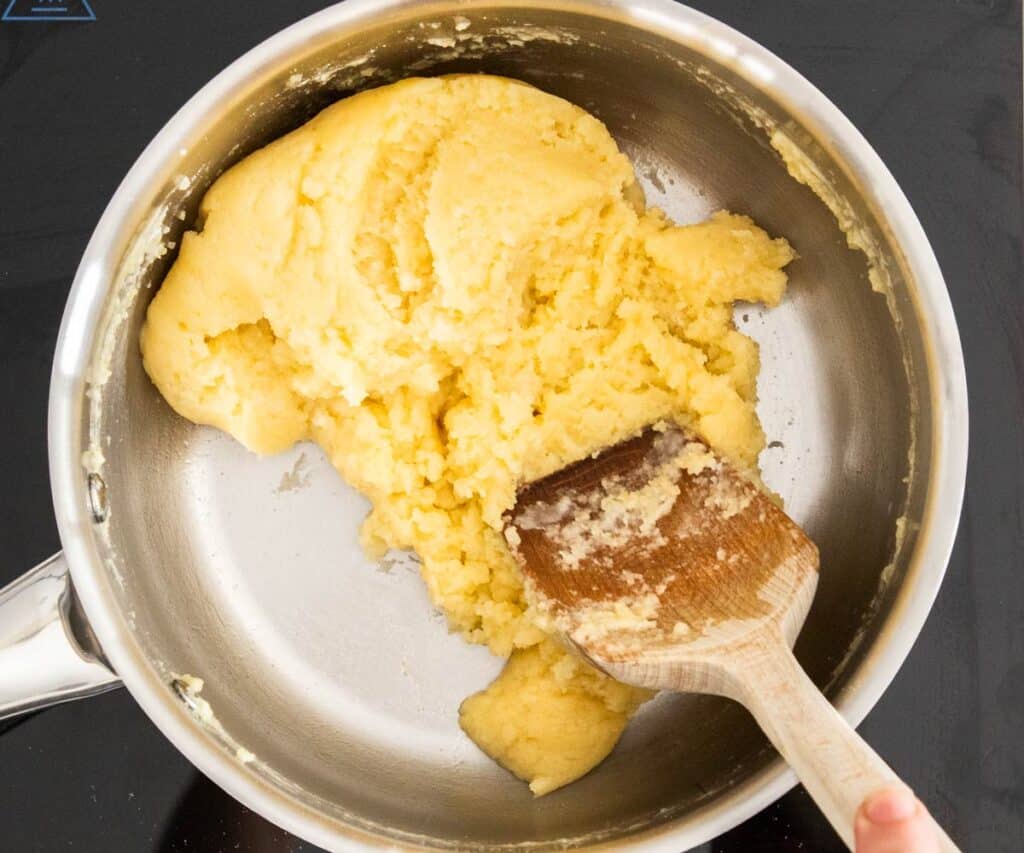
Let it come to a bubble and, as soon as you see the first bubbles appear, take it off the heat. Add the flour and use a wooden spoon or silicone spatula to mix it in.
Cook the panade
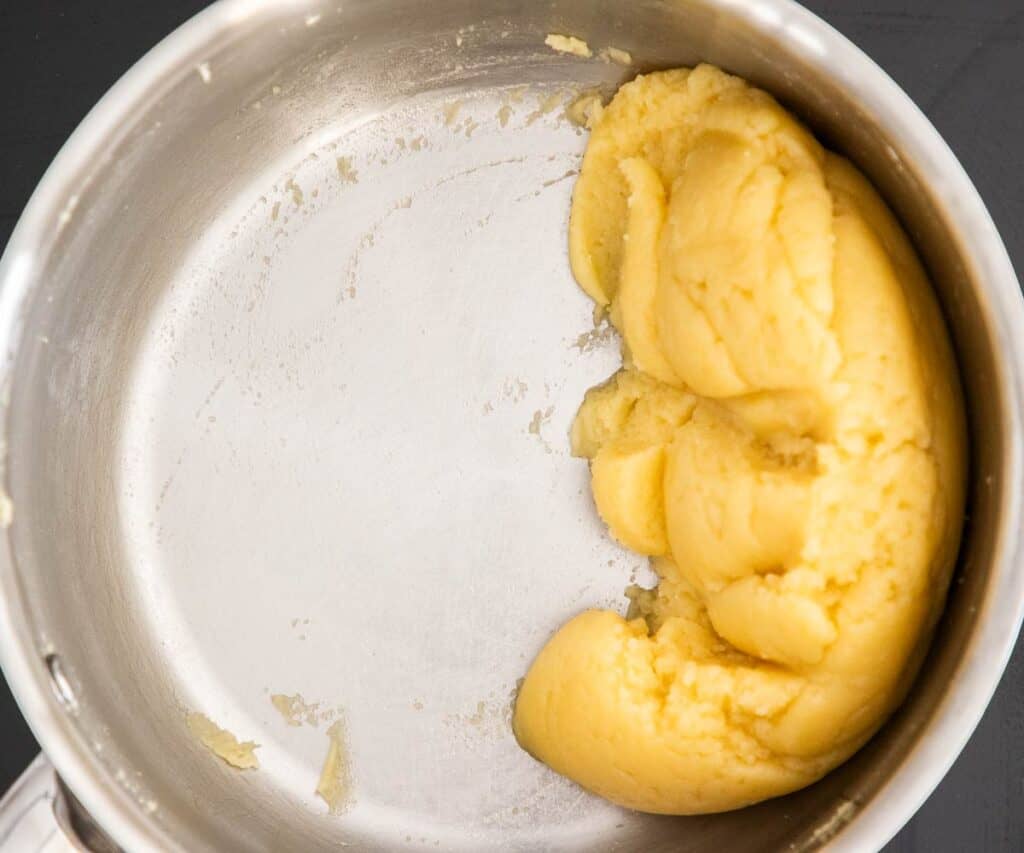
Return the pan to the stove over low heat and cook, stirring and folding constantly for 2 minutes.
"You'll see a film..."
Some recipes will say "you'll see a film on the bottom of the pan" - unfortunately this leaves it too open to interpretation. The type of pan will affect whether you see that film or not and you might see a film but then how obvious should it be and exactly what does it look like. So, just keep the heat on low and cook for 2 minutes moving the dough around the pan constantly.
Cool the panade
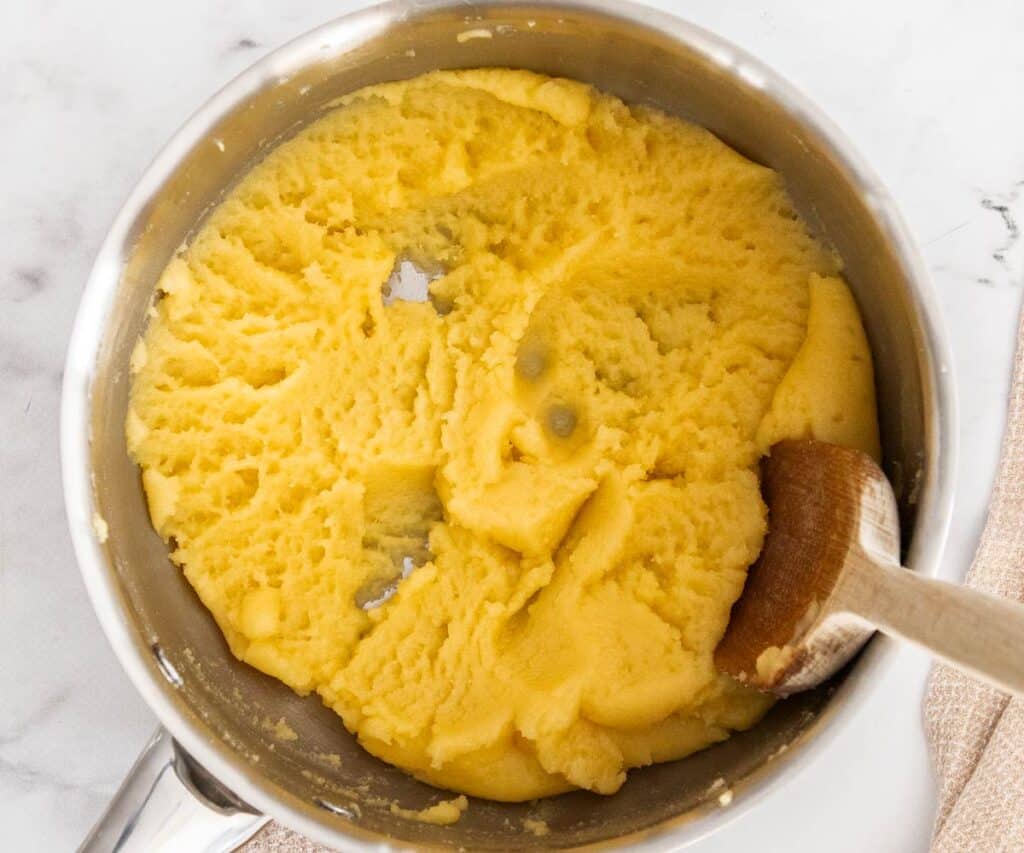
You only need to cool the dough long enough that the eggs won't scramble when you add them.
By hand: Press the dough out into a flat layer on the base of the pan and let it cool for 10 minutes.
With a stand mixer: Transfer the dough to the stand mixer bowl and beat on low for 2 minutes.
Add the eggs
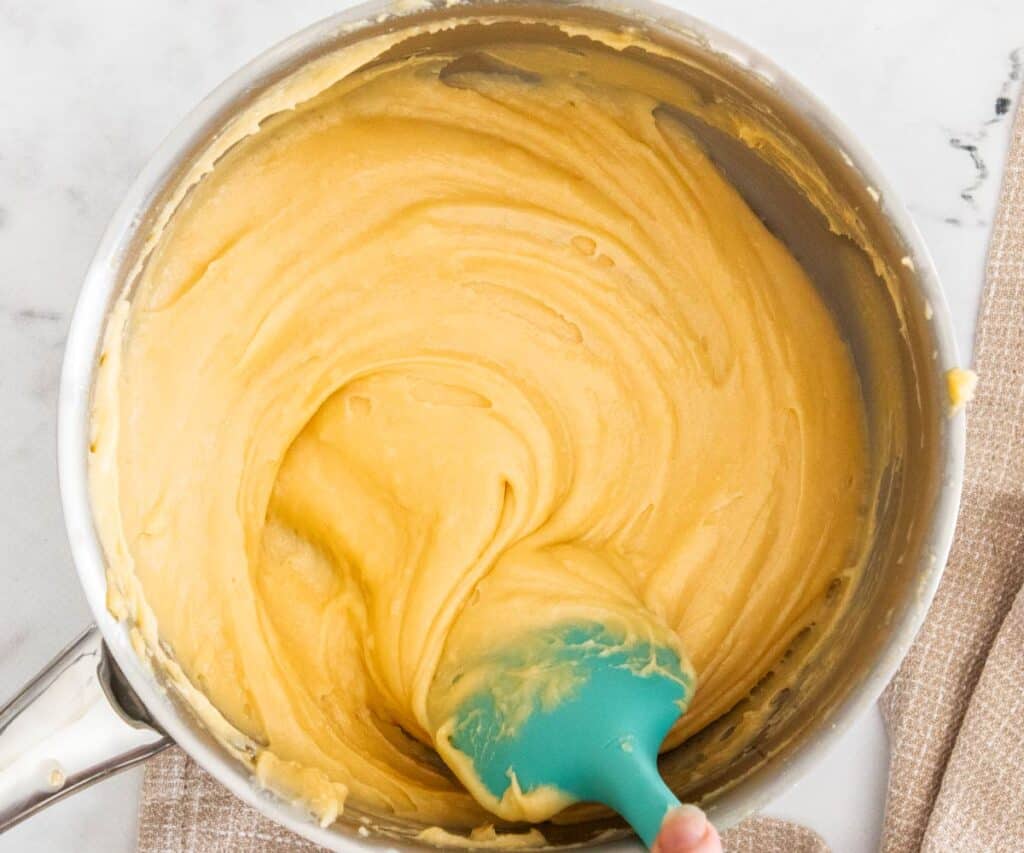
Lightly beat 4 eggs in a small jug. Add one quarter of the beaten eggs to the dough then beat with the wooden spoon or on low using the stand mixer until it's completely incorporated. Add the next two portions the same way. When you get to the final quarter of the eggs, add them just a little at a time, beating each in until fully incorporated and the choux dough is ready (see below).
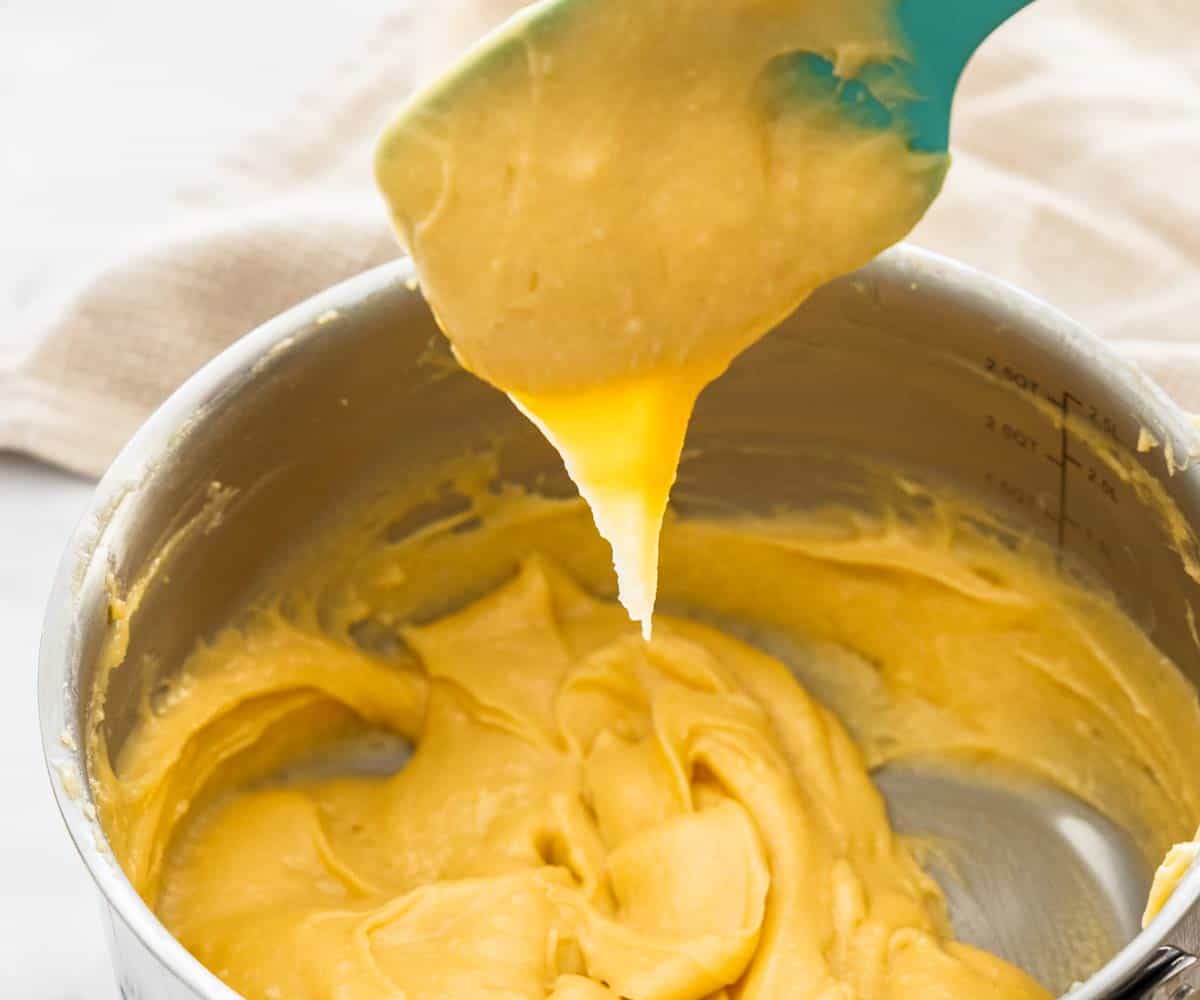
There are a few visual cues to look for to check if your choux pastry is ready;
- Smooth and glossy: The dough will be very smooth and have a slight sheen to it.
- The spoon test: Dip a spoon or spatula into the dough and it should reluctantly fall off the spoon, leaving a "V" of dough hanging.
- The "V" test: As above when you dig the spatula or paddle attachment into the dough then lift it straight up, the dough should form a fairly neat "V".
- The trough test: When you draw a line in the dough with your finger, it should form a trough with straight upright edges and hold the shape.
- Pipeable but holding consistency: It should be fluid enough to pipe but not enough to spread out. You can test this by just dropping a small amount onto a plate with a spoon and seeing his well it holds its shape.
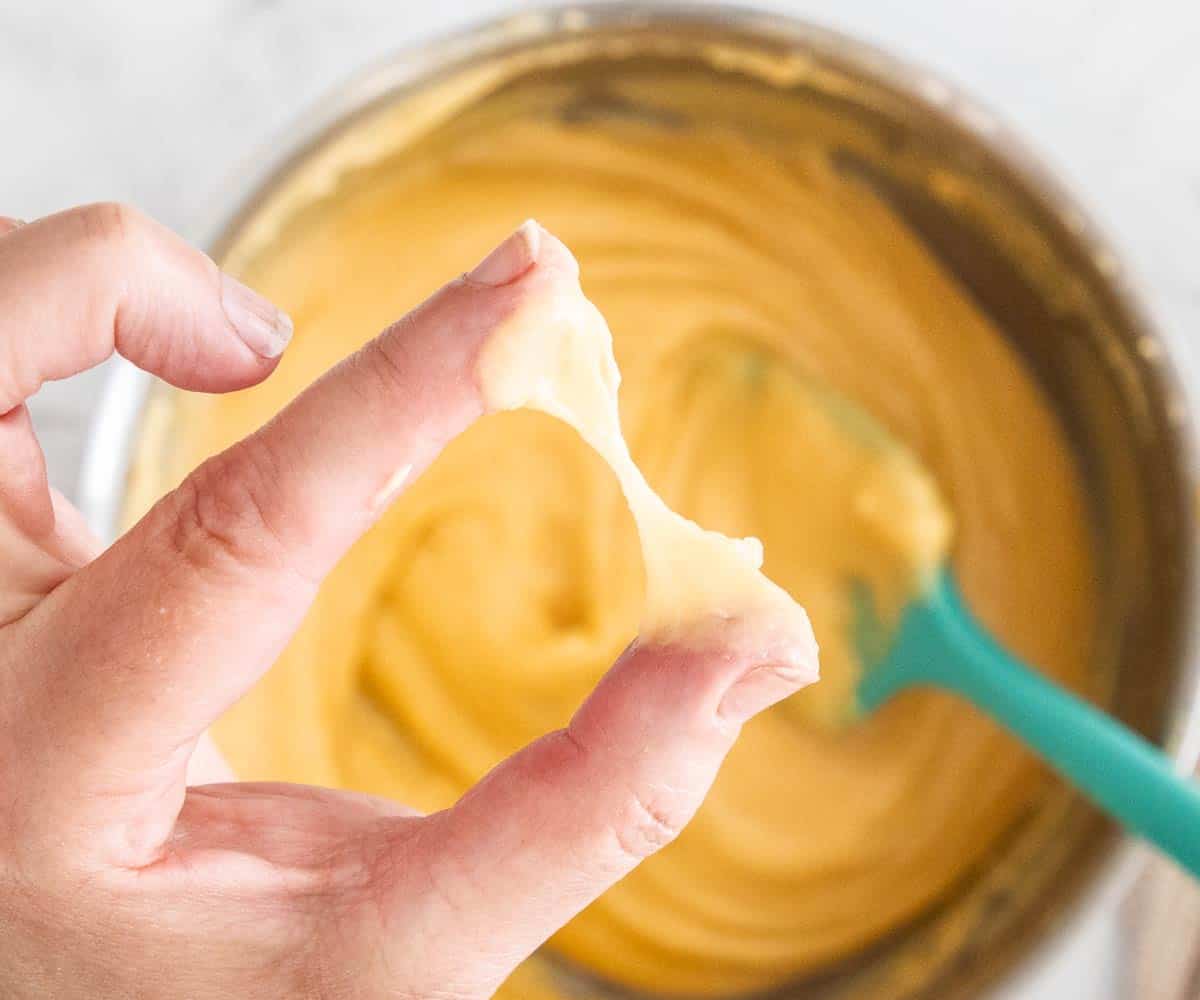
- The pinch test: Pinch a portion of dough (about 1cm / ½ inch thick) between your thumb and finger. Slowly draw your thumb and finger apart - you need to get to 2 inches with at least a string of dough still intact.
Save this post!
No spam, I promise 😊
Transfer to a piping bag
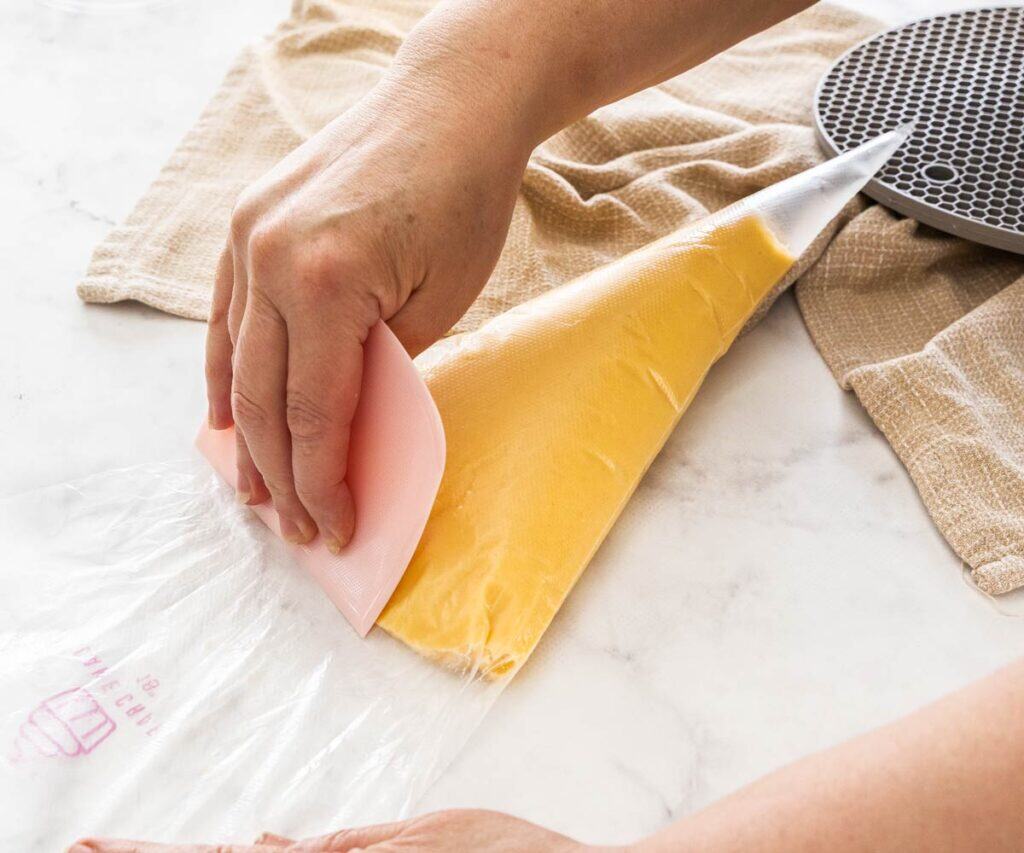
Sit your piping bag into a tall jug or wide glass and fold the top over the edge. Add your piping tip if using, then simply scrape your choux dough into the bag. Now, lay the bag down and use a dough scraper or bench scraper to push the dough together in the bag to reduce the chance of air bubbles.
Troubleshooting choux dough consistency
The amount of eggs you need is dependent on numerous factors including the protein content of the flour you're using, how much moisture was cooked out when making the panade, the exact size of your eggs and even the way you measured your ingredients. This is why it's impossible to give an exact quantity of eggs. So, what do you do if the consistency looks wrong?
- Too firm/dry: Beat another egg and add just a little at a time to the dough/batter beating it in well before adding more. Keep going until you get the right consistency.
- Too loose/wet: Don't add flour as your choux pastries likely won't work out. Part of the process of making choux properly is cooking the flour in the panade stage. This step gelatinizes the starches in the flour making them strong and allowing them to trap steam which creates that lovely hollow centre. If your mixture is too loose, you'll need to make a second batch of panade, then add it a little at a time to your loose mixture, beating it in until you have the right consistency.
Tips and tricks
- Weigh ingredients for the best results. Use a kitchen scale with the ability to change the units to grams. This will give you the very best choux pastry. I prefer not to use cups when baking as just a tiny bit too much of anything can throw off the end result.
- Don't let the liquid mixture boil but instead take it off the heat as soon as you see the first bubbles. This is so you don't lose too much of the liquid through evaporation.
- The easiest way to fill a piping bag is by first placing the piping bag into a tall glass or jug with a wide mouth and folding the top down over the top of the jug. This way, you have both hands to hold the bowl and scrape into your bag. It also means you are less likely to get air bubbles in your mixture.
- All ovens vary: You can do a choux bun or eclair if you like to test exactly what temp and time work for you. Or just make notes with each batch you bake so you can make changes as you need to for your oven. Keep a digital thermometer in your oven to check that it's heating to the correct temperature.
What to make with choux pastry
There are numerous pastries made using choux pastry or a version of choux pastry as it's base.
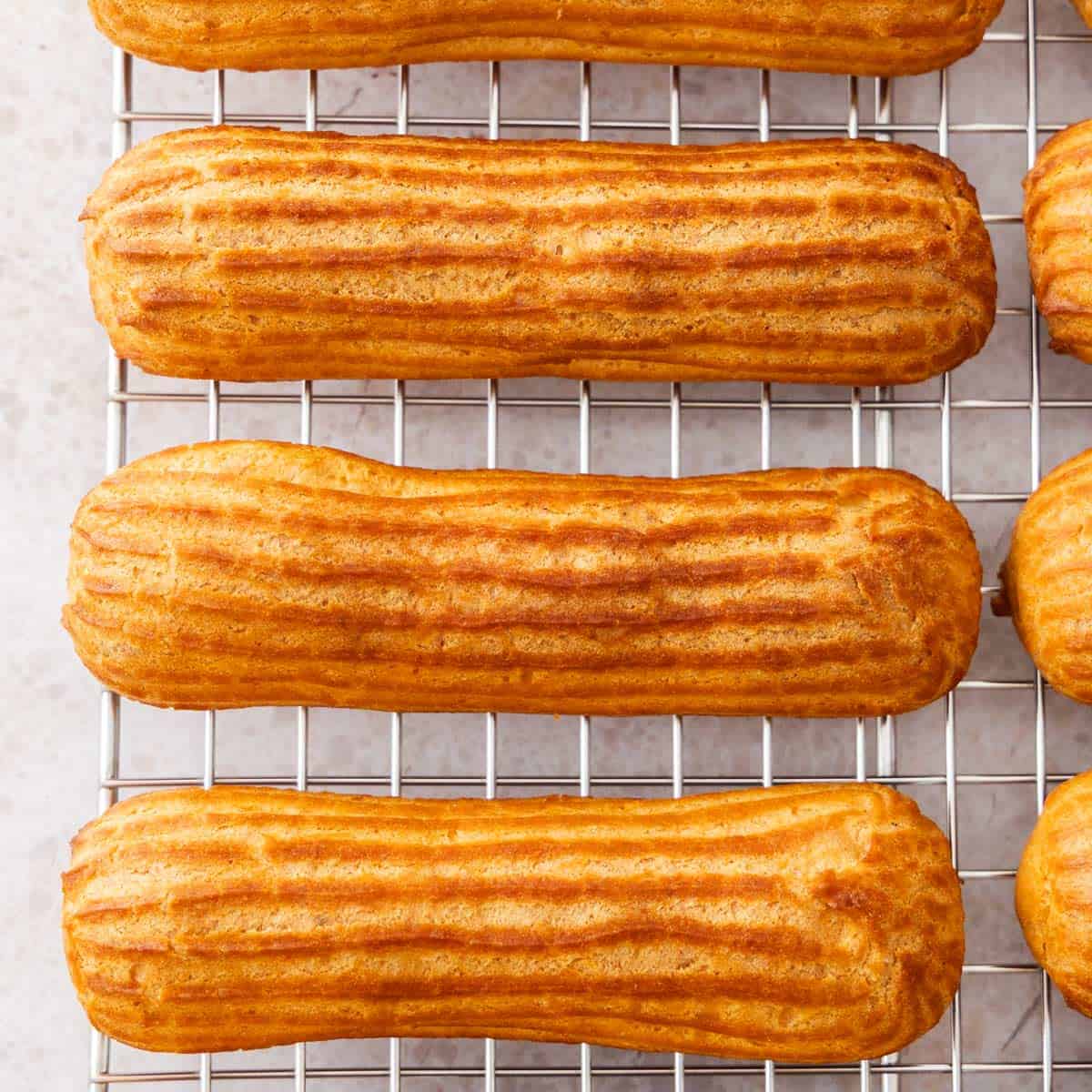
- Eclairs: Sweet or savoury they can be sliced and filled or pipe through holes in the top or base. Often finished off with some sort of glaze, icing or cream.
- Profiteroles: A choux bun filled with pastry cream (or a similar cream filling) or ice cream and topped with chocolate.
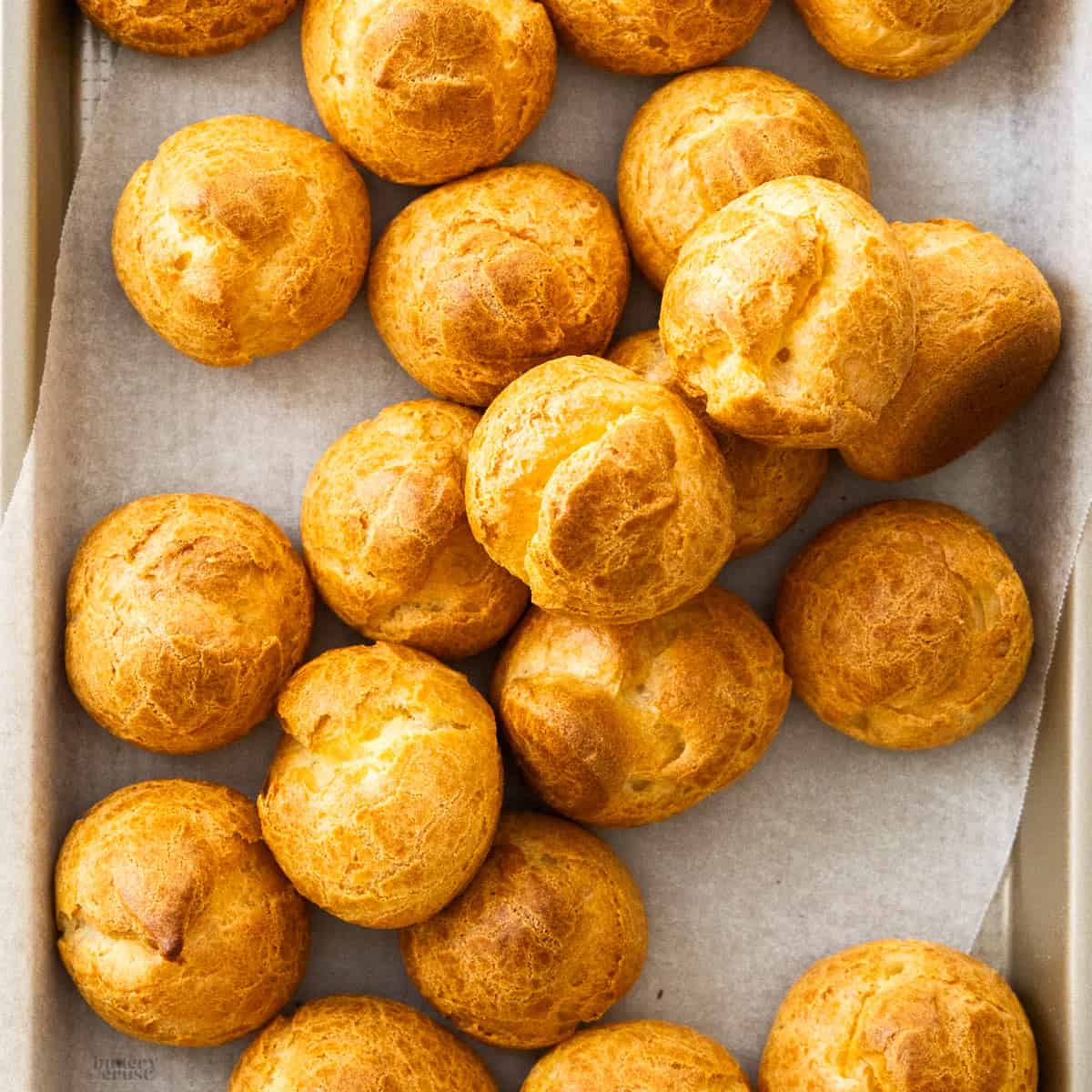
- Choux buns: Often confused with profiteroles, choux buns (aka cream puffs) are still just a small bun but fillings and toppings are unlimited.
- Paris brest: A ring of choux pastry filled with praline mousseline.
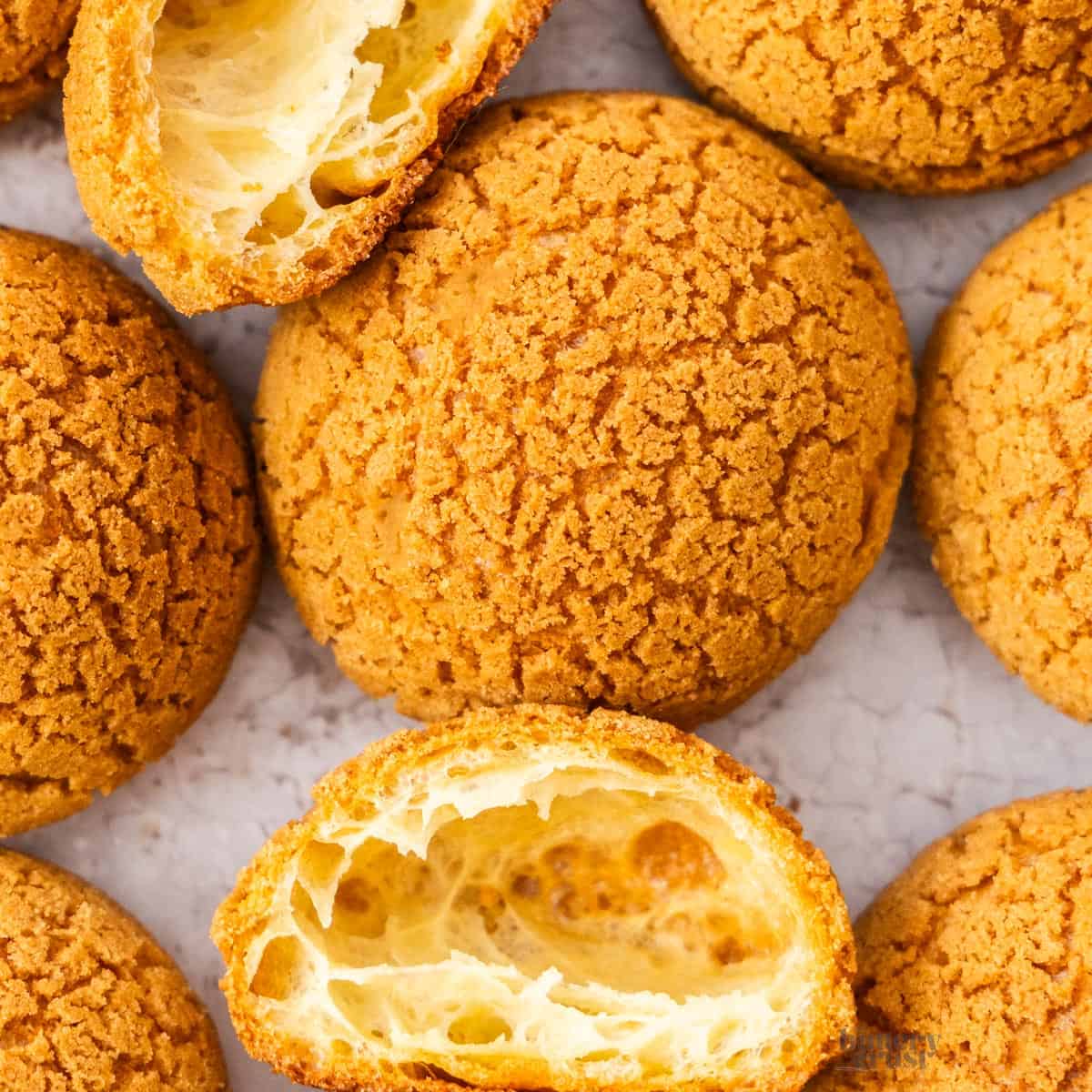
- Choux au craquelin: A choux bun with a crunchy cookie topping and unlimited choices of fillings.
- Choux à la Crème: A choux bun topped with craquelin with a creamy filling.
- Croquembouche: A tower of choux buns filled with a creamy filling and coated with toffee.
- Chouquettes: Miniature choux buns coated in pearl sugar.
- Churros: A Spanish treat of strips of choux pastry that's fried then coated in sugar and dunked in chocolate.
- Gougères: A savoury choux bun with cheese mixed through the dough before deep-frying.
- Beignets: A sweet fried choux.
- Chouxnuts: Choux pastry baked in the shape of a doughnut then filled and topped with icing or glaze.
- French crullers: Deep fried then glazed choux pastry doughnuts.
- Religieuse: A choux pastry bun, topped with a smaller choux pastry bun. They're normally filled with a chocolate pastry cream or mocha pastry cream and topped with chocolate.
- Parisienne gnocchi: A type of gnocchi made using choux pastry instead of the Italian potato or ricotta based gnocchi.
- Gâteau St Honouré: A layered cake combining layers of puff pastry, mini choux buns and cream.
Storage
Pâte à choux (choux pastry) is a great make-ahead pastry.
Unbaked choux pastry
Store unbaked choux pastry can be stored piped or unpiped;
- In the fridge in an airtight container for up to 3 days,
- or the freezer in an airtight container for 1 month.
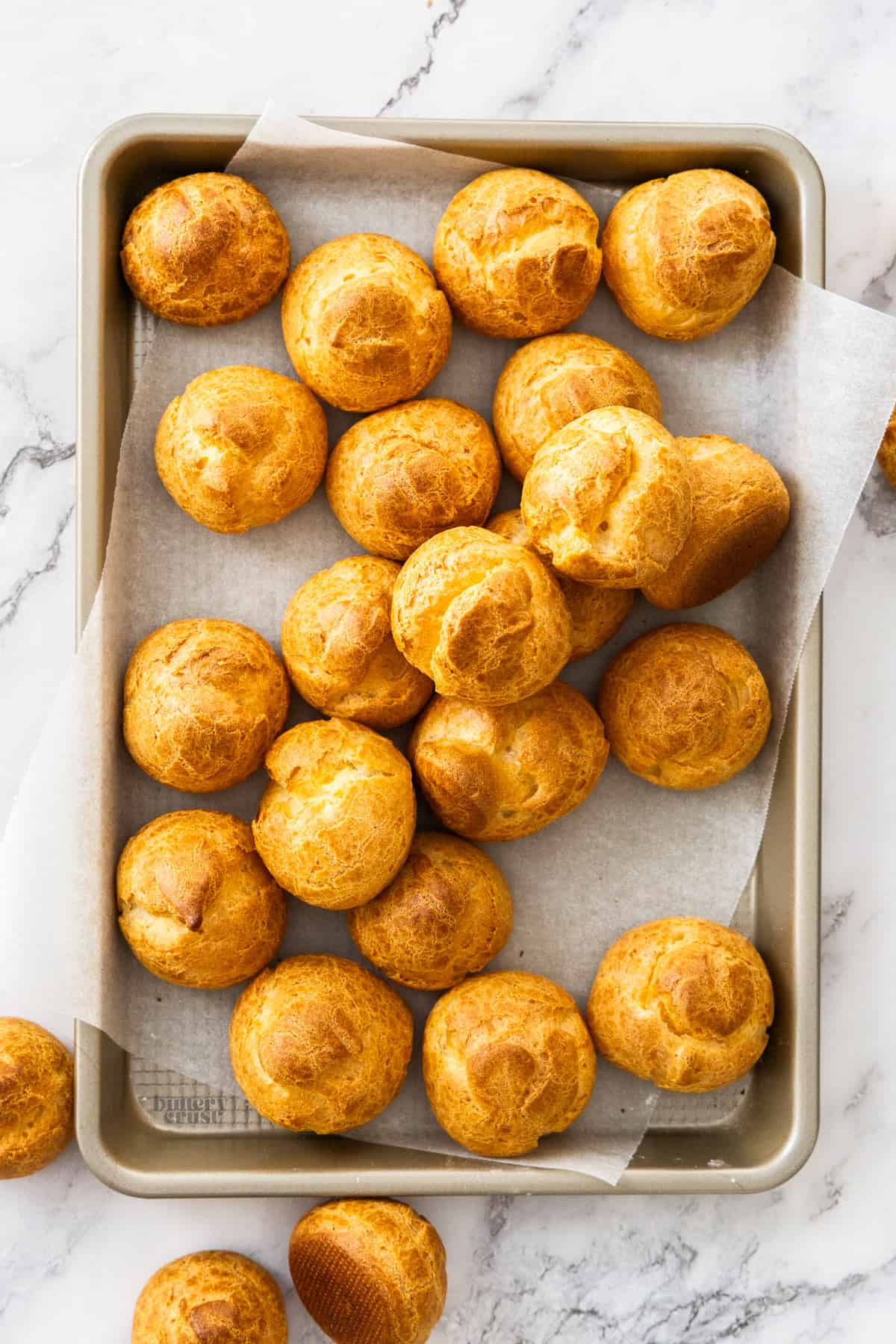
Baked, unfilled choux pastry shells
- At room temperature in an airtight container for 2 days,
- in the fridge in an airtight container for 3-4 days,
- or the freezer in an airtight container for up to 3 months.
Baked choux shells do lose their crispness very quickly. They can be refreshed / recrisped in the oven preheated to 180C/350F, for 5-7 minutes.
Filled choux pastry
Filled choux pastries are best served the day they are made or within a couple of hours. Serving them as soon as they are filled is the best way to get perfect choux desserts. If you do have leftovers, their storage time will depend on the filling but most will be fine for 2-3 days in the fridge in an airtight container.
Yield
This recipe makes enough pâte à choux for 32 choux buns and up to 14-16 eclairs (both are dependent on exactly how large you pipe your pastries).
Choux pastry fillings
Check out my collection of fillings recipes to create your own choux filling combinations or try these ideas;
- Lemon : Pipe with lemon curd and whipped cream. Top with white chocolate or this almond glaze.
- Profiterole: Fill with vanilla pastry cream and top with chocolate or a classic chocolate glaze. Try this chocolate pastry cream too.
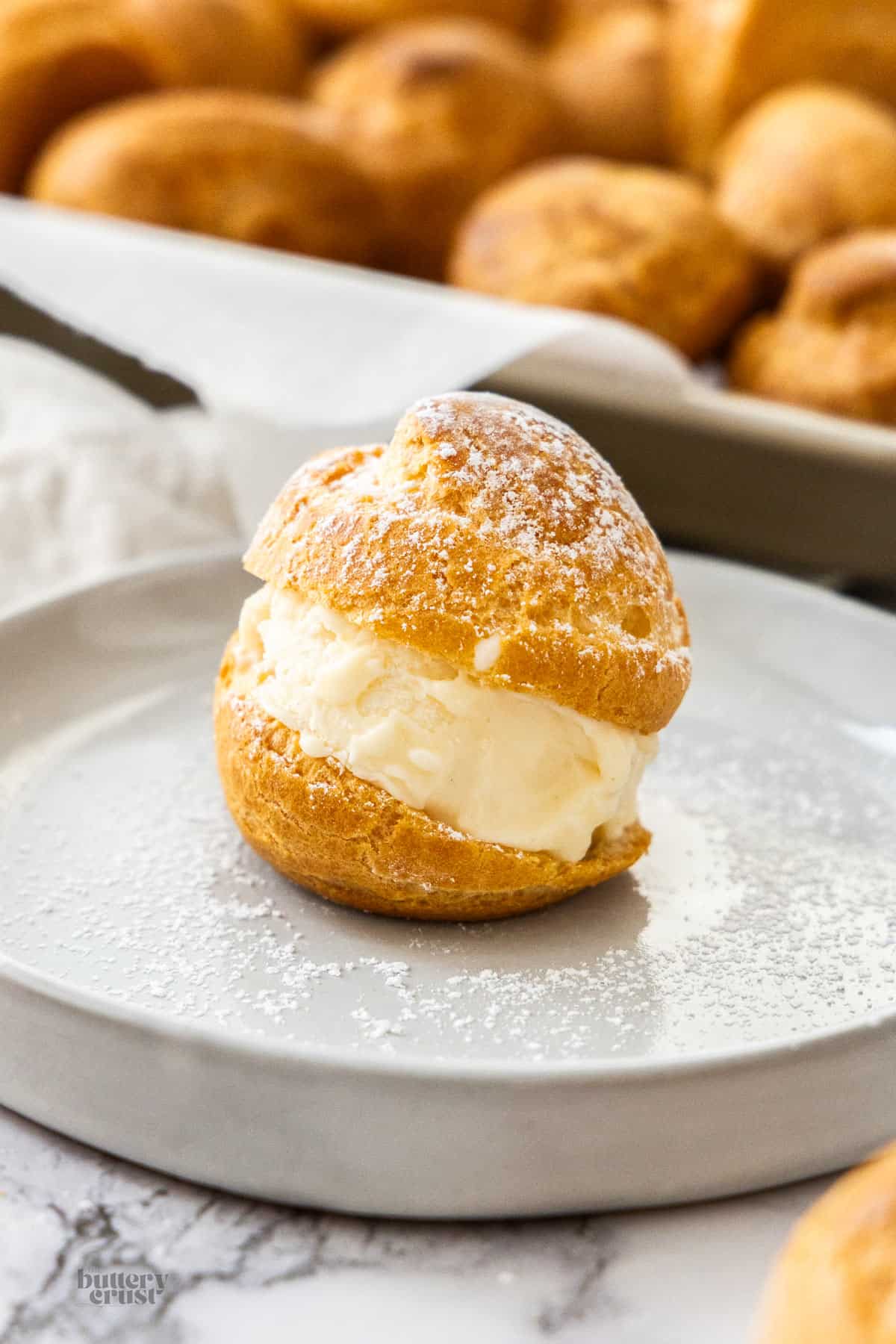
- Ice cream profiterole: Fill with a scoop of vanilla ice cream and drizzle chocolate over the top.
- Apple custard pie: Slice choux buns or eclairs in half and fill with pastry cream and apple compote.
- Raspberry pastry cream and hazelnut praline paste is a divine combo.
get creative
Try the Custom Choux Recipe Builder
Design your own flavour combinations in your pastry playground
If you made this how to make choux pastry recipe,
be sure to leave a ⭐⭐⭐⭐⭐ rating below. Thank you!
How to make Choux Pastry
Equipment
- Wooden spoon / rubber spatula
Ingredients
- ½ cup water (125ml)
- ½ cup whole milk (125ml)
- 115 g unsalted butter (4oz / 1 stick)
- 2 teaspoons white granulated sugar
- ¼ teaspoon salt
- 130 g plain flour (all purpose flour) (1 cup, spooned and levelled/~4 ½oz)
- 200-230 g eggs (7-8oz / 4-5 large eggs, see notes)
Instructions
- Preheat oven to 190C / 375F. Line 2 large baking sheets with silpats (recommended) or baking paper/parchment paper.
- Combine the water, milk, butter, sugar and salt in saucepan and heat over medium stirring to melt the butter, then allow it to start to bubble.
- Once you see the first bubbles, turn the heat off. Add the flour and stir in with the spatula until fully combined.
- Place the pan over low heat and cook for 2 minutes, moving constantly. Fold it over itself then press it out across the pan and repeat for 2 minutes.
- By hand: Press the dough out flat over the base of the pan and leave it to cool for 5-10 minutes until it's no longer hot (warm is fine).By stand mixer: Transfer the dough to a stand mixer with a paddle attachment and beat on low for 2 minutes.
- Lightly beat 4 eggs together in a jug (or shake them up in a jam jar).
- Add a quarter of the eggs to the panade/dough with one of these 3 methods;- In the stand mixer with paddle attachment and mix on low.- Beat by hand, directly in the saucepan with a silicone spatula or wooden spoon.- Use a handheld mixer on low.
- Continue by adding another quarter of the eggs, beating until fully incorporated. Repeat with the third quarter of eggs.
- With the last quarter of the eggs, add them just a little at a time until you have a dough that is smooth and shiny. It should reluctantly fall from the spoon leaving a "V" shape hanging from it.
- Once the dough is the right consistency, transfer it to a piping bag and pipe as desired. This recipe will make around 32 regular choux buns or 14-16 eclairs. They will need to bake, depending on size, anywhere from 30-45 minutes. When your choux pastries come out of the oven, as soon as you can handle them, poke a couple of holes in the base with a skewer or toothpick.
- Please take a moment to rate this recipe. I really appreciate it and it helps me create more recipes.
Notes
- How many eggs? With choux pastry, the texture is best judged by eye, not by quantity of eggs. Add the eggs until the dough is at the right texture. For me it's between 3 ½ and 4 large eggs but the amount you require will be determined by many variables - egg size, amount of moisture cooked out of panade, protein content of flour and even humidity in the air.
- Store baked choux pastries in an airtight container in a cool place, like the pantry for 2 days or fridge for 3-4 days. They can also be frozen for up to 3 months in an airtight container.
- They are only crispy straight from the oven and will begin to gradually soften. You can re-crisp them before filling by placing them in an oven preheated to 180C/350F for 7-10 minutes.
- Don't fill until they're cool.
- Fillings will soften the choux pastry so they're best filled as close to serving as possible.

Hoang Nguyen says
Perfect choux pastry
Marie says
Thanks so much, Hoang. I'm so happy you love it.